 WhatsApp Us (24/7)
 +91 926 888 0303 (24/7)


To Book an Appointment
Call Us+91 926 888 0303AI-Based Alzheimer’s Detection: Tests & Limits
By Dr. Manoj Khanal in Neurosciences , Interventional Neurology , Neurology
Sep 17 , 2026

What if Alzheimer's could be detected before memory loss starts disrupting everyday life? Artificial intelligence is bringing that possibility closer, but the reality is more nuanced than the headlines suggest.
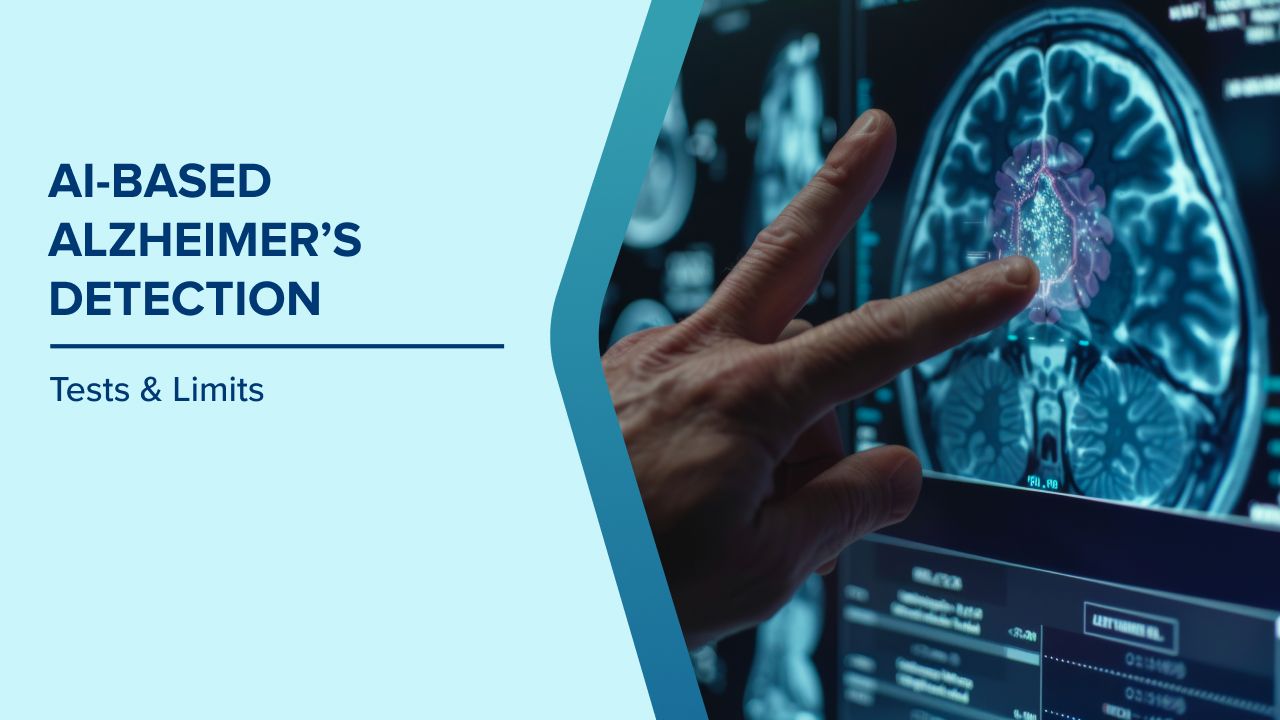
Alzheimer's disease can begin developing years, even decades, before obvious symptoms appear. During this silent phase, biological changes such as abnormal amyloid and tau proteins may already be affecting the brain. Traditionally, detecting these changes has relied on specialised brain scans, spinal fluid tests and, increasingly, blood-based biomarkers. Now, AI is helping clinicians interpret these complex signals faster and potentially identify patterns that the human eye may miss.
AI Can Spot Patterns; Not Predict Your Future
AI systems can analyse enormous amounts of information, including brain-imaging data, cognitive assessments, genetics and blood biomarkers. Some models have demonstrated an ability to distinguish people with Alzheimer's-related changes from those without them, sometimes before significant cognitive symptoms emerge.
But there is an important distinction: early detection is not the same as predicting exactly who will develop Alzheimer's.
An AI-generated result is not a diagnosis. It is a piece of evidence that needs to be interpreted alongside a person's medical history, symptoms, examination and validated clinical tests.
The Rise of the Blood Test
One of the most exciting developments is the combination of AI with blood-based biomarkers. Tests measuring proteins associated with Alzheimer's, particularly amyloid and phosphorylated tau, are making it increasingly possible to detect disease-related changes without immediately relying on more invasive or expensive procedures.
AI can potentially strengthen these approaches by combining multiple biological signals and identifying subtle patterns. This could eventually make early assessment more accessible and practical.
Why Early Detection Matters
Knowing about Alzheimer's risk earlier can have meaningful benefits. It may give patients and families more time to discuss treatment options, manage cardiovascular and lifestyle risk factors, plan finances and healthcare, and make important decisions while cognitive function remains relatively strong.
Early diagnosis may also become increasingly important as newer treatments target Alzheimer's pathology earlier in the disease course.
But There Are Limits
AI is powerful, but it is not a crystal ball. Algorithms can produce false positives or false negatives, and their accuracy may vary depending on the population and data used to develop them. Privacy, bias and responsible use of health data are also important concerns.
Most importantly, do not use an online AI tool or consumer test to self-diagnose Alzheimer's.
The Takeaway for Patients
The future of Alzheimer's detection may look less like waiting for memory problems to become obvious and more like identifying biological warning signs early.
AI could become an important partner in that process, helping doctors connect the dots sooner and personalise assessment more effectively.
The goal isn't simply to predict Alzheimer's. It is to create a window of opportunity: earlier knowledge, earlier conversations and, potentially, earlier intervention.
Written and Verified by:

Related Blogs

Dr. Chandril Chugh In Neurosciences , Interventional Neurology
Nov 08 , 2020 | 1 min read

Dr. Chandril Chugh In Neurosciences , Interventional Neurology
Nov 08 , 2020 | 2 min read
Blogs by Doctor

Monsoon Maladies - Most Common Diseases
Dr. Manoj Khanal In Neuro Oncology
Jun 27 , 2014 | 1 min read

Feeling Numbness? It Could be A Stroke- Beware!
Dr. Manoj Khanal In Neurosciences
Sep 02 , 2016 | 3 min read
Most read Blogs


Related Blogs
Dr. Chandril Chugh In Neurosciences , Interventional Neurology
Nov 08 , 2020 | 1 min read
Dr. Chandril Chugh In Neurosciences , Interventional Neurology
Nov 08 , 2020 | 2 min read
Blogs by Doctor
Monsoon Maladies - Most Common Diseases
Dr. Manoj Khanal In Neuro Oncology
Jun 27 , 2014 | 1 min read
Feeling Numbness? It Could be A Stroke- Beware!
Dr. Manoj Khanal In Neurosciences
Sep 02 , 2016 | 3 min read
Most read Blogs