 WhatsApp Us (24/7)
 +91 926 888 0303 (24/7)


To Book an Appointment
Call Us+91 926 888 0303Baby Vaccination Schedule in India: Essential Vaccines, Benefits, and Timeline
By Dr. Bhaskar Saikia in Paediatrics (Ped)
Nov 04 , 2026

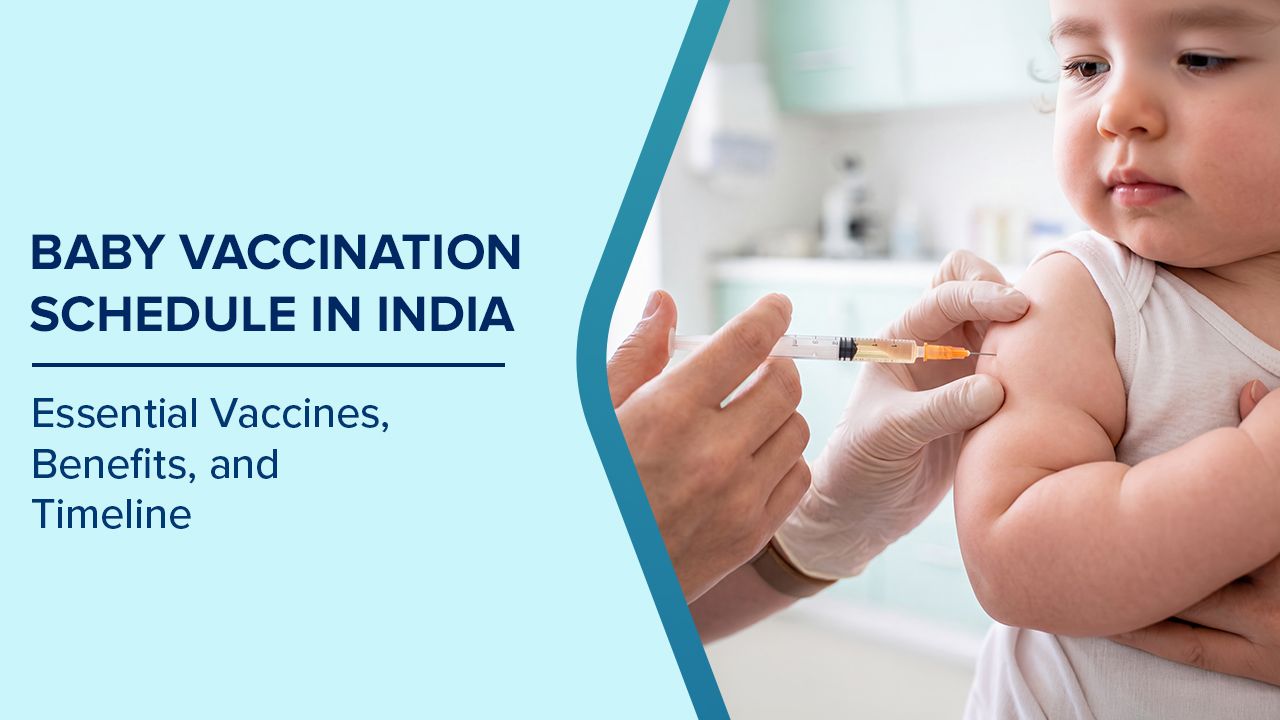
Every parent wants to give their baby the best possible start in life, and vaccination is one of the simplest, most effective ways to do that. In India, babies are exposed to a number of preventable diseases right from birth, which is why the government and paediatricians alike recommend a carefully timed schedule of vaccines from the very first weeks. For new parents, though, keeping track of which vaccine is due when can feel a bit overwhelming, especially with so many doses, boosters, and optional add ons to remember. This article breaks down the baby vaccination schedule in India, covering the essential vaccines, why each one matters, and a clear timeline you can refer back to as your little one grows.
The Importance of Vaccination in Babbies
Vaccines play a crucial role in shaping a baby's health right from the earliest weeks of life. Here's why following the recommended schedule matters so much for your little one:
- Disease Prevention: Vaccines protect babies from serious illnesses such as polio, measles, whooping cough, and hepatitis, many of which can cause lasting complications if left unchecked.
- Early Immunity Building: A newborn's immune system is still developing, and timely vaccination helps it learn to recognise and fight off harmful pathogens before exposure occurs naturally.
- Reduced Risk of Outbreaks: When a large number of children are vaccinated, it becomes much harder for infectious diseases to spread, which protects even those who cannot be vaccinated yet.
- Lower Healthcare Burden: Preventing illness through vaccination reduces hospital visits, medical costs, and the emotional strain that comes with treating a sick infant.
- Long Term Health Benefits: Many vaccines provide protection that lasts well into childhood and beyond, supporting healthier growth and development overall.
Understanding the Two Vaccination Frameworks: UIP and IAP
Parents in India often come across two different vaccination schedules when researching their baby's immunisation plan, and it can get a little confusing trying to figure out which one to follow.
The Universal Immunisation Programme (UIP)
Run by the Government of India, the UIP provides a core set of vaccines completely free of cost at government hospitals, primary health centres, and Anganwadi centres. It focuses on protecting babies against the most serious, widespread diseases, things like tuberculosis, polio, diphtheria, pertussis, tetanus, hepatitis B, and measles, and forms the backbone of public health immunisation across the country.
The Indian Academy of Paediatrics (IAP) Schedule
This framework comes from a professional body of paediatricians that publishes its own recommended schedule. It builds on the UIP base and adds several additional vaccines that aren't part of the free government programme, such as those for chickenpox, hepatitis A, typhoid, and certain pneumococcal infections. These aren't necessarily less important, they simply aren't included in the national rollout yet, often due to cost or logistical constraints at a population level.
Baby Vaccination Schedule in India (Birth to 24 Months)
The schedule below follows the Universal Immunisation Programme (UIP), as maintained by the National Health Mission (NHM), Government of India:
At Birth
Three vaccines are given right after delivery, ideally within the first 24 hours for institutional births. These are: BCG (protects against childhood tuberculosis), Hepatitis B birth dose, and OPV-0 (the first oral polio dose).
6 Weeks
This is the first proper round of vaccination after birth, and it covers several diseases in one sitting. Babies receive OPV-1, Pentavalent-1 (which combines protection against diphtheria, pertussis, tetanus, hepatitis B, and Hib), Rotavirus Vaccine-1, fractional IPV-1, and PCV-1, where available.
10 Weeks
A simpler visit compared to the previous one, this stage involves OPV-2, Pentavalent-2, and Rotavirus Vaccine-2, continuing the immunity building started at 6 weeks.
14 Weeks
The third and final primary dose round. Babies get OPV-3, Pentavalent-3, fractional IPV-2, Rotavirus Vaccine-3, and PCV-2, rounding off the core protection schedule before the 9 month gap.
9 to 12 Months
A bit of a wait after 14 weeks, but an important one. This stage brings the Measles and Rubella (MR) first dose, the PCV booster, and the JE vaccine for babies in endemic districts.
16 to 24 Months
Here's where boosters come in to reinforce earlier immunity. Babies receive MR-2, the JE second dose (in endemic areas), the first DPT booster, and an OPV booster dose.
Recommended Vaccines for Babies Beyond the National Immunisation Programme
While the National Immunisation Schedule covers the most critical, life threatening diseases, there are a handful of additional vaccines that paediatricians often recommend for broader protection. These aren't part of the free government programme, but many doctors consider them worth the investment given how common (and occasionally serious) these illnesses can be in young children.
- Hepatitis A Vaccine: Protects against the Hepatitis A virus, which spreads through contaminated food or water. Usually given as two doses, the first around 12 months and the second six months later.
- Typhoid Conjugate Vaccine (TCV): Offers protection against typhoid fever, a bacterial infection that's still fairly common in parts of India. Most paediatricians recommend it anywhere between 9 to 12 months of age.
- Varicella (Chickenpox) Vaccine: Given in two doses, usually starting around 15 months, this protects against chickenpox, which while often mild, can occasionally lead to complications in infants.
- Influenza Vaccine: An annual shot recommended from 6 months of age onwards, particularly useful for babies prone to respiratory infections or during flu season.
- Pneumococcal Conjugate Vaccine (PCV) Booster: Even in states where PCV is part of the free programme, a booster dose around 15 months is often suggested for more complete protection.
Possible Side Effects After Vaccination
It's completely normal for babies to show some reaction after a vaccine, and in most cases, these effects are mild and settle on their own within a day or two. Here's what parents can typically expect:
- Mild Fever: A slight rise in temperature is one of the most common reactions, especially after vaccines like DPT, Pentavalent, and MR. It usually appears within a few hours and resolves within 24 to 48 hours.
- Soreness or Swelling at the Injection Site: The area where the injection was given may look a little red or feel tender to touch. This typically fades within a couple of days without needing any treatment.
- Irritability or Fussiness: Babies may seem more cranky or unsettled than usual, often due to mild discomfort at the injection site or a slight change in body temperature.
- Reduced Appetite: Some babies eat less than usual for a short period after vaccination, which generally returns to normal within a day.
- Drowsiness: It isn't unusual for babies to sleep a bit more than usual following a vaccine, as the body works through its immune response.
- Mild Rash: Occasionally, vaccines like MR can cause a faint rash a few days after administration, which clears up on its own.
In rare cases, a baby may experience a higher fever, prolonged crying, or an allergic reaction, and these should be reported to a paediatrician immediately. Parents are also advised against giving any medication without consulting their doctor first, even for something as simple as bringing down a fever.
Tips to Prepare Your Baby for Vaccination
A little preparation can make the whole vaccination visit smoother for both you and your baby. Here are a few things that genuinely help:
- Feed Your Baby Beforehand: A baby who isn't hungry tends to settle faster after the injection. Try to feed them shortly before the appointment, but avoid a heavy feed right at the clinic, since some babies spit up during the visit.
- Dress Them in Easy to Remove Clothing: Vaccines are usually given on the thigh or upper arm, so loose, simple clothing makes it quicker for the nurse to access the site without too much fussing around.
- Bring a Comfort Item: A favourite blanket, toy, or pacifier can help soothe your baby during and right after the jab, especially if they're prone to getting upset easily.
- Stay Calm Yourself: Babies often pick up on parental anxiety, so staying relaxed and speaking in a soft, reassuring tone can genuinely help keep them calmer too.
- Hold Your Baby During the Injection: Being held securely by a parent, rather than lying on a table, tends to reduce distress. Most paediatricians are happy to let you hold your baby throughout.
- Plan for After the Visit: Keep some paracetamol drops at home (only to be given if your doctor advises it), and try to keep the rest of the day light, with minimal outings or visitors, in case your baby is a little fussier than usual.
- Carry the Vaccination Card: Always bring your baby's immunisation record along, so the paediatrician can update it and confirm which dose is due next.
A bit of planning goes a long way, and most babies settle within a few minutes of the jab being done, so try not to worry too much going in.
Consult Today
Keeping up with your baby's vaccination schedule is one of the most important things you can do as a parent, not just for your own child's health, but for the wider community around them too. If you're ever unsure about a missed dose, side effects, or which additional vaccines might suit your child, it's always best to speak directly with a paediatrician rather than relying on guesswork. Book a consultation with a paediatrician at Max Hospitals today to get your baby's vaccination schedule reviewed, ask any questions you might have, and ensure your little one stays protected right from the very start.
Frequently Asked Questions
What is the 5 in 1 vaccine for babies in India?
The 5 in 1 vaccine, commonly known as the Pentavalent vaccine, protects against five diseases in a single shot: diphtheria, pertussis, tetanus, hepatitis B, and Haemophilus influenzae type B (Hib). It's part of the Universal Immunisation Programme and is given in three doses, typically at 6, 10, and 14 weeks of age.
What happens if a baby misses a vaccination dose?
A missed dose doesn't usually mean starting the entire series over again. Paediatricians generally follow a catch up schedule, picking up from where the baby left off rather than restarting from the beginning. That said, it's best to book a catch up appointment as soon as possible, since prolonged delays can leave babies exposed to preventable diseases for longer than necessary.
What are the top 3 most important vaccines for babies?
While every vaccine in the schedule serves a purpose, BCG, Pentavalent, and the Measles-Rubella (MR) vaccine are often considered among the most critical, as they protect against severe, potentially life threatening diseases including tuberculosis, diphtheria, pertussis, and measles. That said, paediatricians generally recommend completing the full schedule rather than prioritising select vaccines.
What is the correct timing for the PCV vaccine in infants?
The Pneumococcal Conjugate Vaccine (PCV) is typically given in two primary doses at 6 and 14 weeks, followed by a booster dose between 9 and 12 months. It's worth noting that PCV is only available free of cost in select states under the UIP, so it may be recommended as a private vaccine elsewhere.
Which hospital offers complete vaccination services for infants near me?
Max Hospitals offers a comprehensive infant vaccination programme covering both UIP and IAP recommended vaccines, along with paediatric consultations to guide parents through the schedule and address any concerns along the way.
How can I book baby vaccination appointments at Max Hospitals?
Appointments can be booked directly through the Max Hospitals website or by calling the nearest branch. Parents can also consult a paediatrician beforehand to discuss the baby's vaccination history and plan upcoming doses accordingly.
Who is the best paediatrician for infant vaccination?
Max Hospitals has a team of experienced paediatricians who specialise in infant immunisation and overall child healthcare. Parents are encouraged to book a consultation to discuss their baby's specific needs and get personalised guidance on the vaccination schedule.
Written and Verified by:

Related Blogs

Dr. Nidhi Rawal In Paediatrics (Ped)
Nov 13 , 2020 | 2 min read

Most read Blogs


Related Blogs
Dr. Nidhi Rawal In Paediatrics (Ped)
Nov 13 , 2020 | 2 min read
Most read Blogs