 WhatsApp Us (24/7)
 +91 926 888 0303 (24/7)


To Book an Appointment
Call Us+91 926 888 0303Microdiscectomy for Herniated Disc: Benefits & Risks
By Dr Himanshu Champaneri in Neurosurgery , Neurosciences
Sep 25 , 2026

A herniated disc can turn simple movements such as walking, sitting or bending into painful experiences. When a slipped or herniated disc presses on a nearby spinal nerve, it can cause back pain, leg pain, numbness, tingling or weakness.
Most people with a herniated disc do not immediately need surgery. Treatment may begin with rest or activity modification, medicines and physiotherapy. However, when nerve-related symptoms persist or become severe despite appropriate non-surgical treatment, a microdiscectomy may be considered.
What Is a Herniated Disc?
The spine is made up of individual bones called vertebrae, separated by soft, cushion-like discs. These discs absorb shock and allow the spine to move.
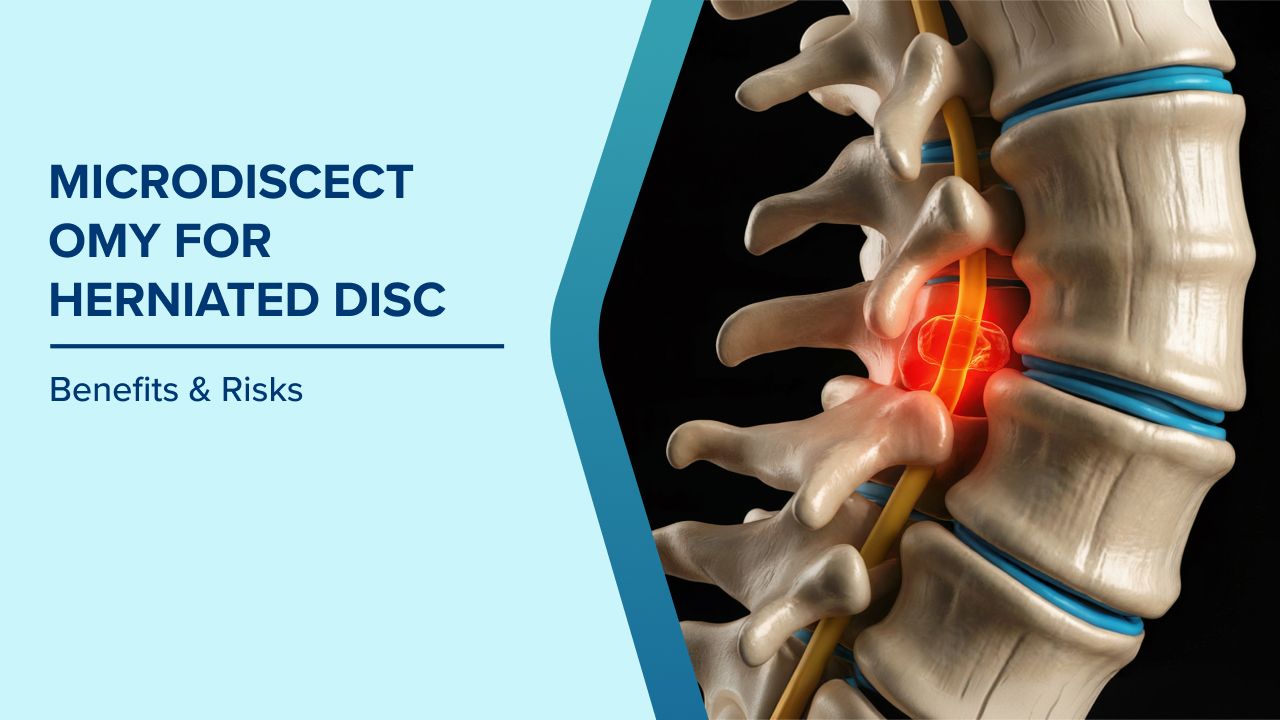
A disc can herniate when its softer inner material pushes through a weakened or torn outer layer. If the herniated portion presses on a spinal nerve, it can cause symptoms along that nerve's path.
A common example is sciatica, where irritation or compression of a lower-back nerve causes pain that travels from the back into the buttock and leg.
What Is Microdiscectomy?
Microdiscectomy is a spinal procedure performed to relieve pressure on a spinal nerve caused by a herniated disc.
The surgeon makes a small incision and uses magnification and specialised instruments to reach the affected area. The surgeon carefully removes the portion of disc material pressing on the nerve. The goal is not to remove the entire disc, but to remove the fragment causing nerve compression while preserving as much normal anatomy as possible.
When Might Microdiscectomy Be Recommended?
Doctors usually treat a herniated disc without surgery at first. However, surgery may be considered when:
- Severe leg or arm pain continues despite appropriate conservative treatment
- Symptoms significantly interfere with walking, working, sleeping or daily activities
- There is persistent nerve compression confirmed by clinical evaluation and imaging
- Progressive neurological weakness develops
- Symptoms do not improve with non-surgical treatment over an appropriate period
In certain situations, surgery may need to be performed more urgently—for example, when there is significant or rapidly worsening weakness or symptoms suggesting cauda equina syndrome, such as loss of bladder or bowel control or numbness around the groin or inner thighs.
How Is the Procedure Performed?
Microdiscectomy is generally performed under general anaesthesia.
The surgeon makes a small incision over the affected part of the spine. The surgeon carefully moves the muscles aside and uses specialised instruments or a microscope to access the compressed nerve. The surgeon then removes the herniated disc fragment to relieve pressure on the nerve.
Because the procedure focuses on removing the offending disc fragment rather than performing extensive spinal surgery, it can disrupt surrounding tissues less than some traditional approaches.
What Are the Potential Benefits?
The primary goal of microdiscectomy is to decompress the nerve.
For appropriately selected patients, removing the disc fragment can significantly relieve nerve-related leg or arm pain. It may also improve mobility and function when nerve compression has limited daily activities.
However, outcomes depend on factors such as the severity and duration of nerve compression, the patient's overall health, and the underlying condition of the spine.
What Is Recovery Like?
Many patients are encouraged to begin walking soon after surgery. The exact recovery period varies depending on the individual, the extent of the procedure and the nature of their work or activities.
During recovery, patients may be advised to:
- Gradually increase physical activity
- Avoid heavy lifting initially
- Follow prescribed exercises or physiotherapy
- Maintain appropriate posture and body mechanics
- Attend scheduled follow-up appointments
Pain from nerve compression may improve relatively quickly in some patients, while numbness or weakness can take longer to recover if the nerve has been compressed for a prolonged period.
Is Microdiscectomy Completely Risk-Free?
Like any surgical procedure, microdiscectomy has potential risks. These can include infection, bleeding, nerve injury, spinal fluid leakage and recurrence of disc herniation.
Some symptoms may also persist if the nerve has sustained significant or long-standing damage.
Your spine specialist will discuss the expected benefits and potential risks based on your individual condition before recommending surgery.
Can a Herniated Disc Come Back After Surgery?
Microdiscectomy removes the portion of the disc that is compressing the nerve, but it does not make the remaining disc immune to future degeneration or herniation.
Some patients may develop a recurrent disc herniation. Maintaining a healthy weight, staying physically active, strengthening the core muscles and using proper lifting techniques may help support long-term spinal health.
Conclusion
Microdiscectomy is a minimally invasive surgical option designed to relieve nerve pressure caused by a herniated disc. It is not necessary for every patient with a slipped or herniated disc, and many people improve with non-surgical treatment.
However, when significant nerve-related pain persists, neurological weakness develops, or conservative treatment does not provide adequate relief, microdiscectomy may effectively decompress the affected nerve and help restore function.
If you have persistent back pain with leg pain, numbness, tingling, or weakness, a spine specialist can help determine whether conservative treatment or surgery is appropriate for you.
Written and Verified by:

Related Blogs

Dr. Sanjeev Kumar Gupta In Neurosurgery , Neurosciences
Jun 30 , 2016 | 2 min read

Dr. Sonal Gupta In Neurosurgery , Neurosciences
Jul 20 , 2016 | 2 min read
Blogs by Doctor

Most read Blogs


Related Blogs
Dr. Sanjeev Kumar Gupta In Neurosurgery , Neurosciences
Jun 30 , 2016 | 2 min read
Dr. Sonal Gupta In Neurosurgery , Neurosciences
Jul 20 , 2016 | 2 min read
Blogs by Doctor
Most read Blogs