 WhatsApp Us (24/7)
 +91 926 888 0303 (24/7)


To Book an Appointment
Call us+91 926 888 0303To Book an Appointment
Call us+91 926 888 0303Recent Articles
Forgetfulness vs Dementia: Early Signs and Diagnosis
Everyone forgets things occasionally. Misplacing your keys, walking into a room and forgetting why you went there, or struggling to recall someone's name are common experiences, especially during periods of stress or a busy schedule.
Dr. Rajesh Gupta In Neurosciences Neurology
Aug 03 , 2026
What Is Mechanical Thrombectomy: Symptoms, Causes & RecoveryWhat Is Mechanical Thrombectomy: Symptoms, Causes & Recovery
A stroke can change a person's life within minutes. The sudden loss of movement, speech difficulties, facial drooping, or confusion occurs because part of the brain is no longer receiving the blood and oxygen it needs. While every minute matters during a stroke, modern advances in stroke treatment have created opportunities that were unimaginable a few decades ago.
Dr. Shailesh Jain In Neurosurgery Neurosciences Interventional Neurology Spine Surgery
Jul 27 , 2026

Monsoon and Migraine: Symptoms, Triggers & Management
The monsoon season brings welcome relief from the summer heat, but for many people, it can also bring an increase in migraine attacks. Changes in weather, humidity, sleep patterns, and daily routines can act as triggers, making migraine symptoms more frequent or severe. In the United States, about 6% of men and 18% of women get a migraine in a given year, with a lifetime risk of about 18% and 43% respectively. In Europe, migraines affect 12-28% of people at some point in their lives with about 6-15% of adult men
Dr. Amit Batra In Neurosciences Neurology
Jul 27 , 2026 | 4 min read
Migraine in Summer: Triggers and Prevention Tips
Many people notice that their migraines become more frequent during the summer months, even when they are following their usual routine. While hot weather is often blamed, temperature alone is rarely the whole story.
Dr. Sawan Kumar Verma In Neurosciences
Jul 27 , 2026
Most read blogs

Loose motions or Diarrhea is one of the most common ailments across every age group – from infants and mothers to the elderly. Diarrhea is the frequent passage of watery or loose stools across irregular intervals. There are many possible causes of Diarrhea. These include allergies, food poisoning, infections, and stress. As such, Diarrhea is merely a symptom of one of many possible causes. Most of the time, loose motions is not a serious problem and can be treated at home. Below, we've outlined 3 simple h
Max Team In Internal Medicine
Feb 22 , 2018

To make sure that what you eat helps your body and also helps you stay interested, spread out your food through the day by following different food ideas. You can mix and match the following depending on how much you can eat and whether you are vegetarian or non vegetarian.
Max Team In Obstetrics And Gynaecology Nutrition And Dietetics
Nov 07 , 2020
When you have loose motions, the most effective way to return to full health is by changing your diet. There are many foods which can help you to soothe your stomach, but there are some foods that can irritate your stomach. We'll proceed by listing out some of the things that you should and shouldn't do when you have loose motions.
Max Team In Internal Medicine
Mar 21 , 2018

Many people think that squint is a permanent condition and cannot be corrected. But the truth is that eyes can be straightened at any age. Commonly known as “Strabismus”, where the eyes are not aligned in the same direction, this can be present only part of the time, in one or alternating between two eyes. The squinting may turn in (converge), turn out (diverge) or sometimes turn up or down.
Max Team In Ophthalmology Eye Care / Ophthalmology
Nov 13 , 2020

Regaining Control: Understanding Paralysis, its Management, and the Path to Recovery
Paralysis, a condition marked by the loss of muscle function in a part or most of the body, presents a profound challenge for those affected and their loved ones. Whether resulting from injury, illness, or neurological disorders, the journey of managing paralysis and striving for recovery is often complex and emotionally taxing. However, advancements in medical science and rehabilitation therapies are continually opening new avenues for regaining control and improving quality of life. This article delves into the various aspects of paralysis, exploring its causes, the latest management strategies, and the hopeful path to recovery that many individuals are now able to pursue. Let’s start with understanding the condition.
Dr. Nikhil Dongre In Neurosciences
Jul 27 , 2026 | 14 min read

Blood Clot in Brain: Types, Causes and Treatment
Blood clots, which are typically the body’s natural response in the healing process (to prevent bleeding), can become dangerous when they form inside blood vessels and obstruct blood flow. A blood clot in the brain occurs when a blood vessel becomes blocked or ruptures, disrupting the flow of oxygen and nutrients to the brain. This can lead to severe complications, including damage to brain cells, strokes, or even death. While some individuals may experience mild episodes without noticeable symptoms, others may face serious complications like seizures or paralysis. Understanding the risks and symptoms of blood clots is essential for ensuring prompt medical attention. If you notice any concerning signs, consult a healthcare professional immediately to seek appropriate treatment.
Dr. Kapil Jain In Neurosciences
Jul 27 , 2026 | 7 min read
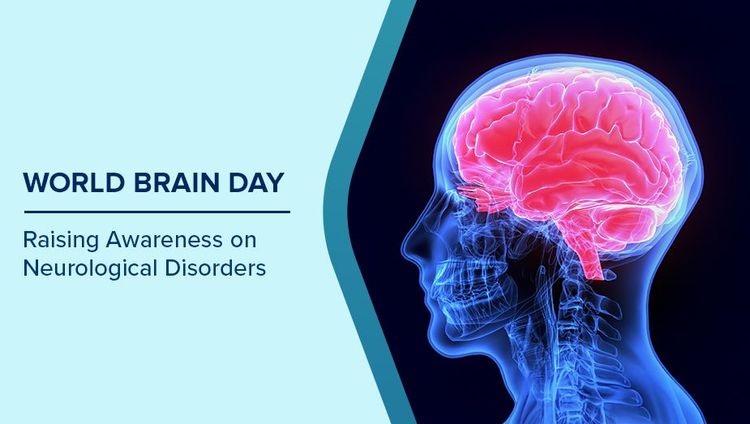
World Brain Day 2026: Raising Awareness on Neurological Disorders
The brain plays a key role in regulating movement, memory, behaviour, and decision-making, making it one of the most vital organs in the body. Any disruption in its structure or function due to neurological disorders can lead to impairment, which can be progressive in nature. Many neurological disorders, including epilepsy, Parkinson’s disease, and dementia, often begin with mild or vague symptoms that are easy to dismiss. As these conditions progress, they can result in more serious and often irreversible changes, affecting not only the individual but also their loved ones. To help address this growing concern, World Brain Day is observed each year to raise awareness about neurological disorders and promote early recognition and care. This blog outlines the key symptoms linked to neurological conditions and how you can take simple steps to support your brain health. But, before we get into all that, let’s have a look at how World Brain Day started and why it continues to play an important role.
Dr. K. M. Hassan In Neurosciences
Jul 22 , 2026 | 13 min read
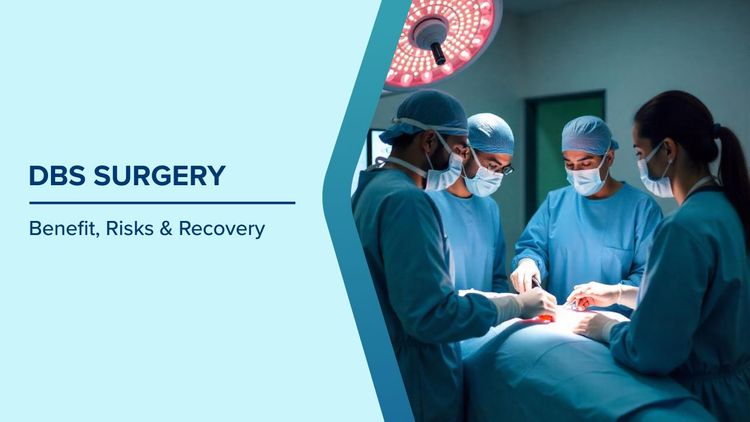
DBS Surgery: Benefit, Risks & Recovery
For people living with neurological conditions such as Parkinson's disease, essential tremor, or dystonia, medications may become less effective over time or cause troublesome side effects. When symptoms begin to interfere with daily activities despite optimal medical treatment, Deep Brain Stimulation (DBS) may be recommended as an advanced treatment option.
Dr Himanshu Champaneri In Neurosurgery Neurosciences
Jul 21 , 2026
By Specialities
- Aesthetic And Reconstructive Surgery
- Allergy
- Anaesthesia
- Arthroscopic Surgery
- Arthroscopy & Sports Injury
- Audiology
- Ayurveda Medicine
- Bariatric Surgery / Metabolic
- Bone Marrow Transplant
- Breast Cancer
- Cancer Care / Oncology
- Cardiac Anesthesia
- Cardiac Electrophysiology-Pacemaker
- Cardiac Sciences
- Cardiac Surgery
- Cardiac Surgery (CTVS)
- Cardiology
- Child Development Clinic
- Clinical Psychology
- Critical Care
- Dental Care
- Department of General Surgery and Robotics
- Dermatology
- Diabesity Clinic
- Diabetes Educator
- Dietetics
- Emergency & Trauma
- Emergency Medicine
- Endocrinology & Diabetes
- Endodontist & Cosmetic Dentist
- ENT
- ENT(Ear Nose Throat)
- Eye Care / Ophthalmology
- Foetal Medicine
- Gastro Intestinal & Hepatopancreatobiliary Surgical Oncology
- Gastroenterology, Hepatology & Endoscopy
- Gastrointestinal & Hepatobiliary Oncology
- Gastrointestinal Surgery
- General Surgery
- Geriatric Medicine
- Gynaecologic Laparoscopy
- Gynecologic Oncology
- Haematology
- Hair Transplant
- Hand & Limb Reconstruction
- Head & Neck Oncology
- Health And Wellness
- Hematology
- Hematology Oncology
- Implantologist
- Infertility & IVF
- Institute of Laparoscopic, Endoscopic & Bariatric Surgery
- Internal Medicine
- Interventional Cardiology
- Interventional Neurology
- Interventional Radiology
- Kidney Transplant
- Laboratory Medicine / Pathology
- Laparoscopic / Minimal Access Surgery
- Liver Transplant and Biliary Sciences
- Lung Transplant
- Maternity
- Maxillofacial Surgery and Implantology
- Medical & Surgical Gastroenterology
- Medical Oncology
- Mental Health And Behavioural Sciences
- Metabolic And Bariatric Surgery
- Molecular Oncology & Cancer Genetics
- Musculoskeletal Oncology
- Musculoskeletal Surgical Oncology
- Neonatology
- Nephrology
- Neuro Oncology
- Neurology
- Neurosciences
- Neurosurgery
- Nuclear Medicine
- Nutrition And Dietetics
- Obstetrics And Gynaecology
- Oncology Reconstructive Surgery
- Ophthalmology
- Orthodontics & Dentofacial Orthopaedics
- Orthopaedics & Joint Replacement
- Paediatric (Ped) Cardiac Surgery
- Paediatric (Ped) Cardiology
- Paediatric (Ped) Endocrinology
- Paediatric (Ped) Gastroenterology
- Paediatric (Ped) Hematology
- Paediatric (Ped) Intensive Care
- Paediatric (Ped) Nephrology
- Paediatric (Ped) Neurology
- Paediatric (Ped) Neurosurgery
- Paediatric (Ped) Oncology
- Paediatric (Ped) Pulmonology
- Paediatric (Ped)/Medical Oncology
- Paediatric Haematology
- Paediatrics (Ped)
- Pain Management
- Palliative Care
- Periodontology
- Physiotherapy & Rehabilitation Medicine
- Psychiatry
- Pulmonology
- Radiation Oncology
- Radiology
- Rheumatology
- Robotic Joint Replacement
- Robotic Surgery
- Spine Surgery
- Surgical Oncology
- Thoracic Oncology
- Thoracic Oncology Surgery
- Thoracic Surgery
- Transfusion Medicine
- Uro-Oncology
- Urology
- Vascular Surgery