 WhatsApp Us (24/7)
 +91 926 888 0303 (24/7)


To Book an Appointment
Call Us+91 926 888 0303Breathlessness (Shortness of Breath): Causes & When to Seek Help
By Dr. Naveen Bhamri in Cardiac Sciences , Cardiology , Interventional Cardiology , Cardiac Electrophysiology-Pacemaker
Aug 11 , 2026

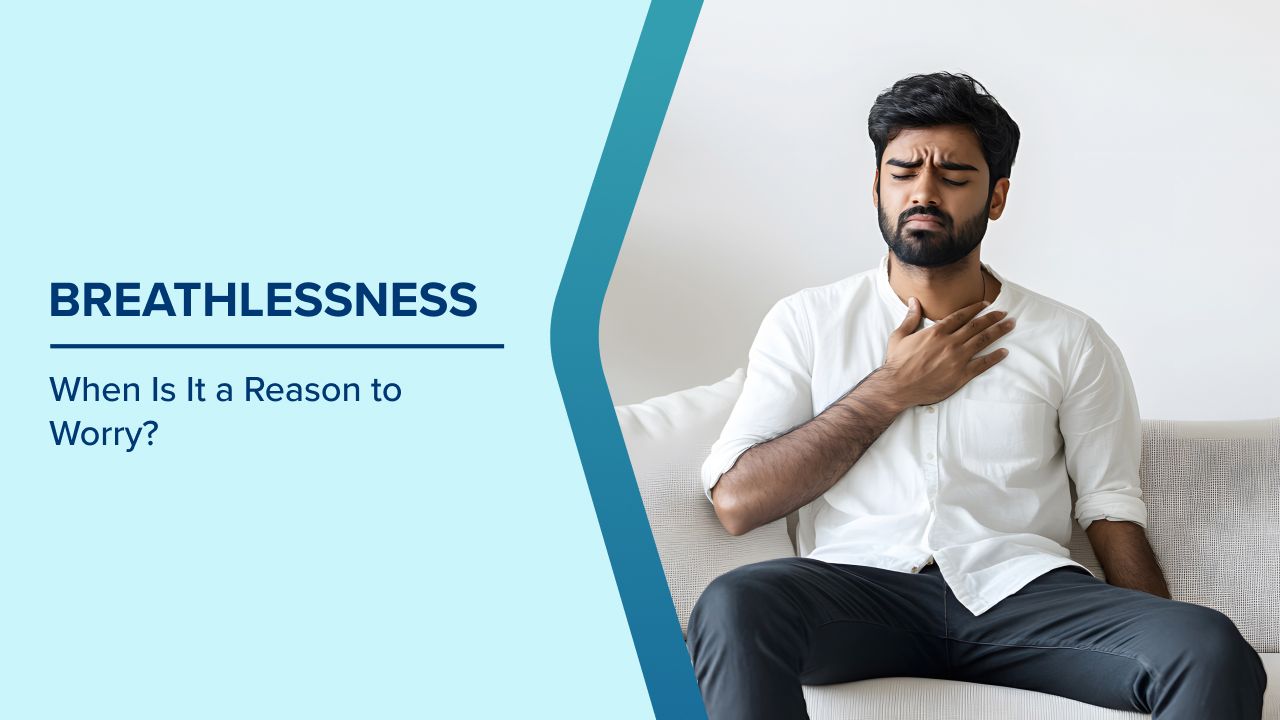
Breathlessness can be unsettling. It may happen while climbing stairs, walking a short distance, or even lying down. Sometimes there is a simple reason, such as a cold, poor sleep, stress, or being less active than usual. But when shortness of breath feels new, keeps coming back, or is worse than expected, it is important to pay attention.
You do not need to guess or panic. The most helpful thing is to notice the pattern. When does it happen? How long does it last? Does it come with chest pain, cough, wheeze, dizziness, or swelling in the legs? These details can help you understand whether it is likely to be mild, urgent, or something that needs further testing.
What Breathlessness Can Feel Like
Breathlessness can feel different from person to person. You may feel as if you cannot take a deep breath. You may feel tightness in your chest, faster breathing, or a need to stop often during normal activities. Some people feel unusually tired because breathing takes more effort than it should.
It may be harmless if it happens after heavy activity or in a stuffy room and settles quickly. It is more concerning if it happens at rest, wakes you from sleep, or feels very different from your usual breathing.
The main thing to notice is whether your breathing pattern has changed.
- Breathing feels harder than expected for the activity.
- You need to stop and catch your breath more often.
- Talking in full sentences becomes difficult.
- You feel worried because the change feels unusual.
Common Causes of Breathlessness
Breathlessness can have many causes, ranging from temporary triggers to medical conditions. Common causes include:
- Cold, flu, or a recent chest infection
- Asthma, allergies, or airway irritation from dust, smoke, or fumes
- Reduced fitness, weight gain, or a period of inactivity
- Stress or anxiety
- Low blood count, also called anaemia
- Heart or lung conditions that need medical assessment
The cause is not always obvious from symptoms alone. If breathlessness is new, persistent, or affecting daily activities, it is best to get it checked.
When Is Shortness of Breath More Worrying?
Shortness of breath is more worrying when it starts suddenly, feels severe, or happens while you are resting. You should seek prompt medical attention if you cannot speak comfortably, feel faint, or feel that something is seriously wrong.
Breathlessness also needs urgent attention if it comes with chest pain, blue lips, confusion, coughing up blood, or severe weakness. Even if the episode improves, a new or unusual breathing problem should still be discussed with a doctor.
Patterns that Deserve Closer Attention
- Breathlessness that is new and unexplained
- Breathlessness that gets worse over days or weeks
- Breathlessness that happens with very little activity
- Breathlessness that wakes you from sleep
- Breathlessness after an illness that is not improving
What to Notice Before You Seek Help
Before you speak to a doctor, try to notice a few simple details. You can write them on your phone or tell the doctor during your visit.
- When does breathlessness happen?
- What are you doing when it starts?
- Does it improve with rest?
- Do you also have cough, wheeze, chest discomfort, dizziness, or swelling?
- Is it happening more often or getting worse?
You do not need to describe it perfectly. Even simple notes can help your doctor understand what may be going on.
When Breathlessness Can Be Linked to Daily Habits
Sometimes breathing feels harder because of everyday factors. These may include inactivity, poor sleep, weight gain, dust, smoke, strong fumes, or a recent illness. Stress and panic can also make breathing feel fast, tight, or hard to control.
At the same time, it is important not to assume it is "just stress" without checking. If breathlessness is new, persistent, or affecting your normal routine, it deserves a proper review.
Speak to a doctor if you have started avoiding stairs, walks, or household tasks because breathing feels harder than before. Breathlessness that keeps returning, even if it settles between episodes, is also worth discussing.
When to Speak to a Doctor
Speak to a doctor if breathlessness is new, getting worse, or limiting your daily life. You should also seek advice if it happens at rest, wakes you from sleep, or comes with cough, wheeze, chest discomfort, faintness, or swelling.
A pulmonologist can help if the shortness of breath may be related to the lungs, or if the problem keeps coming back without a clear reason. Do not wait if the breathing change is sudden or severe, or if it makes it hard to speak, walk, or rest comfortably.
Conclusion
Breathlessness can have simple causes, but new, worsening, or unexplained symptoms should not be ignored. Pay attention to the pattern, seek urgent help for severe symptoms, and speak to a doctor if breathing changes are affecting your daily life.
Frequently Asked Questions
1. Is breathlessness always a sign of a lung problem?
No. Breathlessness can come from the lungs, heart, blood, or breathing muscles. It can also happen with stress or after a period of reduced activity. The pattern and other symptoms help show what may be causing it.
2. Why do I feel short of breath even when I am resting?
Breathlessness at rest can happen when the body is under strain or when an illness is affecting breathing. It is more concerning than breathlessness only with activity, especially if it is new, severe, or getting worse.
3. Can anxiety cause breathlessness symptoms that feel real?
Yes. Anxiety can make breathing feel fast, shallow, tight, or hard to control. The feeling is real. If it keeps happening, it is still sensible to get checked so other causes are not missed.
4. Should I worry if I only get breathless when climbing stairs?
Not always. But if stairs now make you much more breathless than before, or if this is a new change, it is worth discussing with a doctor. This is especially important if it is happening more often.
5. Can a simple cold make me feel unusually short of breath?
Yes. A cold or viral illness can make breathing feel harder, especially with congestion, cough, or airway irritation. If the shortness of breath is severe, lasts longer than expected, or gets worse instead of better, you should seek medical advice.
6. What should I do if the breathlessness comes and goes?
Breathlessness that comes and goes can still matter. This is especially true if it keeps returning, happens with the same activity, or comes with other symptoms. Keeping a note of when it happens can help your doctor decide what should be checked next.
Written and Verified by:

Related Blogs

Dr. Ritwick Raj Bhuyan In Cardiac Sciences , Cardiac Surgery (CTVS)
Nov 08 , 2020 | 2 min read

Dr. Gaurav Minocha In Cardiac Sciences
Nov 08 , 2020 | 4 min read
Blogs by Doctor

Rise in cases of asymptomatic heart attacks amongst middle aged people
Dr. Naveen Bhamri In Cardiac Sciences
Nov 08 , 2020 | 4 min read

What Do You Need to Know About Primary and Secondary Prevention Of CAD?
Dr. Naveen Bhamri In Cardiac Sciences
Nov 08 , 2020 | 2 min read
Most read Blogs

Related Blogs
Dr. Ritwick Raj Bhuyan In Cardiac Sciences , Cardiac Surgery (CTVS)
Nov 08 , 2020 | 2 min read
Dr. Gaurav Minocha In Cardiac Sciences
Nov 08 , 2020 | 4 min read
Blogs by Doctor
Rise in cases of asymptomatic heart attacks amongst middle aged people
Dr. Naveen Bhamri In Cardiac Sciences
Nov 08 , 2020 | 4 min read
What Do You Need to Know About Primary and Secondary Prevention Of CAD?
Dr. Naveen Bhamri In Cardiac Sciences
Nov 08 , 2020 | 2 min read
Most read Blogs