 WhatsApp Us (24/7)
 +91 926 888 0303 (24/7)


To Book an Appointment
Call Us+91 926 888 0303Whiteheads: Causes, Treatment and Prevention Tips
By Dr. Vinay Kumar in Dermatology
Sep 18 , 2026

If you have ever noticed a tiny white bump on the face, especially around the nose, forehead or chin, you might mistake it for a typical pimple and instinctively try to squeeze it out. However, that small bump could actually be a whitehead, a type of acne that forms when a pore becomes clogged. Squeezing it may irritate the skin and make the bump more noticeable. So, what causes whiteheads in the first place, and how can they be treated? This article explains what whiteheads are, why they develop, and how they can be treated and prevented.
What are Whiteheads?
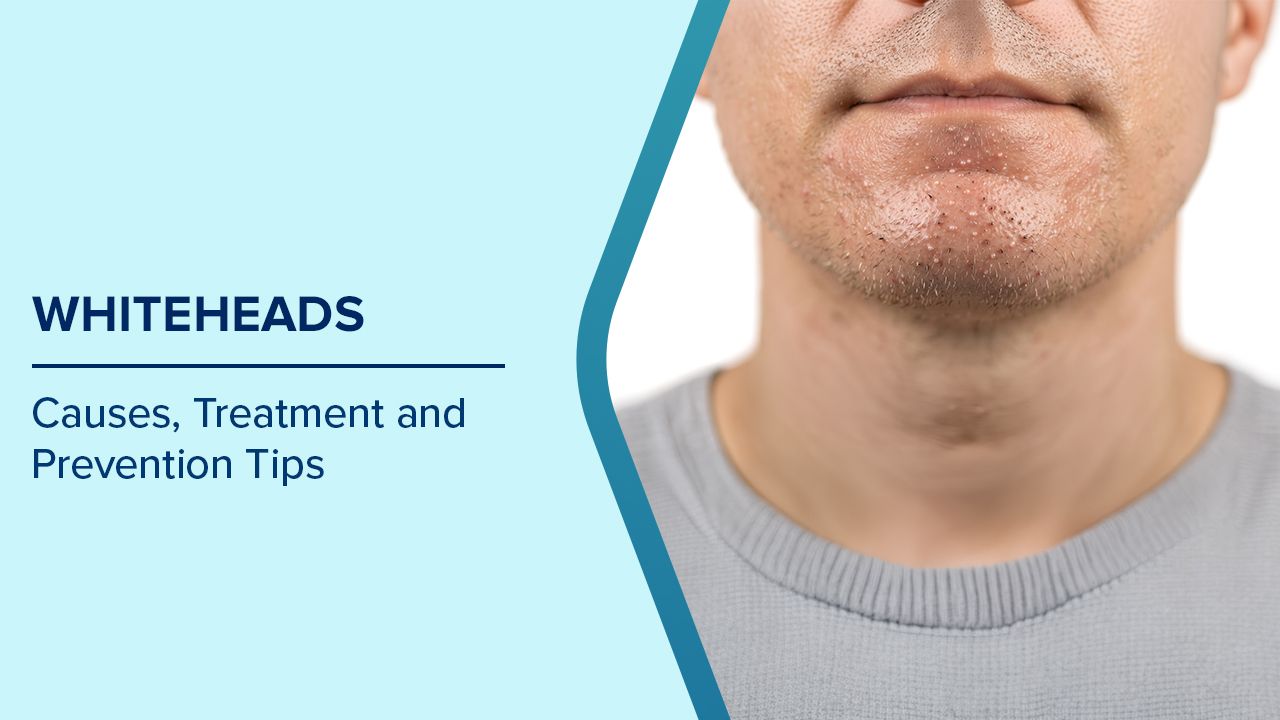
Whiteheads are a type of acne that develops when a pore becomes clogged. The pore remains closed, trapping oil and dead skin cells beneath the surface and creating a small, raised bump.
They are also called closed comedones and usually appear as:
- Small white or skin-coloured bumps
- Firm or slightly raised areas on the skin
- Bumps that are usually not painful or red
- Small spots that may feel more noticeable when the skin is touched
Whiteheads on the face are commonly seen on areas where the skin produces more oil, particularly the forehead, nose and chin. Whiteheads on the nose can be especially noticeable because the pores in this area tend to produce more sebum.
A whitehead does not necessarily mean that the skin is dirty. In fact, excessive washing or scrubbing can irritate the skin without clearing the clogged pore.
What Causes Whiteheads?
A whitehead forms when oil and dead skin cells collect inside a pore and block its opening. Several factors can make this more likely, including:
Excess Oil
Sebum is the natural oil produced by the skin. When too much oil is produced, it can combine with dead skin cells and contribute to clogged pores.
Dead Skin
The skin constantly sheds dead cells. If these cells build up inside the pores instead of shedding normally, they can combine with oil and form a blockage.
Hormonal Changes
Changes in hormone levels can increase oil production and make clogged pores more likely. This is one reason whiteheads and other forms of acne are common during puberty and other periods of hormonal change.
Skin Products
Certain skincare, makeup or haircare products may contribute to clogged pores, particularly in people who are already prone to acne. Heavy or oily products may be more likely to cause problems.
Genetics
Some people are naturally more prone to acne because of factors such as oil production and how their skin sheds dead cells. A family tendency to develop acne can also play a role.
How are Whiteheads Different From Acne and Blackheads?
Whiteheads are actually a form of acne, so the distinction is not between "whiteheads and acne". Instead, whiteheads are one type of acne, alongside blackheads and inflammatory acne.
The main differences include:
- Whiteheads: The pore remains closed, creating a small white or skin-coloured bump. These are known as closed comedones.
- Blackheads: The pore remains open, and the trapped material becomes dark after exposure to air. These are known as open comedones.
- Inflammatory acne: The blocked pore becomes inflamed, resulting in red, swollen or sometimes painful bumps.
The dark appearance of a blackhead does not mean that the pore contains dirt. It results from changes that occur when the material inside an open pore comes into contact with air.
Whiteheads can also sometimes be confused with milia, which are small cysts containing keratin. Since their causes and treatment are different, persistent or unusual bumps should be assessed by a dermatologist.
Can Whiteheads Turn Into Pimples?
A whitehead does not always remain the same. Since it is a clogged pore, the blockage can sometimes become inflamed, causing the small, skin-coloured or white bump to develop into a more noticeable pimple. This can happen when the surrounding skin becomes irritated or when bacteria and other material contribute to inflammation inside the blocked pore.
The change is usually noticeable as the bump becomes red, swollen or tender. Depending on the type of inflammation, it may develop into a papule or pustule.
Several things can increase irritation around a whitehead, including:
- Squeezing: Trying to force the contents out can damage the surrounding skin and push material deeper into the pore.
- Picking: Repeatedly touching or picking the area can introduce more irritation and increase inflammation.
- Pore Blockage: If the blockage remains in place, the pore can continue to become congested and eventually trigger an inflammatory response.
That said, not every whitehead turns into a pimple. Some remain small and gradually clear without becoming red or painful. Avoiding the urge to squeeze or pick them can help reduce unnecessary irritation and the risk of marks after the acne heals.
How can Whiteheads be Treated?
For anyone wondering how to remove whiteheads, the goal is not simply to force the blockage out. Treatment aims to clear existing clogged pores and reduce the chances of new ones forming. The appropriate approach depends on the number of whiteheads, how long they have been present and whether other types of acne are also present.
Common treatment options include:
Gentle Cleansing
A mild cleanser can remove excess oil, sweat, makeup and surface debris without unnecessarily irritating the skin. Washing too often or scrubbing aggressively is unlikely to clear a whitehead and may cause irritation.
Salicylic Acid
Salicylic acid helps remove dead skin cells and excess oil from pores. It is commonly used to manage clogged pores and may help reduce the formation of new whiteheads.
Topical Retinoids
Topical retinoids help regulate the shedding of skin cells and reduce the tendency of pores to become blocked. They are commonly used for comedonal acne.
A dermatologist can recommend an appropriate product and explain how it should be introduced, particularly if the skin is sensitive.
Professional Extraction
A dermatologist may perform comedone extraction when appropriate. This can help remove stubborn clogged pores without the skin damage that may occur when a person tries to squeeze them at home.
How can Whiteheads be Prevented?
Whiteheads cannot always be prevented, particularly when hormonal or genetic factors are involved. However, certain skincare habits can help reduce clogged pores and recurring breakouts.
Some practical ways to reduce the chances of whiteheads include:
- Cleanse Gently: Wash the face regularly with a mild cleanser, particularly after heavy sweating.
- Choose Non-Comedogenic Products: Look for skincare and makeup labelled non-comedogenic if the skin is prone to clogged pores.
- Remove Makeup: Cleanse the face before going to bed rather than leaving makeup on overnight.
- Avoid Picking: Touching, picking or squeezing whiteheads can irritate the skin and increase the risk of marks.
- Check Hair Products: Hair oils, serums, conditioners and styling products can come into contact with the forehead, temples and cheeks. If whiteheads tend to appear in these areas, keeping these products away from the face and washing the skin after they come into contact with it may help.
- Choose Skincare Carefully: Use non-comedogenic moisturisers, sunscreens and makeup products that are less likely to clog pores. Avoid very heavy or oily products if they seem to trigger whiteheads.
- Stay Consistent: Prevention works better as an ongoing routine rather than relying on occasional treatments when a whitehead appears.
Consult Today
An occasional whitehead may clear with simple skincare, but recurring or persistent bumps may need a closer look. If whiteheads keep returning, become red or painful, leave marks, or do not improve with over-the-counter treatments, a dermatologist can assess the skin and determine whether the bumps are actually whiteheads or another skin condition. Consult a dermatologist at Max Hospitals to understand the cause of recurring whiteheads and discuss suitable treatment options.
Frequently Asked Questions
How long do whiteheads usually last?
The duration can vary depending on the cause, skin type and whether the pore remains blocked. Some may clear on their own, while persistent whiteheads may need treatment.
Can whiteheads appear on other parts of the body?
Yes. Although they are common on the face, whiteheads can also develop on areas such as the chest, shoulders and back where pores can become clogged.
Can stress make whiteheads worse?
Stress does not directly cause whiteheads, but it may affect hormones and other processes that can contribute to acne flare-ups in some people.
Do whiteheads occur more often in certain age groups?
Whiteheads can occur at any age, although they are particularly common during adolescence and early adulthood when hormonal changes can increase oil production.
Can whiteheads come back after they disappear?
Yes. Clearing an existing whitehead does not necessarily prevent another clogged pore from developing. Recurring whiteheads may require a consistent skincare routine or professional assessment.
Can diet affect whiteheads?
Some dietary patterns have been associated with acne in certain people, but diet is not considered the sole cause of whiteheads. If breakouts seem to follow particular foods, discussing the pattern with a dermatologist can be helpful.
Can whiteheads be removed at home?
If the question is how to remove whiteheads at home, you can focus on keeping the skin clean and using appropriate acne products consistently. Salicylic acid and topical retinoids may help unclog pores over time, depending on the skin and the severity of the acne.
Written and Verified by:

Related Blogs


Blogs by Doctor

World Blood Donor Day 2025: Importance, Eligibility & Blood Donation Benefits
Dr. Vinay Kumar In Transfusion Medicine , Bone Marrow Transplant
Jun 23 , 2025 | 3 min read
Most read Blogs


Related Blogs
Blogs by Doctor
World Blood Donor Day 2025: Importance, Eligibility & Blood Donation Benefits
Dr. Vinay Kumar In Transfusion Medicine , Bone Marrow Transplant
Jun 23 , 2025 | 3 min read
Most read Blogs