 WhatsApp Us (24/7)
 +91 926 888 0303 (24/7)


To Book an Appointment
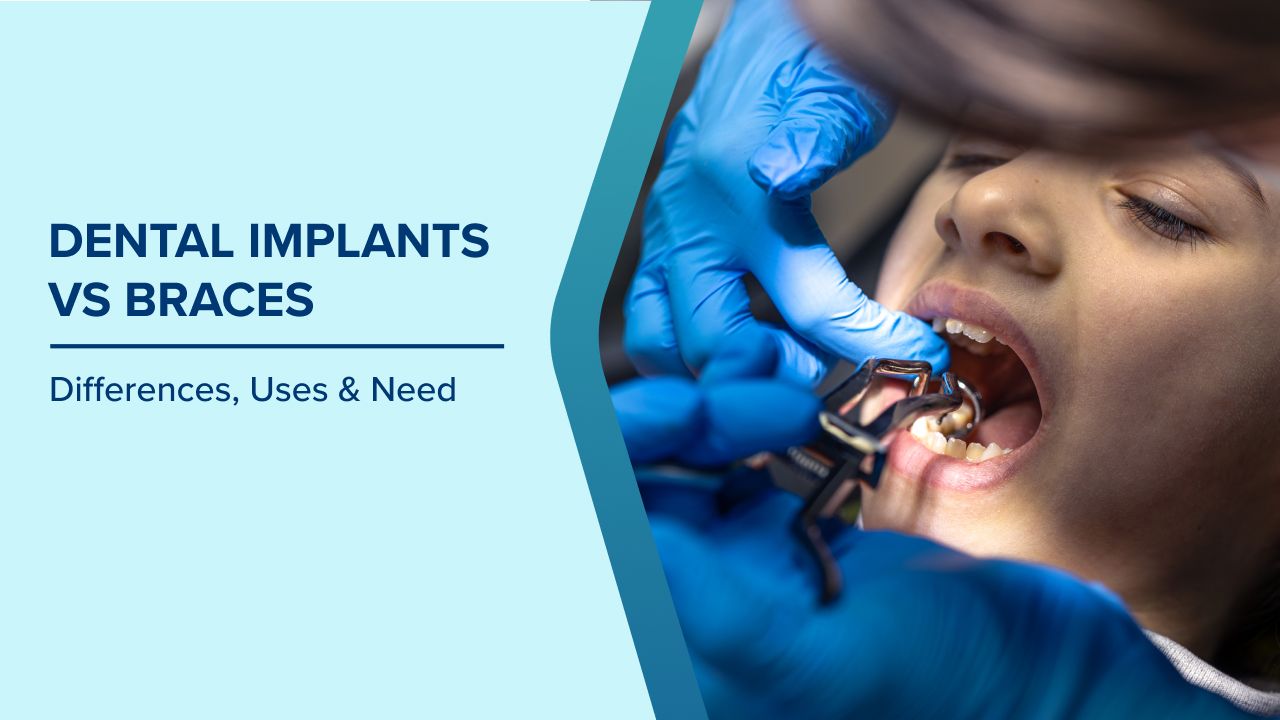
Call Us+91 926 888 0303Dental Implants vs Braces: Differences, Uses & Need
By Dr. Praveen Kumar in Dental Care , Maxillofacial Surgery and Implantology , Orthodontics & Dentofacial Orthopaedics , Implantologist , Periodontology , Endodontist & Cosmetic Dentist
Sep 14 , 2026

Dental implants and braces serve very different purposes. Dental implants replace missing teeth, restoring chewing function and the appearance of your smile, while braces gradually move existing teeth to improve alignment and correct certain bite-related problems. Neither treatment is automatically necessary for everyone. Whether you need dental implants, braces, or another dental treatment depends on your oral health, the condition of your teeth and gums, your ability to bite and chew comfortably, and your individual treatment goals.
What Is the Difference Between Dental Implants and Braces?
The main difference is simple: dental implants replace missing teeth, while braces move existing teeth into a better position.
A dental implant may be considered when a person has lost one or more teeth and needs a replacement. Braces, on the other hand, gradually correct concerns such as crooked teeth, crowding, gaps, and certain bite problems.
In some situations, both treatments may be part of the same overall dental treatment plan. For example, teeth may first be moved into the correct position before replacing a missing tooth with a dental implant.
What Do Dental Implants Do?
A dental implant replaces the root of a missing tooth. It is placed within the jawbone and can support a replacement tooth or other type of dental restoration, depending on the individual's needs. Replacing a missing tooth may help:
- Support comfortable chewing
- Restore the appearance of the smile
- Support speech in some situations
- Reduce difficulties associated with a missing tooth
- Provide a fixed tooth replacement option
However, a dental implant is not automatically the best option for every person with a missing tooth. Other tooth replacement options may also be suitable depending on the individual's dental condition and preferences.
When May Dental Implants Be Recommended?
Dental implants may be considered in situations such as:
- A single missing tooth
- Multiple missing teeth
- Difficulty using removable tooth replacement options
- A desire for a fixed tooth replacement
- Suitable gum and bone health
The position of the missing tooth is also important. Losing a front tooth may raise different functional and cosmetic concerns compared with losing a back tooth.
A detailed dental assessment can help determine whether dental implant treatment is suitable. Factors such as gum health, available bone, oral hygiene, healing ability and overall health may all influence treatment planning.
Are Dental Implants Really Necessary?
No, dental implants are not necessary for every missing tooth. Whether a missing tooth needs replacement, and which option is suitable, depends on several factors. These may include:
- Which tooth is missing
- The number of missing teeth
- The location of the missing tooth
- Difficulty chewing
- The condition of neighbouring teeth
- Gum and bone health
- Overall oral health
- Individual treatment preferences
Some people may benefit from replacing a missing tooth, while others may have different treatment options to consider. Depending on the situation, alternatives may include other fixed or removable tooth replacement options. The right choice depends on the individual's dental examination and treatment goals.
What Do Braces Do?
Braces apply gentle, controlled forces to gradually move teeth into a better position over time. Dental braces may be used to address:
- Crooked teeth
- Crowding
- Gaps between teeth
- Teeth that are out of position
- Certain bite problems
The purpose of orthodontic treatment is not always limited to improving appearance. Depending on the individual's dental condition, braces may also help improve the way the teeth meet and function. However, slightly crooked teeth do not automatically mean that braces are medically necessary.
Can Braces Improve More Than the Appearance of Teeth?
Yes, in some cases, braces may address functional concerns in addition to improving tooth alignment. Depending on the type and degree of misalignment, teeth that are not positioned properly may sometimes affect:
- Biting
- Chewing
- Cleaning between teeth
- Wear on certain teeth
Crowded or overlapping teeth can sometimes be more difficult to clean effectively. Certain bite problems may also affect how the upper and lower teeth meet. However, the effect of crooked teeth varies considerably. Some people may have mild misalignment without significant functional problems, while others may benefit from orthodontic treatment.
Are Braces Really Necessary?
Braces are not necessary for everyone with crooked or uneven teeth. For some people, orthodontic treatment may be chosen mainly to improve the appearance of the smile. For others, braces may be recommended because of significant crowding, gaps, bite problems or difficulty maintaining oral hygiene. Whether braces are necessary depends on factors such as:
- The degree of misalignment
- The type of bite
- Difficulty chewing
- The position of the teeth
- Oral hygiene concerns
- Individual treatment goals
An orthodontic assessment can help determine whether treatment may provide functional benefits or whether the concern is mainly cosmetic.
What Happens If Crooked Teeth Are Not Treated?
The impact of untreated crooked teeth depends on the type and degree of misalignment. Mild crowding may not cause significant functional difficulties for some people. However, more noticeable misalignment may sometimes affect:
- The way teeth meet
- Chewing comfort
- Cleaning between teeth
- Wear on certain teeth
Not every person with crooked teeth will develop dental problems. Similarly, not every alignment concern requires orthodontic treatment. A dental or orthodontic examination can help identify whether the position of the teeth is causing, or may contribute to, functional concerns.
Can Dental Implants and Braces Be Used Together?
Yes, in some cases, dental implants and braces may be used as part of the same overall treatment plan. For example, if a person has a missing tooth and the surrounding teeth have shifted, orthodontic treatment may be used to create or maintain the appropriate space before replacing the missing tooth.
Treatment planning is important because natural teeth can be moved with orthodontic treatment, while dental implants do not move in the same way. For this reason, when both braces and dental implants are being considered, the sequence of treatment needs to be carefully planned.
Dental Implants vs Braces: Which One Do You Need?
Dental implants and braces cannot usually be compared as direct alternatives because they address different dental concerns. Depending on the individual's condition, a person may need:
- A dental implant to replace a missing tooth
- Braces to improve tooth alignment or address a bite problem
- Both treatments as part of a broader dental treatment plan
- Neither treatment
The appropriate approach depends on a proper dental examination, including an assessment of the teeth, gums, bite and overall oral health.
Who May Not Be Suitable for Dental Implants or Braces?
Suitability varies from person to person. For dental implants, treatment planning may take into account:
- Bone health
- Gum health
- Oral hygiene
- Certain medical conditions
- Tobacco use
- Individual healing ability
These factors do not always mean that implants cannot be considered, but they may affect the treatment approach.
For braces, the dentist or orthodontist may assess:
- Dental and gum health
- Existing tooth decay
- Gum disease
- The type of bite problem
- The position of the teeth
- Ability to maintain good oral hygiene during treatment
You may need to address existing dental problems before orthodontic treatment begins.
How Long Do Dental Implants and Braces Take?
There is no single treatment timeline for either dental implants or braces. Dental implant treatment may involve several stages, depending on the condition of the tooth, gums and jawbone. Healing and preparation requirements can also affect the overall timeline.
Braces gradually move teeth over time, and treatment duration depends on the complexity of the alignment or bite problem. The timeline may vary based on:
- Complexity of the condition
- Type of treatment
- Oral health
- Healing
- Treatment goals
- Individual response to treatment
Your dental professional can provide a more personalised estimate after assessing your condition.
Are Dental Implants or Braces Painful?
Both treatments can involve some discomfort at certain stages, but the experience varies between individuals.
After dental implant treatment, some temporary discomfort may occur as the area heals. With braces, people may experience pressure or soreness, particularly after adjustments or changes to the orthodontic appliance.
Neither treatment should be assumed to be completely painless. However, your dental professional can explain what to expect before treatment begins and advise you if discomfort persists or feels unusual.
How to Take Care of Your Teeth During and After Treatment
Good oral hygiene remains important whether you have dental implants, braces or natural teeth. Useful habits include:
- Brushing regularly
- Cleaning between teeth as advised
- Following individual oral hygiene instructions
- Attending recommended dental follow-ups
- Following dietary recommendations when relevant
- Reporting persistent discomfort or other concerns
People with braces need to pay particular attention to cleaning around brackets and wires, where food particles and plaque can accumulate.
People with dental implants also need to maintain good gum and oral health. Although an implant-supported tooth is different from a natural tooth, the surrounding gums and supporting structures still require regular care.
When Should You See a Dentist or Orthodontist?
A dental assessment may be helpful if you have:
- A missing tooth
- Difficulty chewing
- Significant crowding
- Persistent bite problems
- Teeth that do not meet comfortably
- Difficulty cleaning between teeth
- Teeth that appear to be shifting
- Concerns about gaps or tooth alignment
Early assessment can help clarify whether treatment is necessary and what options may be suitable.
Conclusion
Dental implants and braces address different dental concerns. Dental implants are primarily used to replace missing teeth, while braces are used to move teeth and improve alignment or address certain bite problems.
Neither treatment is automatically necessary for everyone. Some people may benefit from treatment because of functional concerns, while others may have cosmetic goals or may not require either treatment at all.
The best approach depends on an individual's teeth, gums, bite, oral function and overall dental health. A personalised dental assessment can help determine whether dental implants, braces, another treatment option or no treatment is appropriate.
Frequently Asked Questions
Can adults get braces?
Yes, orthodontic treatment is not limited to children or teenagers. Adults can also receive braces or other orthodontic treatment, depending on their dental and gum health.
What is the right age to get braces?
There is no single age that is right for everyone. Orthodontic assessment may be helpful when concerns about tooth alignment or bite development become noticeable. Adults can also undergo orthodontic treatment.
Can braces close gaps between teeth?
In many cases, braces can be used to move teeth and reduce or close gaps. Whether this is suitable depends on the cause and size of the gap and the overall bite.
Can a dental implant be placed immediately after tooth removal?
In some cases, an implant may be placed at the time of tooth removal. In other situations, healing may be required before implant placement. Suitability depends on the condition of the surrounding bone and gums and the reason the tooth was removed.
Do dental implants look like natural teeth?
A well-planned replacement tooth can be designed to resemble the shape and appearance of natural teeth. The final result depends on several factors, including the location of the tooth and the condition of the surrounding gums.
Can braces loosen teeth?
Teeth naturally move slightly within their supporting structures during orthodontic treatment. Braces are designed to apply controlled forces. However, individual dental and gum health should be assessed before treatment.
Can you get braces if you have missing teeth?
Yes, in some situations. Braces may be used when one or more teeth are missing, particularly when surrounding teeth need to be moved as part of the overall treatment plan.
Can dental implants get cavities?
The implant itself does not develop a cavity in the same way as a natural tooth. However, good oral hygiene remains essential because the surrounding gums and tissues can still develop problems.
Do teeth move after braces are removed?
Teeth can shift after orthodontic treatment. Retainers may be recommended to help maintain the new tooth positions. The type and duration of retainer use depend on the individual's orthodontic treatment plan.
Can wisdom teeth affect braces?
Wisdom teeth may need to be assessed separately from orthodontic treatment. Their presence does not automatically mean that braces cannot be used or that wisdom teeth must be removed.
Written and Verified by:

Related Blogs


Most read Blogs


Related Blogs
Most read Blogs