 WhatsApp Us (24/7)
 +91 926 888 0303 (24/7)


To Book an Appointment
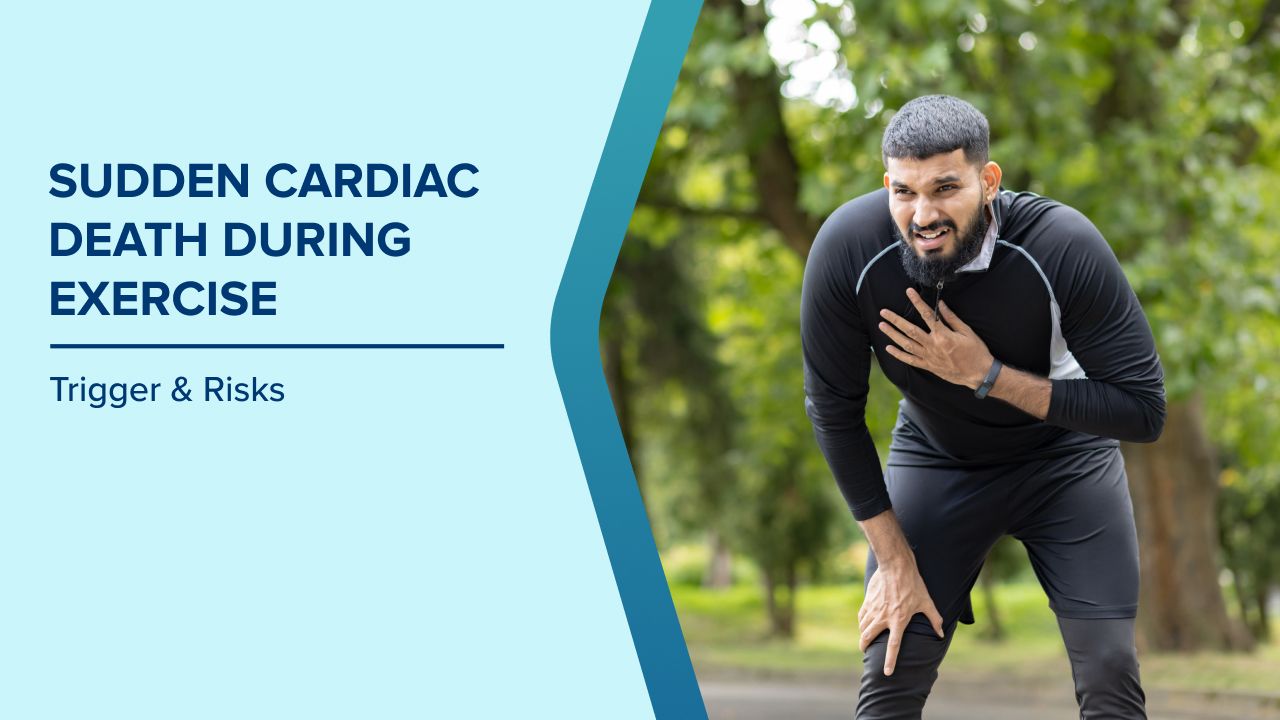
Call Us+91 926 888 0303Sudden Cardiac Death During Exercise: Trigger & Risks
By Dr. Balbir Singh in Cardiac Sciences , Cardiology , Interventional Cardiology , Cardiac Electrophysiology-Pacemaker
Sep 18 , 2026

Sudden cardiac events during exercise can be concerning, especially when someone suddenly collapses during a workout or sporting activity. However, these events can occur in certain individuals, and regular, moderate exercise remains an important part of maintaining cardiovascular health.
Sudden cardiac death is one of the leading causes of death worldwide. It is not limited to people with known heart disease and can also occur in the general population.
What Is Sudden Death?
Sudden death is generally defined as a death occurring within one hour of the onset of symptoms. A person may be completely fine and then suddenly develop uneasiness or another symptom and die within minutes. That is what we mean by sudden death.
In people with heart disease, the two major mechanisms are a heart attack and a malignant arrhythmia.
A heart attack, or myocardial infarction, occurs when an artery becomes blocked, cutting off blood supply to part of the heart. The other mechanism is a dangerous abnormal heart rhythm, or malignant arrhythmia, in which the heart's electrical activity becomes unstable, and the person can suddenly collapse and die.
Can Intense Exercise Trigger Sudden Cardiac Events?
Very strenuous or excessive exercise can trigger these events in certain individuals. However, this does not mean that exercise or going to the gym is harmful.
Similar events have also been reported among football players and other athletes during competitive activities. In some cases, people have survived because immediate CPR and defibrillation were available.
The important message is to exercise sensibly and understand individual cardiovascular risk, particularly before undertaking strenuous physical activity.
Should You Have a Health Check Before Starting Intense Exercise?
Screening can be particularly useful for people who are planning to start strenuous exercise.
A basic medical assessment, including an ECG and appropriate blood tests, can help identify certain risk factors. If abnormalities are detected, the person should consult a cardiologist before undertaking intense exercise.
This principle applies not only to gym workouts, but also to running, cycling, competitive sports and other forms of strenuous activity.
The important thing is to understand the risk rather than become afraid of exercise.
What Increases the Risk of Cardiovascular Problems?
The next step is to assess an individual's cardiovascular risk profile. Important risk factors include:
- Smoking
- Binge drinking
- High cholesterol
- Diabetes
- High blood pressure
These factors should be identified and managed, particularly before someone begins strenuous physical activity. Prevention is largely about understanding and controlling these risk factors.
Does COVID Have a Role in Sudden Deaths?
There is also a lot of discussion about whether COVID has contributed to an increase in sudden deaths.
At present, we cannot confidently say that COVID is responsible for such an increase. Sudden deaths certainly occurred before the pandemic as well.
How Much Exercise Is Too Much for the Heart?
Another important question is how much exercise is too much for the heart. Being athletic does not make a person immune to heart disease. Athletes have suffered heart attacks later in life, while others have collapsed during football, cricket and other competitive sports.
Physical fitness is extremely beneficial, but it is not a guarantee against heart disease. For the general public, particularly those who are not involved in aggressive or competitive sports, moderate and regular exercise is excellent. Brisk walking, using a treadmill, cardio, aerobics, stretching, yoga and some lightweight strength training are all good options.
The important thing is not to overexert yourself, particularly as you get older or if you have underlying risk factors.
Why Are Stress and Mental Health Important for Heart Health?
Exercise is only one part of maintaining cardiovascular health. Stress is another important contributor to cardiovascular disease and can play a role in heart attacks and other cardiac events. Depression is also associated with poorer outcomes after a heart attack.
Managing stress, mental health and other cardiovascular risk factors is therefore equally important.
What Should Young People Focus on When Exercising?
For a young person looking to exercise for good health, the goal should be overall fitness rather than excessive muscle building.
Yoga, stretching, cardio, aerobics and brisk walking are all excellent forms of exercise. There is no need to push the body to extremes simply to become very muscular or to take unnecessary supplements.
The focus should be on maintaining a healthy body weight, body-fat percentage and waist-to-hip ratio.
How Can Gyms Prepare for a Cardiac Emergency?
Gyms themselves also have an important role to play in preventing deaths. Every gym trainer should be trained in CPR, and gyms should have an automated external defibrillator, or AED, readily available. In a cardiac arrest, immediate CPR and defibrillation can make the difference between life and death.
Cases of sudden cardiac arrest during exercise highlight the importance of having effective CPR and a defibrillator available immediately. Timely intervention can improve the possibility of survival.
This highlights an important lesson for gyms and gym trainers: having trained staff and appropriate emergency equipment can save lives. Even if that equipment saves just one person over several years, it is absolutely worth having.
Conclusion
Intense exercise can, in certain individuals, trigger a cardiac event, particularly when underlying cardiovascular risk factors are present. However, this should not discourage people from being physically active.
For most people, moderate and regular exercise is an important part of a healthy lifestyle. Understanding individual risk, managing cardiovascular risk factors and taking appropriate precautions before strenuous activity can help people exercise more safely.
The goal is not to fear exercise, but to understand your cardiovascular health and choose an appropriate level of physical activity.
Written and Verified by:

Related Blogs

Dr. Ritwick Raj Bhuyan In Cardiac Sciences , Cardiac Surgery (CTVS)
Nov 08 , 2020 | 2 min read

Dr. Gaurav Minocha In Cardiac Sciences
Nov 08 , 2020 | 4 min read
Blogs by Doctor


Most read Blogs


Related Blogs
Dr. Ritwick Raj Bhuyan In Cardiac Sciences , Cardiac Surgery (CTVS)
Nov 08 , 2020 | 2 min read
Dr. Gaurav Minocha In Cardiac Sciences
Nov 08 , 2020 | 4 min read
Blogs by Doctor
Most read Blogs