 WhatsApp Us (24/7)
 +91 926 888 0303 (24/7)


To Book an Appointment
Call Us+91 926 888 0303Constipation in Children: Symptoms & When to Consult
By Dr. Nidhi Rawal in Paediatric (Ped) Gastroenterology
Sep 17 , 2026
1

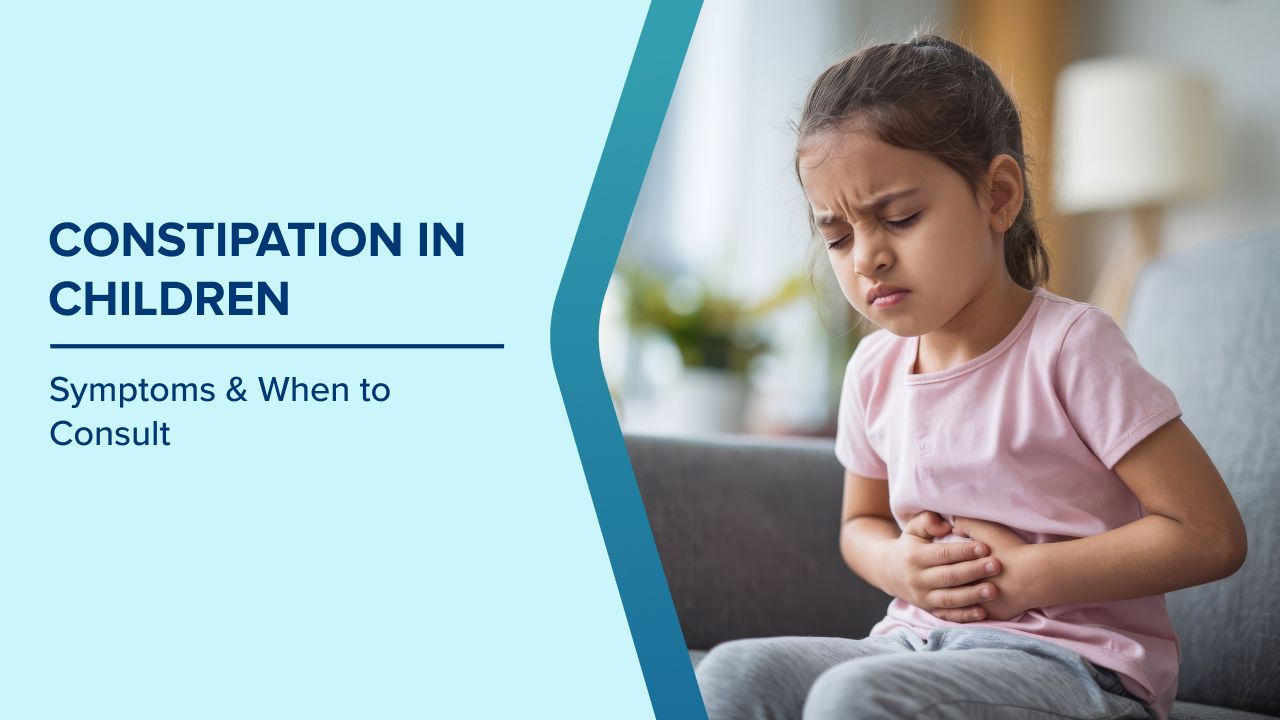
When children complain of tummy pain, feel bloated, or suddenly lose interest in food, parents may assume it is indigestion or a temporary stomach problem. But sometimes, the reason may be much simpler: constipation.
Constipation is common in children and does not always mean that a child has stopped passing stools completely. Hard or painful stools, stool withholding, bloating and even reduced appetite can all be signs that stool is building up in the bowel.
What does constipation look like in children?
Every child's bowel pattern is different, so the number of bowel movements alone does not determine whether a child is constipated. More important signs include:
- Hard, dry or pellet-like stools
- Pain or excessive straining while passing stool
- Feeling that the bowel has not completely emptied
- Going several days without a bowel movement
- Holding the stool in or avoiding the toilet
- Abdominal discomfort or bloating
- Reduced appetite
- Staining or soiling of underwear
Some children may even have loose-looking stool or leakage around a large amount of retained stool. This can be mistaken for diarrhoea when it is actually a consequence of constipation.
Why do children become constipated?
One of the most common reasons is stool withholding. A child may avoid passing stool because a previous bowel movement was painful. Toilet training, school bathrooms, being busy while playing or feeling embarrassed about using the toilet can also lead children to hold their stool.
As stool remains in the colon for longer, more water is absorbed from it. The stool becomes harder and more difficult to pass, which can create a cycle: painful stool → withholding → harder stool → more pain.
Other contributing factors can include inadequate fibre intake, insufficient fluid intake, dietary changes and, less commonly, certain medical conditions or medicines.
How can constipation affect appetite?
When stool accumulates in the bowel, some children develop abdominal fullness, discomfort or bloating. This may make them feel full sooner and reduce their interest in meals.
If your child is eating considerably less than usual along with hard stools, abdominal symptoms or infrequent bowel movements, constipation should be considered as one possible cause.
What can parents do?
For children with mild constipation, healthy bowel habits can help:
- Offer fibre-rich foods such as fruits, vegetables, whole grains and pulses.
- Encourage adequate fluid intake.
- Encourage regular toilet time, particularly after meals, if the child is toilet-trained.
- Provide a footstool so the child's feet are supported while sitting on the toilet.
- Avoid scolding or pressuring the child about bowel movements.
Fibre should generally be increased gradually, along with adequate fluids. If constipation persists, medication may sometimes be needed, but parents should discuss the appropriate treatment and dose with their child's doctor rather than starting laxatives on their own.
When should you consult a doctor?
Seek medical advice if constipation continues for more than two weeks, keeps returning or does not improve with basic measures. Blood in the stool, persistent abdominal pain, vomiting, significant bloating or weight loss warrant prompt medical evaluation.
A paediatrician or paediatric gastroenterologist can assess the child's symptoms, diet, bowel habits and growth and determine whether constipation is the likely cause or whether another condition needs to be considered.
The takeaway
Hard stools are only one sign of constipation. Bloating, tummy discomfort, stool withholding, soiling and poor appetite may also indicate that your child's bowel movements are not as regular or comfortable as they should be.
Recognising the problem early can help break the cycle of painful stools and withholding and restore healthy bowel habits.
Written and Verified by:

Related Blogs

Dr. Pankaj Vohra In Paediatric (Ped) Gastroenterology
Aug 21 , 2014 | 2 min read

Blogs by Doctor

What Can A Parent Do If A Child Is Reporting Stomach Ache?
Dr. Nidhi Rawal In Paediatrics (Ped)
Nov 13 , 2020 | 2 min read

Most read Blogs


Related Blogs
Dr. Pankaj Vohra In Paediatric (Ped) Gastroenterology
Aug 21 , 2014 | 2 min read
Blogs by Doctor
What Can A Parent Do If A Child Is Reporting Stomach Ache?
Dr. Nidhi Rawal In Paediatrics (Ped)
Nov 13 , 2020 | 2 min read
Most read Blogs