 WhatsApp Us (24/7)
 +91 926 888 0303 (24/7)


To Book an Appointment
Call Us+91 926 888 0303Dopamine Overload: Signs and Effects of Scrolling
By Dr. Rajneesh Kummar in Neurosciences , Neurology
Sep 21 , 2026
1

"Dopamine overload" is a popular term used to describe the mental effects of constantly consuming stimulating digital content, but it is not a medical diagnosis. Scrolling does not simply cause dopamine to build up or "flood" the brain. However, frequent exposure to novel content, notifications, and rewarding online experiences can reinforce repeated checking and make it harder for some people to stay with one task. At the same time, constant task-switching can make sustained concentration feel more difficult. The good news is that attention is not fixed. Reducing interruptions, creating focused periods, improving sleep and practising single-tasking can gradually support better cognitive stamina, or the ability to stay mentally engaged for longer.
What is Dopamine and Why Does It Matter?
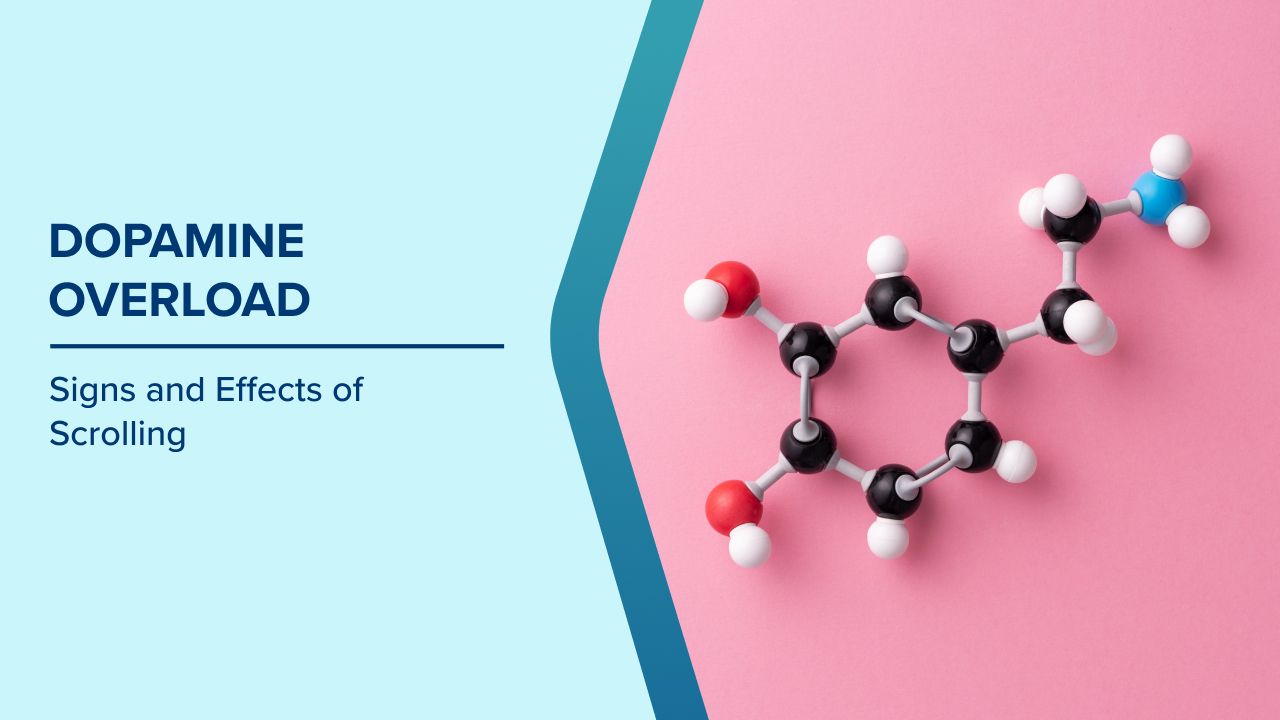
Dopamine is a neurotransmitter, a chemical messenger that helps nerve cells communicate. It is involved in several important functions, including motivation, learning, movement, attention and reward-related behaviour.
Dopamine is often described as the brain's "pleasure chemical", but that explanation is too simple. It also helps the brain notice what is important, learn from experiences and influence which behaviours are repeated.
For example, when something feels rewarding, interesting or unexpected, dopamine-related signalling can contribute to learning that the experience is worth paying attention to. This does not mean dopamine is bad. It is essential for normal brain function.
The issue with digital habits is less about dopamine being harmful and more about how repeated cues, novelty and rewards can reinforce certain behaviours, such as checking a phone whenever there is a moment of boredom.
What Does "Dopamine Overload" Actually Mean?
"Dopamine overload" is mainly a popular internet term, not a recognised medical condition. People often use it to describe feeling mentally overstimulated after spending long periods moving between social media, short videos, messages, games and other highly engaging content. The phrase can make it sound as though dopamine has accumulated in the brain because someone has been scrolling too much. That is not an accurate way to understand how dopamine works.
A more useful explanation is behavioural reinforcement. A phone can provide a continuous stream of new information, social feedback and unpredictable rewards. Checking it repeatedly can therefore become a learned habit.
So, rather than asking whether the brain has "too much dopamine", it is more helpful to ask whether a person's digital environment is encouraging constant checking, distraction and rapid changes in attention.
How Does Constant Scrolling Affect Attention Span?
Endless scrolling offers something that many everyday activities do not: constant novelty. One video is followed by another. A new post appears, then a message, then another recommendation. Each piece of content may be interesting for only a few seconds before attention moves elsewhere.
Regularly engaging with this type of rapid content does not mean that the brain's attention span has been permanently damaged. However, it may make rapid attention switching feel more habitual.
As a result, slower activities can sometimes feel harder to settle into. Reading a chapter, studying for an examination, writing a report, listening to a long presentation or completing repetitive office work may seem less immediately engaging than scrolling through a feed.
This is one reason someone may wonder, "Why can't I concentrate after scrolling?" The issue may not be that the brain has lost its ability to focus. Instead, attention may have become accustomed to frequent changes in stimulation and interruptions.
How Does Multitasking Affect Concentration?
What feels like multitasking is often rapid task-switching. For example, a student may be watching an online lecture while replying to WhatsApp messages. An office worker may switch between an email, a spreadsheet, social media and several browser tabs. Someone watching television may simultaneously scroll through Instagram.
When two activities both require attention, switching between them means repeatedly disengaging from one task and directing attention towards another. This can result in:
- More interruptions
- Greater mental effort
- Difficulty maintaining a deep level of focus
- More time spent getting back into the original task
- A greater chance of losing track of what was being done
Multitasking does not necessarily cause permanent brain damage. However, repeatedly dividing attention can make demanding work feel more tiring and fragmented.
Why is It So Hard to Focus After Constant Digital Stimulation?
Several everyday factors can contribute to this experience.
- Constant interruptions: Notifications, calls and message alerts provide repeated cues to look away from the current task.
- Habitual checking: If checking the phone has become associated with boredom, uncertainty or waiting, the behaviour can become almost automatic.
- Novelty seeking: Rapidly changing content provides something new to process every few seconds. A task with little immediate variation may therefore feel comparatively dull.
- Reduced comfort with boredom: When every quiet moment can be filled with entertainment, sitting without stimulation may become less comfortable.
- Mental fatigue: Continually deciding what to look at next and switching between activities can make a person feel mentally tired.
However, digital habits are only one possible explanation for poor concentration. Sleep deprivation, stress, anxiety, depression, heavy workloads, poor routines and certain health conditions can also affect attention.
Signs That Your Digital Habits May Be Affecting Your Focus
Digital habits may be worth examining if you notice patterns such as:
- Checking your phone without consciously deciding to
- Opening social media automatically
- Interrupting work to check messages
- Struggling to read without looking at your phone
- Frequently switching between apps while working
- Losing your place while reading
- Feeling restless during quiet activities
- Finding long or repetitive tasks unusually difficult
- Reaching for digital entertainment whenever you feel bored
- Checking your phone even when there are no new notifications
These behaviours do not automatically mean someone has phone addiction or another disorder. They may simply indicate that digital checking has become a strong habit.
Does Social Media Cause a Shorter Attention Span?
Social media can encourage rapid consumption of information, particularly when a person spends a lot of time moving through short-form videos, posts and notifications.
However, it would be too strong to say that social media automatically causes a shorter attention span in everyone. People's experiences differ, and the effect can depend on how often, how long and how intentionally social media is used.
Someone who occasionally watches videos during a break is in a different situation from someone who checks social media every few minutes throughout the working or studying day.
The more useful question is whether social media use is interfering with the ability to complete important tasks, maintain conversations, read for longer periods or remain focused without repeatedly seeking another source of stimulation.
What is Cognitive Stamina?
Cognitive stamina refers to the ability to stay mentally engaged with a task even when it becomes demanding, repetitive or less immediately rewarding. It includes being able to:
- Maintain attention
- Resist unnecessary distractions
- Continue working through mental effort
- Tolerate periods of low stimulation
- Return to a task after an interruption
Cognitive stamina is particularly important for students preparing for examinations, professionals handling demanding work and anyone who needs to concentrate for extended periods.
Like other habits, sustained attention can be supported through regular practice and a better environment for focusing.
Simple Ways to Rebuild Your Attention Span and Cognitive Stamina
The goal is not to eliminate dopamine or stop using technology. Instead, focus on making distractions less automatic.
- Start With Short Focus Sessions: Do not expect to concentrate for several hours without interruption if you are currently used to checking your phone every few minutes. Start with a manageable period of focused work. Gradually increase the duration as remaining with one task becomes easier.
- Turn Off Non-Essential Notifications: Not every message needs to demand immediate attention. Disable unnecessary alerts and keep only important notifications active when possible. Fewer interruptions mean fewer cues telling you to stop what you are doing.
- Keep the Phone Away During Focused Work: An easy way to reduce checking is to make the phone less accessible. Keep it in a bag, drawer or another part of the room during study or focused work when practical. The objective is to remove the need to repeatedly resist the temptation to check it.
- Stop Multitasking: Choose one demanding task and give it your attention. If an email needs to be answered, finish the email before moving to another task where possible. Grouping less demanding activities together can also reduce unnecessary switching.
- Create Phone-Free Periods: Choose specific parts of the day when unnecessary scrolling is avoided. This could be during meals, the first part of the morning, study sessions or time spent with family. The exact timing matters less than creating consistent periods without automatic checking.
- Make Boredom Less Uncomfortable: Not every empty moment needs to be filled with a screen. Allow yourself to sit quietly, wait without scrolling or take a short walk without entertainment. Over time, becoming more comfortable with low-stimulation moments can make it easier to stay with activities that do not provide constant novelty.
- Read Longer-Form Content: Books, detailed articles and other longer-form material require attention to remain with one subject. Start with a manageable amount rather than forcing yourself to read for a long period. The goal is to practise staying with one piece of content without repeatedly switching away.
- Take Real Breaks: A break should allow the mind to step away from demanding work. Replacing a difficult task with another stream of rapid digital content may not provide the same mental separation as stretching, walking, drinking water, talking to someone or simply sitting quietly.
- Protect Sleep: Poor sleep can make concentration, memory and mental performance more difficult. A consistent sleep routine and sufficient sleep are therefore important parts of improving focus. Reducing stimulating phone use close to bedtime may also make it easier for some people to maintain a healthier nighttime routine.
- Move Regularly: Regular physical activity supports overall physical and mental wellbeing and can be incorporated into a routine that supports concentration. A short walk between work sessions can be a simple alternative to automatically opening a social media app during every break.
What is a Dopamine Detox? Does It Really Work?
A dopamine detox usually refers to taking a deliberate break from activities that a person finds excessively stimulating, such as social media, gaming or constant phone checking.
The name is misleading if it suggests that a person can literally remove dopamine from the brain or reset their dopamine system in a fixed period.
Dopamine is necessary for normal functioning, so eliminating it is neither possible nor desirable. There is also no need to avoid all enjoyable experiences.
A more practical approach is to identify unwanted digital habits and change the behaviours that maintain them. For example, reducing unnecessary notifications, creating phone-free periods and replacing automatic scrolling with another activity can help create a healthier relationship with technology.
How Long Does It Take to Improve Attention Span?
There is no universal number of days in which attention automatically returns to normal. Improvement can depend on how often a person uses digital media, existing habits, sleep, stress levels, workload, environment and how consistently they make changes.
Some people may notice that focusing feels easier once interruptions are reduced, while others may need more time to establish a different routine.
Rather than looking for a quick "dopamine reset", it is more useful to focus on consistent changes that can be maintained over time.
When Difficulty Concentrating May Need Medical Attention
Persistent difficulty concentrating should not automatically be blamed on scrolling or dopamine. Problems with attention can occur alongside sleep disorders, prolonged stress, anxiety, depression, attention-related conditions and certain medical problems. They may also be influenced by major changes in workload, lifestyle or emotional wellbeing.
Consider speaking to a healthcare professional if concentration problems persist, become worse or significantly interfere with work, studies, relationships or everyday activities.
A proper evaluation can help identify whether digital habits are contributing or whether another factor needs attention.
A Simple Daily Routine to Reduce Digital Distraction
A realistic routine does not require giving up your smartphone.
- Morning: Avoid opening social media immediately after waking. Give yourself time to begin the day without an instant stream of notifications and content.
- Work or study: Set aside uninterrupted focus periods. Keep unnecessary notifications switched off and place the phone out of immediate reach.
- Breaks: Instead of automatically scrolling, try walking, stretching, drinking water or talking to someone.
- Evening: Create a lower-stimulation period when practical. Use this time for conversation, reading or other activities that do not require constant digital engagement.
- Night: Keep the phone away from the bed when possible and prioritise a consistent sleep routine.
The purpose is not perfection. It is to make focused attention and intentional phone use more routine.
Conclusion
"Dopamine overload" is not a medical diagnosis, and the goal is not to eliminate dopamine. The more useful concern is whether constant digital stimulation, repeated checking and task-switching are making it harder to sustain attention.
Scrolling does not permanently damage the brain or automatically shorten everyone's attention span. However, frequent interruptions and highly stimulating digital habits may contribute to a pattern in which slower, demanding activities feel harder to maintain.
Reducing unnecessary notifications, practising single-tasking, creating phone-free periods, taking genuine breaks, protecting sleep and gradually increasing focused work can help rebuild attention and cognitive stamina. If concentration difficulties persist despite changes in routine, it is worth considering other possible causes with a healthcare professional.
Frequently Asked Questions
Is dopamine overload a real medical condition?
No, "dopamine overload" is a popular term used to describe perceived overstimulation from rewarding or highly engaging activities. It is not a formal medical diagnosis.
Does scrolling actually release dopamine?
Rewarding or novel experiences can influence dopamine-related signalling in the brain. However, this does not mean that every scroll causes a large dopamine release or that dopamine accumulates because someone uses a phone frequently.
Can social media permanently reduce attention span?
There is no basis for describing ordinary social media use as permanently damaging attention. However, frequent interruptions and rapid content switching may make sustained focus more difficult for some people.
Does short-form video affect concentration?
Short-form video provides rapid changes in information and can encourage quick shifts of attention. Spending large amounts of time consuming this type of content may make slower activities feel less immediately engaging, although individual experiences vary.
Why do I keep checking my phone even when I do not need to?
Repeated checking can become a learned habit triggered by boredom, notifications, waiting or simply seeing the phone nearby. Changing the environment, such as keeping the phone out of reach and disabling unnecessary alerts, can reduce these cues.
Is a dopamine detox necessary to improve focus?
No, you do not need to eliminate dopamine or stop all pleasurable activities. Changing specific digital habits that interfere with concentration is a more practical approach.
How can I stop checking my phone while working?
Reduce the triggers first. Turn off unnecessary notifications, put the phone out of immediate reach, and decide in advance when you will check messages rather than responding to every alert.
Can poor sleep make phone-related concentration problems worse?
Yes, insufficient or poor-quality sleep can independently affect attention, memory and mental performance. This means concentration difficulties may not be caused by digital habits alone.
How can I improve concentration without completely giving up social media?
Set boundaries around when and where you use it. For example, keep social media away from focused work, meals or bedtime and use designated periods for checking it.
When should difficulty concentrating be evaluated by a doctor?
Consider seeking medical advice when concentration problems are persistent, worsening or interfering substantially with work, education, relationships or daily life, particularly when improving sleep and reducing distractions does not help.
Written and Verified by:

Related Blogs

Dr. Chandril Chugh In Neurosciences , Interventional Neurology
Nov 08 , 2020 | 1 min read

Dr. Chandril Chugh In Neurosciences , Interventional Neurology
Nov 08 , 2020 | 2 min read
Blogs by Doctor

What is Stroke: Types, Symptoms & Risk Factors
Dr. Rajneesh Kummar In Neurosciences , Neurology
Nov 21 , 2024 | 6 min read

What is Headaches: Causes, Preventions & How to Find Relief
Dr. Rajneesh Kummar In Neurosciences , Neurology
Jan 10 , 2025 | 4 min read
Most read Blogs


Related Blogs
Dr. Chandril Chugh In Neurosciences , Interventional Neurology
Nov 08 , 2020 | 1 min read
Dr. Chandril Chugh In Neurosciences , Interventional Neurology
Nov 08 , 2020 | 2 min read
Blogs by Doctor
What is Stroke: Types, Symptoms & Risk Factors
Dr. Rajneesh Kummar In Neurosciences , Neurology
Nov 21 , 2024 | 6 min read
What is Headaches: Causes, Preventions & How to Find Relief
Dr. Rajneesh Kummar In Neurosciences , Neurology
Jan 10 , 2025 | 4 min read
Most read Blogs