 WhatsApp Us (24/7)
 +91 926 888 0303 (24/7)


To Book an Appointment
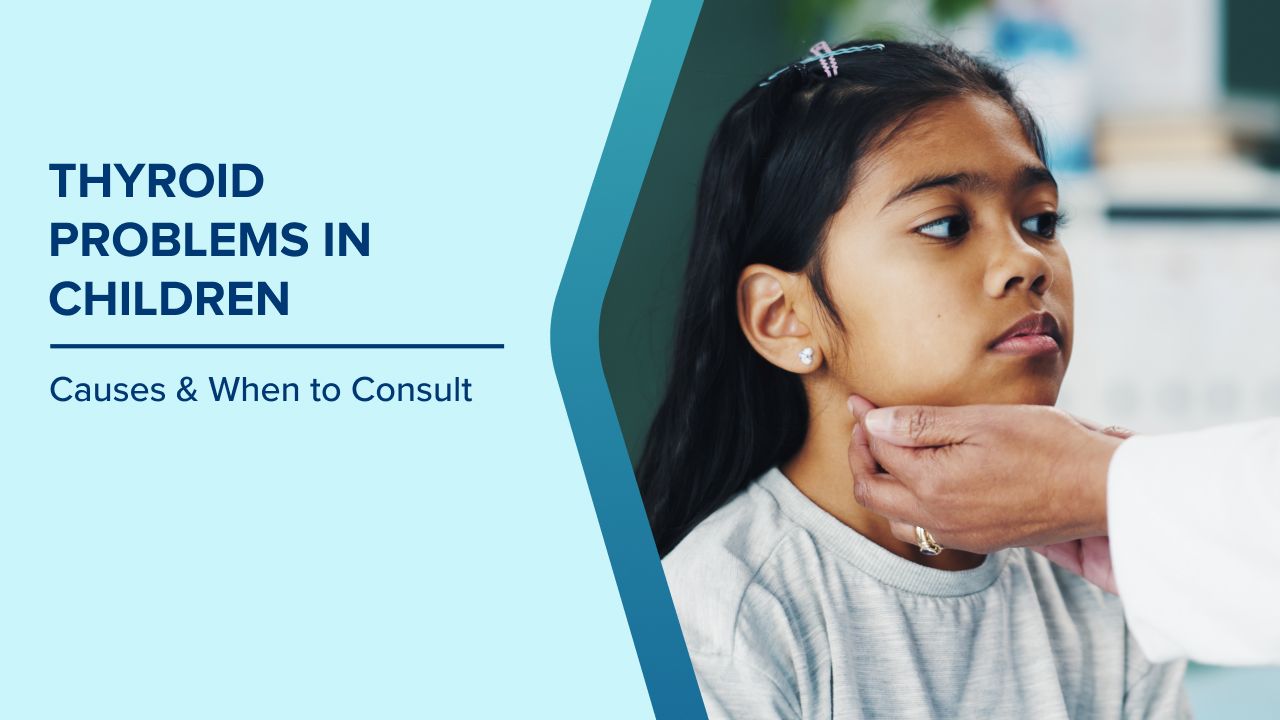
Call Us+91 926 888 0303Thyroid Problems in Children: Causes & When to Consult
By Dr. Ganesh Jevalikar in Endocrinology & Diabetes , Paediatric (Ped) Endocrinology
Sep 17 , 2026

Children grow at different rates, but growth is an important indicator of overall health. If a child is consistently shorter than expected for their age or appears to be growing more slowly than before, parents may wonder whether nutrition, genetics, or an underlying medical condition could be responsible.
One possible cause is a thyroid disorder. Thyroid hormones play an important role in growth, brain development, metabolism, and the normal functioning of many organs. When thyroid hormone levels are too low or, less commonly, too high, a child's growth and development may be affected.
How Does the Thyroid Affect a Child's Growth?
The thyroid gland produces hormones that influence the body's metabolism and support normal growth and development.
During childhood, thyroid hormones work alongside growth hormone and other hormones to support the development of bones and tissues.
When the thyroid does not produce enough hormones, a condition called hypothyroidism, many body processes slow down. In children, one of the important effects can be a reduction in the normal rate of height gain.
Can Hypothyroidism Cause Poor Growth?
Yes. Poor linear growth or slowing of height gain can be a sign of hypothyroidism in children.
Unlike adults, where fatigue and weight gain may be prominent symptoms, children with hypothyroidism may first come to medical attention because they are growing more slowly than expected.
Other possible symptoms include:
- Tiredness or low energy
- Increased sensitivity to cold
- Constipation
- Dry skin
- Slow heart rate
- Difficulty concentrating
- Weight gain
- Delayed puberty
- Changes in school performance
- Puffy face or swelling around the eyes
However, these symptoms are not specific to thyroid disease. A child with poor growth needs a comprehensive evaluation rather than assuming that the thyroid is responsible.
What About Hyperthyroidism?
An overactive thyroid, or hyperthyroidism, can also affect growth and development.
Children may experience:
- Increased appetite
- Weight loss or difficulty gaining weight
- Fast heartbeat
- Excessive sweating
- Heat intolerance
- Tremors
- Restlessness or anxiety
- Difficulty sleeping
- Frequent bowel movements
Some children with hyperthyroidism may initially grow rapidly, but prolonged untreated disease can negatively affect overall health, bone development, and puberty.
Why Is Height Growth More Important Than a Single Measurement?
A single height measurement does not always tell the full story.
Doctors are more interested in the growth pattern over time. A child who consistently follows their expected growth curve may simply be shorter because of family genetics. On the other hand, a child who previously grew normally but suddenly begins crossing downward on the growth chart may need further evaluation.
That's why regular measurement of height, weight, and growth velocity during pediatric visits is important.
How Do Doctors Check for a Thyroid Problem?
If a thyroid disorder is suspected, the doctor may begin with a detailed medical history and physical examination.
The evaluation may include:
Growth assessment:
Height and weight are plotted on age- and sex-appropriate growth charts to assess the child's growth pattern.
Blood tests:
Thyroid function is commonly assessed using tests such as TSH (thyroid-stimulating hormone) and free T4. Additional tests may be recommended depending on the suspected cause.
Thyroid antibodies:
When an autoimmune thyroid disorder such as Hashimoto's thyroiditis is suspected, specific antibody tests may be performed.
Other investigations:
Depending on the child's growth pattern, doctors may evaluate nutrition, bone age, growth hormone function, chronic illnesses, or other hormonal conditions.
Is Every Short Child Suffering From a Thyroid Problem?
No.
Short stature can have many causes, including:
- Family or genetic short stature
- Constitutional delay in growth
- Inadequate nutrition
- Chronic medical conditions
- Growth hormone deficiency
- Certain genetic conditions
- Gastrointestinal disorders
- Other hormonal problems
Some children are simply shorter than their peers but are otherwise healthy and growing at an appropriate rate.
The key concern is often a significant change in growth velocity or a persistent deviation from the child's expected growth pattern.
Can Thyroid-Related Growth Problems Be Treated?
In many cases, yes.
Children with hypothyroidism are commonly treated with thyroid hormone replacement, with the dose adjusted according to age, weight, blood-test results, and clinical response.
Early diagnosis and appropriate treatment are particularly important in children because thyroid hormones are essential not only for physical growth but also for brain development and normal maturation.
Once the underlying thyroid problem is appropriately managed, growth may improve. However, the extent of catch-up growth depends on factors such as the child's age, how long the thyroid disorder was present, and how severe it was.
When Should Parents Consult a Doctor?
Consider discussing your child's growth with a paediatrician if:
- Your child appears significantly shorter than children of the same age.
- Their height growth has slowed noticeably.
- They are dropping across growth-chart percentiles.
- Growth is accompanied by fatigue, constipation, cold intolerance, or unexplained weight changes.
- There are concerns about delayed puberty or overall development.
- There is a family history of thyroid or other endocrine disorders.
The Bottom Line
Thyroid problems can affect a child's growth, particularly when hypothyroidism is present. However, thyroid disease is only one of many possible reasons for poor or slow growth.
Monitoring growth over time and seeking medical evaluation when a child's growth pattern changes can help identify underlying problems early. If a thyroid disorder is diagnosed, appropriate treatment can help support normal growth and development.
If you are concerned that your child is not growing as expected, consult a paediatrician or paediatric endocrinologist rather than relying on comparisons with other children. Early assessment can help determine whether the difference is simply part of normal growth variation or a sign that further evaluation is needed.
Written and Verified by:

Related Blogs

Dr. Vaishakhi Rustagi In Endocrinology & Diabetes , Paediatric (Ped) Endocrinology , Nutrition And Dietetics
Nov 08 , 2020 | 1 min read

Dr. Vaishakhi Rustagi In Endocrinology & Diabetes , Paediatric (Ped) Endocrinology
Nov 08 , 2020 | 2 min read
Blogs by Doctor

Rising obesity leads to a surge in type-2 diabetes in children
Dr. Ganesh Jevalikar In Paediatric (Ped) Endocrinology
Nov 14 , 2022 | 4 min read
Most read Blogs


Related Blogs
Dr. Vaishakhi Rustagi In Endocrinology & Diabetes , Paediatric (Ped) Endocrinology , Nutrition And Dietetics
Nov 08 , 2020 | 1 min read
Dr. Vaishakhi Rustagi In Endocrinology & Diabetes , Paediatric (Ped) Endocrinology
Nov 08 , 2020 | 2 min read
Blogs by Doctor
Rising obesity leads to a surge in type-2 diabetes in children
Dr. Ganesh Jevalikar In Paediatric (Ped) Endocrinology
Nov 14 , 2022 | 4 min read
Most read Blogs