 WhatsApp Us (24/7)
 +91 926 888 0303 (24/7)


To Book an Appointment
Call Us+91 926 888 0303IHC Test in Cancer: Uses, Important & Results
By Dr Saurabh Gupta in Surgical Oncology , Cancer Care / Oncology , Uro-Oncology , Musculoskeletal Surgical Oncology , Musculoskeletal Oncology , Breast Cancer , Thoracic Oncology , Gynecologic Oncology , Head & Neck Oncology , Gastrointestinal & Hepatobiliary Oncology , Oncology Reconstructive Surgery , Thoracic Oncology Surgery , Gastro Intestinal & Hepatopancreatobiliary Surgical Oncology , Robotic Surgery
Sep 29 , 2026

When you are diagnosed with cancer, knowing the type of cancer is only the first step. Your doctor may need more information about the cancer cells to understand how the disease may behave and which treatments may suit you. This is where Immunohistochemistry (IHC) can help.
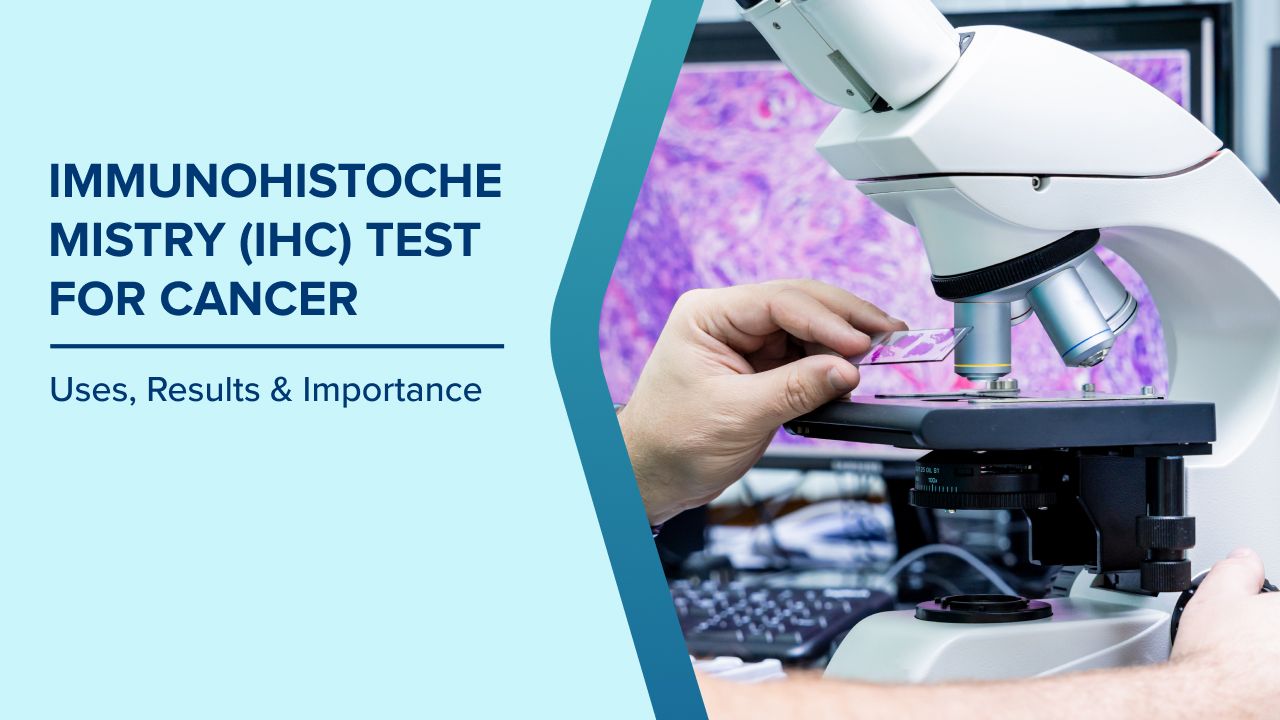
IHC is a specialised laboratory test performed on a tissue sample, usually obtained during a biopsy. It looks for specific proteins, called markers, present in cancer cells. The results can help doctors identify the type or subtype of cancer and, in some cases, determine whether certain treatments may be appropriate.
Why Is IHC Done?
A routine biopsy lets a pathologist examine cells under a microscope. However, sometimes more information is needed to identify exactly what type of cancer is present. Your doctor may recommend IHC to:
- Confirm or clarify a cancer diagnosis.
- Identify the specific subtype of a cancer.
- Find where a cancer that has spread may have started.
- Check for markers that can guide targeted or hormone-based treatment.
- Help assess how quickly some tumour cells are growing.
- Provide additional information that helps your oncology team plan treatment.
The markers tested depend on your cancer type and the clinical question your doctor is trying to answer.
What Does an IHC Test Look For?
IHC does not work like a routine blood test with a single normal or abnormal value. Instead, it identifies whether particular proteins or markers are present in the tissue and how they are expressed. Some commonly tested markers include:
- ER and PR: These hormone receptors are commonly tested in breast cancer. Their presence can help doctors determine whether hormone-based treatment may be useful.
- HER2: HER2 testing is important in cancers such as breast and gastric cancer. When HER2 is overexpressed, doctors may consider certain targeted treatments.
- Ki-67: This marker indicates how actively tumour cells are dividing and may inform treatment planning in certain cancers.
- PD-L1: In some cancers, PD-L1 testing may help determine whether immunotherapy is an option.
- CD markers: Markers such as CD3 and CD20 can help identify different types of blood cancers, including lymphomas.
- Cytokeratins and other markers: These may help doctors determine a cancer's likely origin, particularly when the cancer has spread and the original site is uncertain.
Not every patient needs all these markers. Your doctor and pathologist select the tests based on your diagnosis.
How Is the IHC Test Performed?
Usually, there is no separate procedure for collecting a sample specifically for IHC. The test is generally performed on tissue already obtained during a biopsy or surgery.
The pathology laboratory processes the tissue and prepares it on slides. Special antibodies are then applied to identify specific proteins in the cells. If the protein is present, a staining reaction makes it visible under a microscope.
A pathologist examines the stained tissue and prepares a report for your treating doctor.
What Do IHC Results Mean?
IHC results can be reported in different ways depending on the marker being tested. A result may indicate that a particular marker is positive, negative or, in some cases, borderline/equivocal.
For example, in breast cancer, ER and PR results provide information about hormone receptor status. HER2 may be reported using scores such as 0, 1+, 2+ or 3+. A HER2 result of 2+ may require additional testing to clarify the result.
Importantly, do not interpret an IHC result on its own. Your oncologist considers it alongside your biopsy findings, imaging, stage of cancer, medical history and other test results.
Does a Positive Result Mean I Have More Severe Cancer?
Not necessarily. A positive result means that the particular marker being tested was detected. What it means for your treatment depends entirely on which marker was tested and what type of cancer you have.
For example, a positive hormone receptor result in certain breast cancers may indicate that hormone-based treatment could be considered. Similarly, certain HER2-positive cancers may be suitable for HER2-targeted treatment.
Your doctor will explain what your specific result means.
What If the Result Is Borderline?
Sometimes an IHC result does not provide a clear answer. This does not necessarily mean that something has gone wrong.
For example, a HER2 IHC result of 2+ may be considered equivocal and may require a confirmatory test such as ISH or FISH, depending on the clinical situation and testing guidelines.
Additional testing helps provide greater clarity before treatment decisions are made.
Do You Need to Prepare for an IHC Test?
IHC itself does not usually require fasting or special preparation. Since the test is generally performed on tissue obtained during a biopsy, you should follow the preparation instructions given for your biopsy procedure. Tell your doctor about any medicines you take, particularly blood-thinning medicines, as well as relevant medical history.
Why Is IHC Important in Cancer Care?
Cancer treatment is increasingly becoming more personalised. Two patients with the same broad type of cancer may have different tumour characteristics and may therefore require different treatment approaches.
IHC provides important information about tumour biology. By combining this information with pathology, imaging, and clinical assessment, the oncology team can develop a treatment plan appropriate for the individual patient.
Conclusion
A biopsy tells doctors what the cancer looks like. IHC can provide additional information about what the cancer cells are expressing. Together, these findings help the oncology team better understand the disease and plan next steps.
If your doctor recommends IHC, ask which markers will be tested and how the results may influence your treatment plan. Your oncologist and pathologist can help you understand what your individual report means.
Written and Verified by:

Surgical Oncology, Robotic Surgery, Uro-Oncology, Musculoskeletal Surgical Oncology, Musculoskeletal Oncology, Breast Cancer, Thoracic Oncology, Thoracic Oncology Surgery, Gynecologic Oncology, Head & Neck Oncology, Gastrointestinal & Hepatobiliary Oncology, Oncology Reconstructive Surgery, Gastro Intestinal & Hepatopancreatobiliary Surgical Oncology, Cancer Care / Oncology
Meet the doctorRelated Blogs

Dr. S. VEDA PADMA PRIYA In Surgical Oncology , Cancer Care / Oncology
May 16 , 2016 | 2 min read

Dr. Kanika Batra Modi In Surgical Oncology , Cancer Care / Oncology
May 26 , 2016 | 4 min read
Blogs by Doctor

Why Cancer Staging Matters: Tests & Diagnosis
Dr Saurabh Gupta In Surgical Oncology , Cancer Care / Oncology , Uro-Oncology , Musculoskeletal Surgical Oncology , Musculoskeletal Oncology , Breast Cancer , Thoracic Oncology , Gynecologic Oncology , Head & Neck Oncology , Gastrointestinal & Hepatobiliary Oncology , Oncology Reconstructive Surgery , Thoracic Oncology Surgery , Gastro Intestinal & Hepatopancreatobiliary Surgical Oncology , Robotic Surgery
Aug 10 , 2026
CEA Test: Normal Range, High Levels & Meaning
Dr Saurabh Gupta In Surgical Oncology , Cancer Care / Oncology , Uro-Oncology , Musculoskeletal Surgical Oncology , Musculoskeletal Oncology , Breast Cancer , Thoracic Oncology , Gynecologic Oncology , Head & Neck Oncology , Gastrointestinal & Hepatobiliary Oncology , Oncology Reconstructive Surgery , Thoracic Oncology Surgery , Gastro Intestinal & Hepatopancreatobiliary Surgical Oncology , Robotic Surgery
Sep 28 , 2026
Most read Blogs


Related Blogs
Dr. S. VEDA PADMA PRIYA In Surgical Oncology , Cancer Care / Oncology
May 16 , 2016 | 2 min read
Dr. Kanika Batra Modi In Surgical Oncology , Cancer Care / Oncology
May 26 , 2016 | 4 min read
Blogs by Doctor
Why Cancer Staging Matters: Tests & Diagnosis
Dr Saurabh Gupta In Surgical Oncology , Cancer Care / Oncology , Uro-Oncology , Musculoskeletal Surgical Oncology , Musculoskeletal Oncology , Breast Cancer , Thoracic Oncology , Gynecologic Oncology , Head & Neck Oncology , Gastrointestinal & Hepatobiliary Oncology , Oncology Reconstructive Surgery , Thoracic Oncology Surgery , Gastro Intestinal & Hepatopancreatobiliary Surgical Oncology , Robotic Surgery
Aug 10 , 2026
CEA Test: Normal Range, High Levels & Meaning
Dr Saurabh Gupta In Surgical Oncology , Cancer Care / Oncology , Uro-Oncology , Musculoskeletal Surgical Oncology , Musculoskeletal Oncology , Breast Cancer , Thoracic Oncology , Gynecologic Oncology , Head & Neck Oncology , Gastrointestinal & Hepatobiliary Oncology , Oncology Reconstructive Surgery , Thoracic Oncology Surgery , Gastro Intestinal & Hepatopancreatobiliary Surgical Oncology , Robotic Surgery
Sep 28 , 2026
Most read Blogs