 WhatsApp Us (24/7)
 +91 926 888 0303 (24/7)


To Book an Appointment
Call Us+91 926 888 0303Living Donor Liver Transplant: Potential Risks & Safety
By Dr. Mayank Nautiyal in Laparoscopic / Minimal Access Surgery , Bariatric Surgery / Metabolic , Liver Transplant and Biliary Sciences , Gastrointestinal & Hepatobiliary Oncology , Gastrointestinal Surgery , Gastro Intestinal & Hepatopancreatobiliary Surgical Oncology , Robotic Surgery
Aug 27 , 2026

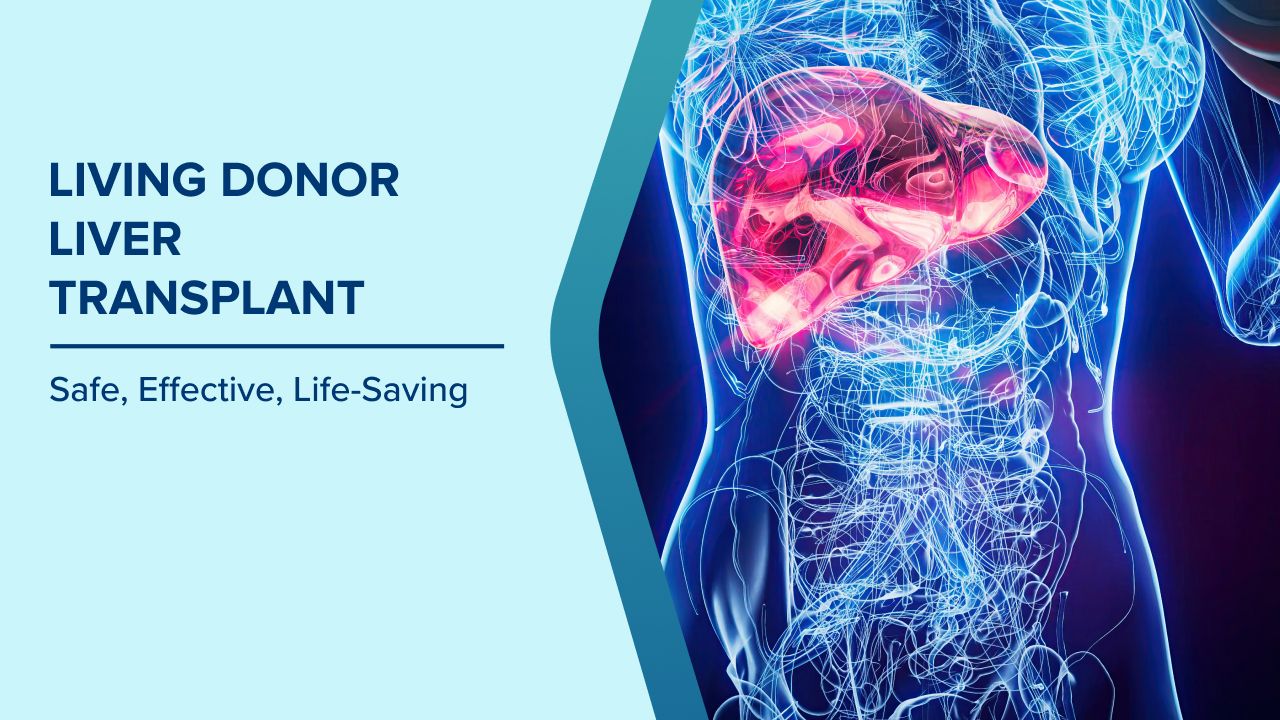
A liver transplant can be performed using a portion of the liver from a living person. This is possible because the liver has a remarkable ability to grow after part of it is removed. Living donor liver transplantation therefore involves two people undergoing carefully coordinated procedures: the donor, who gives a portion of their liver, and the recipient, whose diseased liver is replaced with the donated portion.
But how does the procedure actually work? More importantly, what happens to the donor after giving away part of their liver, and how is their safety protected?
What Is a Living Donor Liver Transplant?
In a living donor liver transplant, a healthy person donates a carefully selected portion of their liver to someone who needs a transplant. The donated liver segment is then placed in the recipient after the diseased liver has been removed.
Unlike organ donation after death, this approach allows the transplant team to plan the procedure in advance. The donor and recipient are assessed separately, and the operation proceeds only when the transplant team is satisfied that donation is medically appropriate and that the donor is not being exposed to an unacceptable level of risk.
How Does the Donated Liver Support the Recipient?
The liver performs several essential functions, including processing nutrients, producing important proteins and helping remove substances from the blood. A transplanted liver segment can perform these functions in the recipient once adequate blood flow and bile drainage are established.
The amount of liver donated is carefully calculated rather than simply removing a fixed portion. Surgeons consider the recipient's requirements and the donor's remaining liver volume when planning the operation.
This balance is important because the recipient needs enough functioning liver tissue, while the donor must retain sufficient liver volume to support normal body functions after surgery.
How Is a Living Donor Liver Transplant Planned?
Living donor transplantation involves detailed planning before either operation begins.
Mapping the Liver's Anatomy
Imaging is used to create a detailed picture of the donor's liver. The surgical team examines the arrangement of blood vessels and bile ducts because their anatomy varies between individuals.
This information helps surgeons determine whether donation can be performed safely and which portion of the liver would be most appropriate.
Assessing the Recipient's Requirements
The recipient's body size, liver condition and anatomical requirements are considered when determining the appropriate graft. The transplant team must ensure that the donated segment can adequately support the recipient after transplantation.
Coordinating Two Surgical Procedures
The donor and recipient operations are closely coordinated. Once the donor's liver segment has been removed and prepared, it is transferred for implantation into the recipient.
This requires careful timing and close communication between the surgical, anaesthesia and transplant teams.
What Happens to the Donor's Liver?
One of the most distinctive features of living donor liver transplantation is the liver's ability to regenerate.
After a portion is removed, the remaining liver undergoes a process of growth and adaptation. The aim is not to restore the exact original shape, but to allow sufficient liver tissue and function to return over time.
Regeneration begins soon after surgery, although the pace and extent of recovery can vary between individuals.
Importantly, liver regeneration does not mean that donation is risk-free. Removing part of an otherwise healthy organ is major surgery, which is why donor assessment and surgical expertise are so important.
Is Living Liver Donation Safe?
For carefully selected donors undergoing evaluation at an experienced transplant centre, living liver donation can be performed with a strong emphasis on safety. However, it should never be described as risk-free.
The donor does not receive a direct medical benefit from the operation, so the acceptable threshold for risk is particularly strict. Before approval, doctors consider whether the individual's overall health, liver anatomy and other factors make donation appropriate.
If the assessment identifies a significant concern, the person may be advised not to donate.
What Are the Potential Risks for a Liver Donor?
Although most carefully selected donors recover well, complications can occur because liver donation is major abdominal surgery.
Potential problems may include:
- Bleeding requiring treatment
- Infection
- Bile leakage or other bile-related problems
- Blood clots
- Wound-related complications
- Temporary changes in liver function
- Reactions related to anaesthesia
Serious complications are uncommon, but the possibility must be discussed openly before consent is given.
The donor should understand both the short-term surgical risks and the possibility of unexpected events during recovery.
How Is Donor Safety Protected?
Donor protection begins well before surgery and continues after discharge.
Independent Donor Assessment
The donor is evaluated as an individual rather than simply as a potential source of an organ. Medical teams assess whether donation is appropriate for their health and circumstances.
Detailed Anatomical Assessment
Imaging helps identify variations in the liver's blood vessels, bile ducts and overall structure. This allows surgeons to anticipate technical challenges before the operation.
Careful Graft Planning
Surgeons determine how much liver can be safely donated while leaving an adequate liver remnant for the donor.
Voluntary Informed Consent
Donation must be voluntary. The donor should have sufficient opportunity to understand the procedure, potential risks and alternatives without feeling pressured by the recipient or family.
A donor can also withdraw from the process if they no longer wish to proceed.
Can a Donor Live Normally After Donation?
The goal of living donor transplantation is for the donor to return to their usual life after recovery.
The remaining liver adapts after surgery, and donors are followed medically to assess their recovery. Returning to work, exercise and other activities is usually gradual and depends on the individual's progress and the nature of their daily activities.
The recovery experience is different for every donor, so personal medical advice is more useful than following a fixed timeline.
What Should a Potential Donor Consider Before Saying Yes?
Choosing to become a living liver donor is a significant personal decision. Being willing to help someone is important, but it should not be the only consideration.
A potential donor should understand:
- The procedure involves major surgery.
- Donation carries medical risks despite careful screening.
- Recovery requires time and support.
- The decision should be voluntary and free from pressure.
- The donor can discuss concerns confidentially with the transplant team.
- Donation should proceed only when the medical team considers it reasonably safe.
Taking time to ask questions is an essential part of informed decision-making.
The Importance of an Experienced Transplant Team
Living donor liver transplantation requires expertise in donor surgery, recipient transplantation, anaesthesia, critical care and post-operative monitoring. The complexity is increased because the health of two individuals must be protected simultaneously.
For this reason, donor evaluation should be carried out at a transplant centre with appropriate infrastructure and a multidisciplinary team experienced in living donor procedures.
Conclusion
Living donor liver transplantation is possible because the liver can regenerate after a portion is removed. However, the procedure is not simply about transferring part of one liver to another person. It involves detailed anatomical planning, careful donor selection, coordinated surgery and strict attention to donor welfare.
For a potential donor, the most important question is not simply whether donation is possible, but whether it can be done safely in their individual circumstances. A Liver transplant specialist can explain the evaluation process, potential risks and expected recovery so that the decision is informed, voluntary and medically appropriate.
Frequently Asked Questions
1. Does the donor lose the ability to perform normal liver functions?
The remaining liver is expected to continue performing essential functions and undergoes regeneration and adaptation after donation. Donor suitability is assessed carefully to ensure an adequate liver remnant remains.
2. Can someone donate part of their liver if they feel completely healthy?
Feeling healthy alone does not establish suitability. A detailed medical and anatomical assessment is required before someone can be considered for donation.
3. Can a donor change their mind?
Yes. Living donation must be voluntary, and a potential donor should be able to withdraw from the process without pressure.
4. Does liver donation involve removing the entire liver?
No. In living donor transplantation, only a selected portion is removed. The recipient receives this graft, while the donor retains the remaining liver.
5. Is living donor liver transplantation completely risk-free?
No. It is major surgery and carries potential risks. The purpose of extensive donor assessment is to identify and minimise those risks as much as possible.
Written and Verified by:

Dr. Mayank Nautiyal Exp: 18 Yr
Laparoscopic / Minimal Access Surgery, Bariatric Surgery / Metabolic, Liver Transplant and Biliary Sciences, Gastrointestinal & Hepatobiliary Oncology, Gastrointestinal Surgery, Gastro Intestinal & Hepatopancreatobiliary Surgical Oncology, Robotic Surgery
Meet the doctorRelated Blogs


Dr. Pradeep Chowbey In Laparoscopic / Minimal Access Surgery
Nov 16 , 2020 | 1 min read
Blogs by Doctor

Debunk Myths associated with Organ Donation
Dr. Mayank Nautiyal In Liver Transplant and Biliary Sciences
Aug 16 , 2022 | 3 min read
Hepatic Encephalopathy: Symptoms, Trigger & Liver Transplant
Dr. Mayank Nautiyal In Laparoscopic / Minimal Access Surgery , Bariatric Surgery / Metabolic , Liver Transplant and Biliary Sciences , Gastrointestinal & Hepatobiliary Oncology , Gastrointestinal Surgery , Gastro Intestinal & Hepatopancreatobiliary Surgical Oncology , Robotic Surgery
Aug 27 , 2026
Most read Blogs


Related Blogs
Dr. Pradeep Chowbey In Laparoscopic / Minimal Access Surgery
Nov 16 , 2020 | 1 min read
Blogs by Doctor
Debunk Myths associated with Organ Donation
Dr. Mayank Nautiyal In Liver Transplant and Biliary Sciences
Aug 16 , 2022 | 3 min read
Hepatic Encephalopathy: Symptoms, Trigger & Liver Transplant
Dr. Mayank Nautiyal In Laparoscopic / Minimal Access Surgery , Bariatric Surgery / Metabolic , Liver Transplant and Biliary Sciences , Gastrointestinal & Hepatobiliary Oncology , Gastrointestinal Surgery , Gastro Intestinal & Hepatopancreatobiliary Surgical Oncology , Robotic Surgery
Aug 27 , 2026
Most read Blogs