 WhatsApp Us (24/7)
 +91 926 888 0303 (24/7)


To Book an Appointment
Call Us+91 926 888 0303Oral vs IV Chemotherapy: Differences & Precautions
By Dr. Sameer Khatri in Medical Oncology , Cancer Care / Oncology , Head & Neck Oncology , Gastrointestinal & Hepatobiliary Oncology
Aug 27 , 2026

Chemotherapy does not always mean sitting in a hospital for an IV infusion. Some cancer medicines are available as tablets or capsules that can be taken by mouth, often at home. This can make treatment seem more convenient, but it may also raise an important question: Is oral chemotherapy as effective as IV chemotherapy?
The answer is that oral chemotherapy can be just as effective as IV chemotherapy when the medicine is appropriate for the specific cancer being treated. Oral chemotherapy is not a weaker or milder form of treatment. The key difference is the way the medicine enters the body, while its effectiveness depends on the specific drug, type and stage of cancer, and the overall treatment plan.
How Does Oral Chemotherapy Differ From IV Chemotherapy?
The primary difference between oral and intravenous chemotherapy is the route through which the medicine enters the body, rather than its strength. Both approaches can deliver powerful cancer medicines that work throughout the body to target cancer cells.
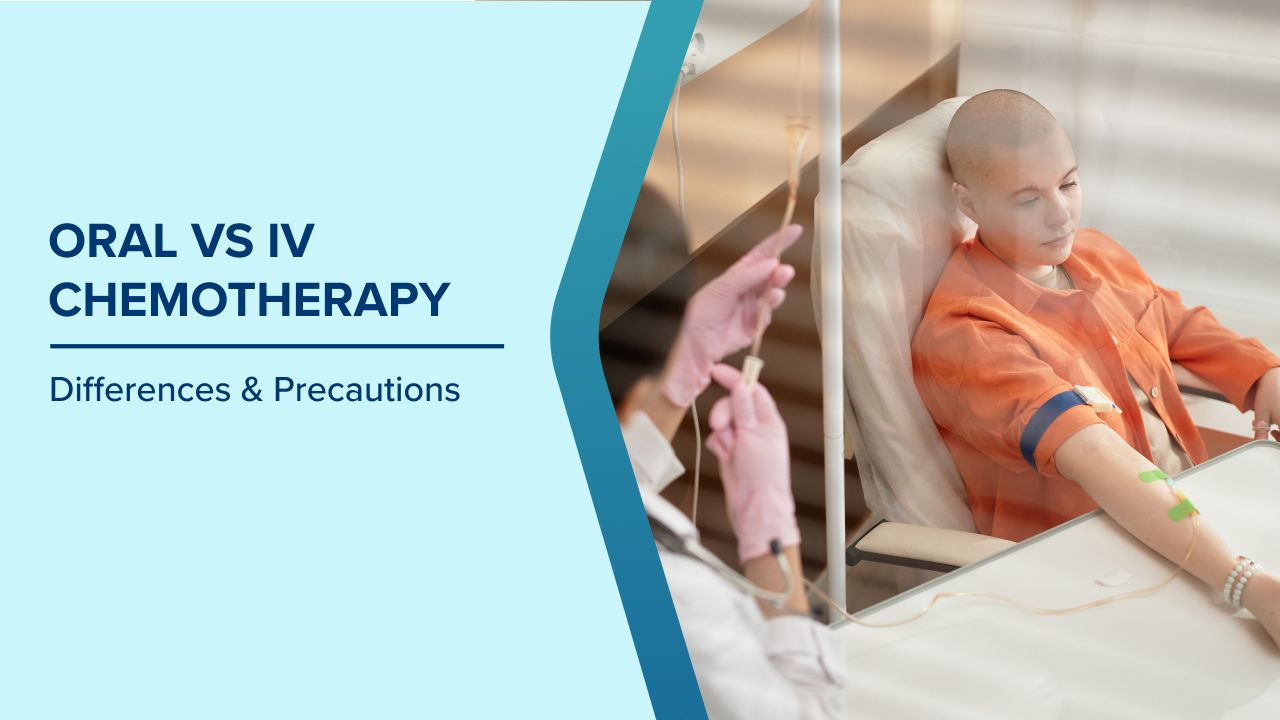
- IV Chemotherapy: The medicine is delivered directly into a vein, allowing it to enter the bloodstream immediately. This approach is used for medicines that need to be administered intravenously or require close monitoring during treatment.
- Oral Chemotherapy: The medicine is taken by mouth and passes through the digestive system before being absorbed into the bloodstream. Depending on the cancer, an oral medicine may be selected because it is effective against specific cancer cells or molecular changes.
The choice between oral and IV chemotherapy is not based simply on convenience. Doctors consider the cancer type and stage, the specific medicine available, the patient's overall health and the goals of treatment.
How is the Effectiveness of Chemotherapy Measured?
Whether chemotherapy is taken as a tablet at home or administered through an IV, the oncology team regularly monitors the patient's response to treatment. The same broad principles are used to determine whether the cancer is responding, remaining stable or progressing.
Imaging Scans
CT scan, MRI scan or PET scan may be performed to check whether tumours are shrinking, remaining stable or showing signs of progression.
Blood Tests
Routine blood tests help doctors monitor blood cell counts and assess how well organs such as the liver and kidneys are tolerating treatment. Depending on the cancer, specific tumour markers may also be monitored.
Symptoms and Clinical Assessment
Changes in symptoms, physical examination findings and overall health can provide additional information about how the treatment is working.
With oral chemotherapy, following the prescribed treatment schedule is particularly important. Missing doses, taking the medicine incorrectly or vomiting after taking a dose can affect how much of the medicine reaches the bloodstream and, therefore, how well the treatment works.
Oral vs. IV Chemotherapy: What Is the Difference?
Although both forms of treatment can be effective, the treatment experience can be quite different.
Oral Chemotherapy
- Taken by mouth as tablets or capsules
- Can often be taken at home
- Absorbed through the digestive system before entering the bloodstream
- Requires strict adherence to the prescribed treatment schedule
- May require regular blood tests and follow-up appointments
- Requires patients and caregivers to follow specific storage and handling instructions
IV Chemotherapy
- Administered directly into a vein
- Usually given in a hospital, day-care centre or infusion facility
- Enters the bloodstream directly
- Is administered under the supervision of healthcare professionals
- May take several hours, depending on the medicines being given
- Requires patients to visit the hospital according to their treatment schedule
Neither route is automatically more effective than the other. The effectiveness of treatment depends on the specific medicine, whether it is appropriate for the cancer being treated, the treatment plan and how the cancer responds.
How Do Doctors Decide Between Oral and IV Chemotherapy?
There is no single chemotherapy approach that is right for every patient. Doctors consider several medical and practical factors before recommending a particular treatment.
- Cancer Type and Stage: Not every cancer has an oral chemotherapy option. Doctors determine whether an oral medicine is appropriate and effective for the specific type and stage of cancer.
- Overall Health: The patient's general health and the condition of organs such as the liver and kidneys can influence whether a particular oral or IV medicine is suitable. Digestive health may also be important for medicines that need to be absorbed through the gastrointestinal tract.
- Drug Interactions: Other medicines and supplements may affect how certain oral cancer medicines are absorbed or processed. Patients should therefore tell their healthcare team about all medicines and supplements they are taking.
- Ability to Follow the Treatment Schedule: Oral chemotherapy places greater responsibility on the patient for taking the medicine at the prescribed dose and time. Following instructions related to meals, missed doses and other precautions is an important part of treatment.
- Daily Routine and Practical Considerations: For some patients, taking chemotherapy at home may reduce the need for frequent hospital visits. However, oral chemotherapy does not mean that medical monitoring is no longer required. Patients still need regular follow-ups, blood tests and other assessments as advised by their oncology team.
Safety at Home: Important Precautions
Taking chemotherapy at home does not mean that the medicine is less potent or requires fewer precautions. Oral chemotherapy medicines can be powerful and should be handled according to the instructions provided by the healthcare team.
- Keep a treatment schedule: Record treatment days, doses, rest periods and medical appointments to avoid missing doses.
- Do not crush, split or chew tablets unless instructed: Some medicines need to be swallowed whole because altering them can affect how the medicine is released.
- Store medicines safely: Keep them in their original packaging and away from children and pets. Follow the recommended storage instructions.
- Do not double a dose: If a dose is missed or vomiting occurs after taking the medicine, contact the oncology team for guidance rather than taking another dose on your own.
- Follow handling instructions: Certain oral chemotherapy medicines may require special precautions when handled by patients or caregivers.
Frequently Asked Questions
Can I continue working while taking oral chemotherapy?
Many people can continue working while receiving oral chemotherapy, but this varies from person to person. Treatment-related effects such as fatigue, nausea and brain fog may affect energy levels and concentration. Depending on how the individual responds to treatment, working hours or responsibilities may need to be adjusted.
Can I travel while taking oral chemotherapy?
Travel may be possible during treatment, but planning ahead is important. Patients may need to carry an adequate supply of medication, ensure it is stored correctly and keep their oncology team's contact information available. Travel plans should be discussed with the treating team beforehand.
What happens if I vomit after taking oral chemotherapy?
Do not automatically take another dose. Contact the oncology team and explain when the medicine was taken and when vomiting occurred. The healthcare team can advise whether another dose is needed based on the circumstances.
Will oral chemotherapy cause hair loss?
Not necessarily. Hair thinning or hair loss depends on the specific medicine and treatment regimen rather than simply whether chemotherapy is taken orally or intravenously. Some oral cancer medicines may cause hair changes, while others may not.
Is oral chemotherapy safer than IV chemotherapy?
Oral chemotherapy is not necessarily safer simply because it is taken as a tablet. Depending on the specific medicine, it can cause significant side effects. The main difference is the method of administration, and patients receiving oral chemotherapy still require appropriate monitoring throughout treatment.
Is oral chemotherapy better than IV chemotherapy?
Neither treatment is universally better. The most suitable option depends on the type and stage of cancer, the specific medicine available, the patient's overall health, treatment goals and how the cancer is expected to respond. The treating oncologist determines which approach is most appropriate for each patient.
Written and Verified by:

Related Blogs


Dr. Meenu Walia In Medical Oncology , Cancer Care / Oncology
Aug 02 , 2016 | 4 min read
Blogs by Doctor

Tobacco and Cancer: Understanding the Link and Taking Action
Dr. Sameer Khatri In Cancer Care / Oncology
Mar 03 , 2024 | 2 min read

Most read Blogs

Related Blogs
Dr. Meenu Walia In Medical Oncology , Cancer Care / Oncology
Aug 02 , 2016 | 4 min read
Blogs by Doctor
Tobacco and Cancer: Understanding the Link and Taking Action
Dr. Sameer Khatri In Cancer Care / Oncology
Mar 03 , 2024 | 2 min read
Most read Blogs