 WhatsApp Us (24/7)
 +91 926 888 0303 (24/7)


To Book an Appointment
Call Us+91 926 888 0303Rezum Therapy: A Minimally Invasive Solution for Enlarged Prostate
By Dr. Deepak Garg in Urology , Uro-Oncology , Robotic Surgery
Oct 30 , 2026 | 4 min read
1

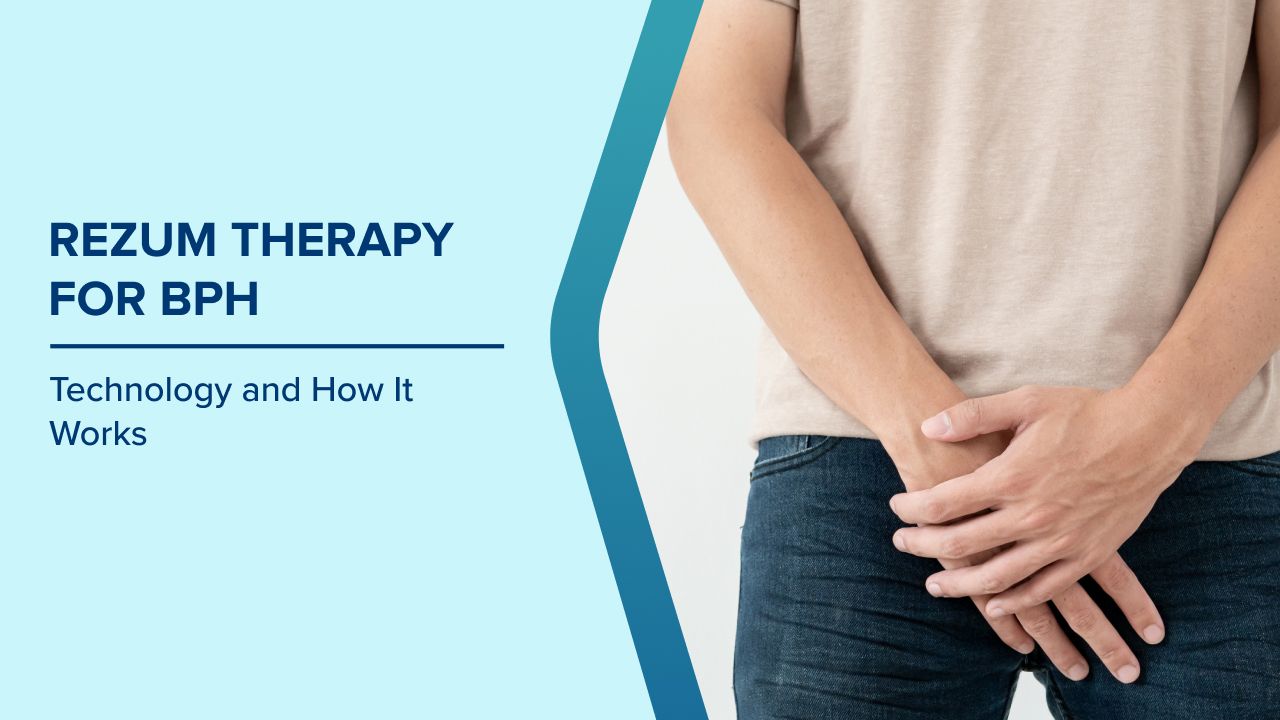
Rezum therapy is an advanced medical system used in urology to treat benign prostatic hyperplasia (BPH), commonly known as an enlarged prostate. It uses controlled water vapour energy to target excess prostate tissue that obstructs the flow of urine. This minimally invasive technology offers an alternative to conventional surgical approaches for appropriately selected patients.
By delivering thermal energy directly to targeted areas of the prostate, the Rezum system helps reduce urinary obstruction while limiting disruption to surrounding tissues. Understanding how Rezum therapy works, its technology and its role in enlarged prostate treatment can help patients make informed decisions about their urological care.
What Is the Rezum Machine?
Rezum therapy is a specialised water vapour therapy system designed to treat urinary symptoms associated with BPH. It uses a delivery device to introduce controlled doses of sterile water vapour into selected areas of the prostate.
The technology uses the thermal energy released when water vapour condenses within the targeted tissue. This energy creates a controlled thermal effect that damages selected prostate cells. The body subsequently breaks down and absorbs the treated tissue, helping reduce the obstruction around the urethra.
The Rezum system delivers this treatment through the urethra, without requiring external surgical incisions.
How Does Rezum Therapy Work?
Rezum therapy uses a controlled delivery mechanism to administer water vapour into selected areas of the prostate. The procedure involves several steps:
- Water Vapour Generation: The system generates sterile water vapour for therapeutic delivery.
- Controlled Energy Delivery: A specialised instrument is inserted through the urethra and positioned within the prostate.
- Targeted Tissue Treatment: Brief, controlled doses of water vapour are released into the obstructive prostate tissue. Each delivery typically lasts approximately nine seconds.
- Natural Tissue Absorption: The thermal energy initiates a healing response, and the body gradually absorbs the treated tissue.
- Improved Urinary Passage: As the obstructive tissue reduces over time, pressure on the urethra may decrease, allowing urine to flow more easily.
The number and placement of treatments depend on prostate size and anatomy and are determined by the treating urologist.
Key Technology Features of the Rezum Machine
- Controlled Water Vapour Delivery: The system delivers measured doses of water vapour directly into targeted prostate tissue. This allows the urologist to treat selected areas contributing to urinary obstruction.
- Minimally Invasive Delivery System: The treatment instrument is introduced through the urethra, eliminating the need for external incisions. This approach allows the procedure to be performed using an endoscopic technique.
- Targeted Thermal Energy: The technology uses the energy released as water vapour condenses within tissue. This produces a controlled thermal effect in the targeted region, initiating the process through which treated cells are gradually absorbed.
- Treatment Adapted to Prostate Anatomy: The number and location of water vapour injections can be adjusted according to the size, shape and anatomical features of the prostate. This allows the urologist to plan treatment based on the individual's clinical findings.
What Is the Role of Rezum Therapy in Enlarged Prostate Treatment?
Benign prostatic hyperplasia causes the prostate gland to enlarge, potentially compressing the urethra and restricting urine flow. The resulting symptoms may include frequent urination, a weak stream, difficulty starting urination and repeated nighttime trips to the bathroom.
Rezum therapy addresses this obstruction by treating the excess tissue responsible for narrowing the urinary passage. As the treated tissue is gradually absorbed, urinary symptoms may improve.
The technology may be considered for men experiencing bothersome urinary symptoms due to an enlarged prostate. Suitability depends on prostate volume, anatomy, bladder function and overall health.
What Happens After Rezum Treatment?
The effects of Rezum treatment develop gradually rather than immediately. Temporary swelling in the prostate may initially cause urinary discomfort, urgency or difficulty passing urine. Some patients require a catheter for a short period following the procedure.
As healing progresses, the body absorbs the treated tissue and the urinary passage may become less obstructed. Some patients notice improvement within a few weeks, while further improvement may continue over approximately three months.
Follow-up appointments help the urologist assess symptom improvement, urinary function and recovery.
Conclusion
Rezum therapy represents an advancement in minimally invasive urological technology. Its controlled water vapour delivery system targets obstructive prostate tissue without conventional surgical removal, offering an additional treatment option for appropriately selected patients with BPH.
Understanding the technology, its working mechanism and its applications can help patients have informed discussions with their urologist about managing an enlarged prostate.
Frequently Asked Questions
1. What is Rezum therapy used for?
Rezum therapy is used to deliver water vapour therapy for benign prostatic hyperplasia, a non-cancerous enlargement of the prostate that can obstruct urine flow.
2. What technology does Rezum therapy use?
It uses thermal energy released when sterile water vapour condenses within targeted prostate tissue, initiating a controlled tissue response.
3. How long does Rezum therapy take to deliver treatment?
Each water vapour delivery typically lasts approximately nine seconds. The overall procedure duration depends on the number of treatments required and the patient's prostate anatomy.
4. Does Rezum therapy remove the prostate?
No, it does not remove the entire prostate. Instead, it treats selected areas of obstructive tissue, which the body gradually breaks down and absorbs.
5. Is Rezum therapy suitable for every enlarged prostate?
No, suitability depends on prostate size, anatomy, symptom severity, bladder function and overall health. A urologist must assess the patient before recommending treatment.
6. How soon does Rezum therapy show results?
Improvement may begin within a few weeks, although the full benefits can take up to approximately three months to develop.
Written and Verified by:

Related Blogs

Dr. Anant Kumar In Urology , Kidney Transplant , Uro-Oncology
Nov 08 , 2020 | 8 min read

Dr. Anant Kumar In Urology , Uro-Oncology
Nov 08 , 2020 | 3 min read
Blogs by Doctor
Most read Blogs


Related Blogs
Dr. Anant Kumar In Urology , Kidney Transplant , Uro-Oncology
Nov 08 , 2020 | 8 min read
Dr. Anant Kumar In Urology , Uro-Oncology
Nov 08 , 2020 | 3 min read
Blogs by Doctor
Most read Blogs