 WhatsApp Us (24/7)
 +91 926 888 0303 (24/7)


To Book an Appointment
Call Us+91 926 888 0303Strawberry Legs: Causes, Symptoms, Treatment, and Prevention
By Dr. Deepali Bhardwaj in Dermatology
Sep 24 , 2026

If you have noticed small dark dots on your legs that is making the skin look like the surface of a strawberry, you might be dealing with strawberry legs. This is a common and usually harmless skin concern that can develop due to clogged pores, shaving, ingrown hairs, or dry skin. However, a major concern about strawberry legs is, it can make the skin look uneven and affect confidence. The good news is that with the right skincare habits and treatment, the appearance of strawberry legs can often be improved. This blog explains what causes strawberry legs, how to recognise them, the available treatment options, and simple ways to help prevent them.
What are Strawberry Legs?
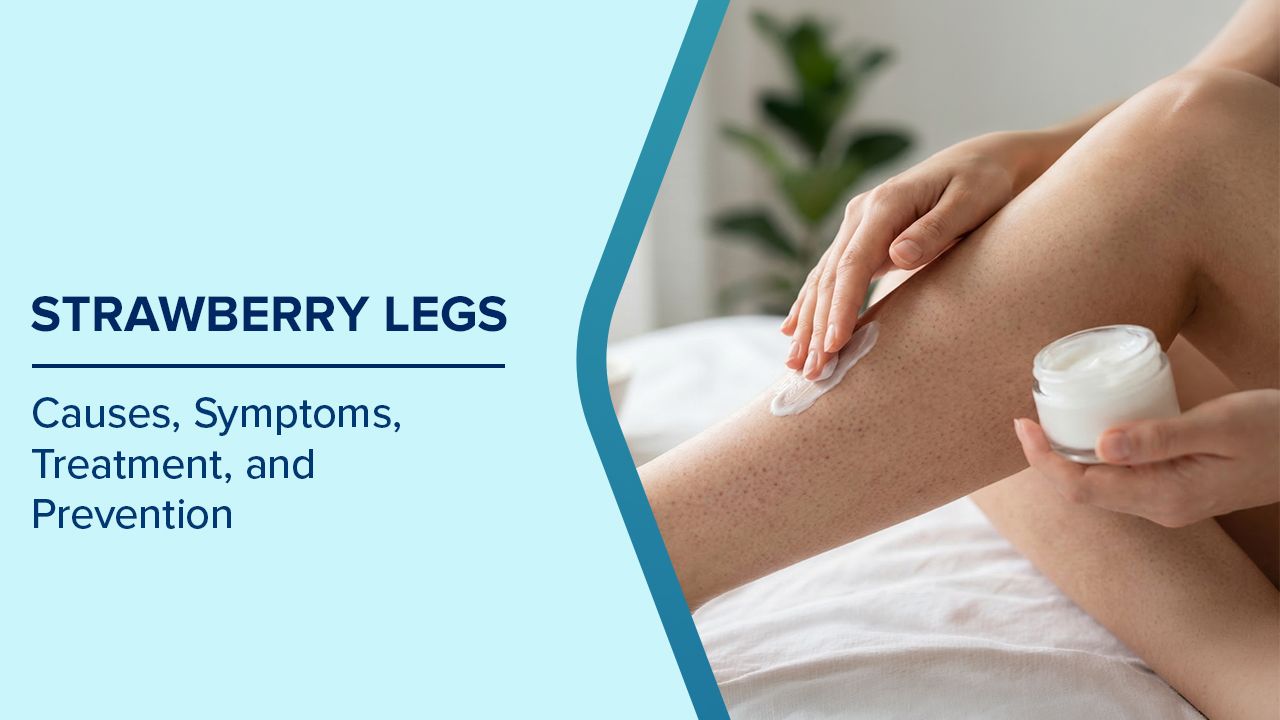
Strawberry legs are not a medical condition but a term used to describe the appearance of skin with tiny dark spots that resemble the seeds on a strawberry. These spots are actually hair follicles or pores that become more noticeable when they are blocked with oil, dead skin cells, bacteria, or trapped hair. In some cases, the dark appearance is caused by oxidation, where trapped oil or debris turns darker after coming into contact with air.
What do Strawberry Legs Look Like?
Strawberry legs are easy to recognise because the skin develops tiny dark spots that resemble the seeds on the surface of a strawberry. These spots are usually visible around hair follicles and can become more noticeable after shaving or when the skin is dry.
Some of the common features of strawberry legs include:
- Small Dark Dots: Tiny black, brown, or dark-coloured spots around the hair follicles.
- Rough Texture: The skin may feel uneven, bumpy, or slightly coarse to the touch.
- Visible Pores: Hair follicles or pores appear larger and more prominent than usual.
- Dry Or Flaky Skin: The affected area may also look dry, especially during colder months or in people with naturally dry skin.
- Mild Redness: Some people may notice slight redness or irritation, particularly if the spots are caused by shaving, ingrown hairs, or folliculitis.
The condition most commonly appears on the lower legs but can also affect other areas with hair follicles, such as the thighs.
What Causes Strawberry Legs?
Strawberry legs can develop for several reasons, and in many cases, more than one factor may be responsible. Some of the most common strawberry leg causes include:
Clogged Pores
When oil, dead skin cells, dirt, or bacteria build up inside the pores, they can become blocked. Once exposed to air, this trapped material may oxidise and turn dark, making the pores appear as tiny black dots.
Shaving
Using a dull razor, shaving without enough lubrication, or shaving against the direction of hair growth can irritate the skin. Shaving may also leave the hair follicle more visible, especially in people with thicker or darker hair.
Ingrown Hairs
An ingrown hair develops when a hair curls back into the skin instead of growing outward. This can cause dark spots, bumps, redness, and irritation that contribute to the appearance of strawberry legs.
Folliculitis
Folliculitis is the inflammation or infection of hair follicles, often caused by bacteria or friction. It may lead to red or dark bumps that make the affected skin look dotted and uneven.
Keratosis Pilaris
Keratosis pilaris is a common skin condition in which excess keratin blocks hair follicles. It causes rough, tiny bumps that can make the skin appear similar to strawberry legs, particularly on the thighs, arms, and legs.
Dry Skin
Dry skin allows dead skin cells to accumulate more easily around the hair follicles. This can make pores appear larger and more noticeable while increasing the likelihood of irritation after shaving.
Enlarged Pores
Some people naturally have larger or more visible pores. When these pores contain oil, dead skin, or hair, they can appear darker and create the characteristic spotted appearance of strawberry legs.
What are the Symptoms of Strawberry Legs?
Strawberry legs do not usually cause noticeable symptoms and are mainly a cosmetic concern. However, depending on the underlying cause, some people may experience:
- Mild itching, especially if the skin is dry
- Skin that feels rough or bumpy
- Irritation or a burning sensation after shaving
- Tenderness around inflamed hair follicles
- Redness or mild swelling when ingrown hairs or folliculitis are present
How are Strawberry Legs Treated?
Strawberry legs treatment depends on the underlying cause. A dermatologist may recommend medications or procedures to reduce blocked hair follicles, treat associated skin conditions, and improve the skin's appearance. Treatment options include:
Topical Retinoids
Topical retinoids help increase skin cell turnover and prevent dead skin cells from blocking hair follicles. They are commonly prescribed when clogged pores or keratosis pilaris contribute to strawberry legs.
Chemical Peels
Superficial chemical peels containing alpha hydroxy acids (AHAs) or beta hydroxy acids (BHAs) help remove the outer layer of dead skin cells, improve skin texture, and reduce the appearance of clogged pores.
Prescription Creams
Depending on the underlying cause, a dermatologist may prescribe medicated creams containing retinoids, corticosteroids, or other active ingredients to reduce inflammation and improve the skin's appearance.
Antibiotics or Antifungal Medications
If strawberry legs are caused by folliculitis, topical or oral antibiotics or antifungal medications may be prescribed to treat the infection and reduce inflammation.
Laser Hair Removal
Laser hair removal targets the hair follicles to reduce hair growth. It can be particularly helpful for people who develop strawberry legs due to frequent shaving or recurrent ingrown hairs.
Laser Skin Resurfacing
In persistent cases, certain laser treatments may improve skin texture and reduce the appearance of enlarged pores or pigmentation associated with strawberry legs.
How to Get Rid of Strawberry Legs at Home?
Home remedies cannot eliminate strawberry legs completely, but they may help improve the skin's appearance and reduce dryness, clogged pores, and mild irritation. These remedies work best for mild cases and should not replace medical treatment if symptoms persist or worsen. Some home remedies for strawberry legs that may help include:
Aloe Vera Gel
Aloe vera has soothing and moisturising properties that can help calm irritated skin and reduce dryness. Applying fresh aloe vera gel or a fragrance-free aloe vera product may leave the skin feeling smoother.
Oatmeal Bath
Colloidal oatmeal helps soothe irritated skin while gently cleansing and moisturising it. An oatmeal bath may be particularly helpful if strawberry legs are accompanied by dryness or mild itching.
Coconut Oil
Coconut oil acts as a natural moisturiser and may help soften dry, rough skin. It should be applied to clean skin, although people with acne-prone skin should use it cautiously as it may clog pores.
Honey
Honey has natural moisturising and antimicrobial properties. Applying a thin layer as a short face or body mask before rinsing may help soothe irritated skin and improve hydration.
Warm Compress
If ingrown hairs are contributing to strawberry legs, applying a warm compress to the affected area for a few minutes can help soften the skin and encourage trapped hairs to come closer to the surface.
Sugar and Olive Oil Scrub
A gentle homemade scrub made with fine sugar and olive oil may help remove dead skin cells and leave the skin feeling smoother. It should be used gently and no more than once or twice a week to avoid skin irritation.
How Can Strawberry Legs Be Prevented?
A consistent skincare routine and proper hair removal practices can help reduce the chances of developing strawberry legs. Some effective prevention tips include:
- Shave Properly: Use a clean, sharp razor and shaving gel to reduce friction and irritation. Avoid shaving too closely or repeatedly over the same area.
- Exfoliate Regularly: Gentle exfoliation helps remove dead skin cells that can clog hair follicles and make dark spots more noticeable.
- Moisturise Skin: Applying a suitable moisturiser regularly helps prevent dryness and keeps the skin barrier healthy.
- Avoid Harsh Products: Fragranced products and strong exfoliants can irritate the skin and worsen redness or sensitivity.
- Use Clean Razors: Replace razors regularly and avoid sharing them to reduce the risk of bacterial buildup and skin infections.
- Avoid Tight Clothing: Tight clothes can create friction and trap sweat, which may contribute to blocked pores and irritation.
- Treat Ingrown Hairs Early: Avoid picking or squeezing ingrown hairs, as this can increase inflammation and lead to dark spots.
- Follow Hair Removal Alternatives: People who frequently develop irritation after shaving may consider alternatives such as waxing or laser hair removal after consulting a dermatologist.
Consult Today
Strawberry legs are usually manageable with the right care, but the most effective approach depends on why they develop in the first place. Whether the concern is due to clogged pores, shaving irritation, ingrown hairs, or a skin condition, identifying the cause can make treatment more effective. If the appearance of strawberry legs does not improve with regular skincare or is accompanied by persistent bumps, redness, or irritation, consult a dermatologist for a proper evaluation and treatment plan to restore smoother-looking skin.
Frequently Asked Questions
Q. Are strawberry legs the same as blackheads?
Strawberry legs and blackheads may look similar because both involve dark spots on the skin. However, blackheads usually occur when pores on areas like the face become clogged with oil and dead skin cells, while strawberry legs are mainly related to visible hair follicles, trapped hairs, or blocked pores on areas with body hair.
Q. Can strawberry legs occur even without shaving?
Yes, strawberry legs can occur even in people who do not shave. Factors such as naturally larger pores, dry skin, keratosis pilaris, clogged hair follicles, or ingrown hairs can contribute to their appearance.
Q. How long does it take for strawberry legs to go away?
The time required for strawberry legs to improve depends on the underlying cause and the treatment approach. Mild cases may improve within a few weeks with consistent skincare, while cases linked to skin conditions may take longer and require medical treatment.
Q. Can strawberry legs leave permanent marks?
Strawberry legs themselves do not usually cause permanent marks. However, repeated irritation, picking at bumps, or inflammation from conditions such as folliculitis or ingrown hairs can sometimes lead to temporary or longer-lasting dark spots.
Q. Are strawberry legs more common in people with certain skin types?
People with dry skin, coarse body hair, or a tendency to develop clogged pores may be more likely to notice strawberry legs. However, the condition can occur in people of all skin types.
Written and Verified by:

Related Blogs


Blogs by Doctor
Most read Blogs


Related Blogs
Blogs by Doctor
Most read Blogs