 WhatsApp Us (24/7)
 +91 926 888 0303 (24/7)


To Book an Appointment
Call Us+91 926 888 0303Stress Test (TMT Test): Procedure, Results & Normal Range
By Dr. Yogendra Singh in Cardiac Surgery (CTVS) , Cardiology , Interventional Cardiology , Cardiac Electrophysiology-Pacemaker
Sep 14 , 2026

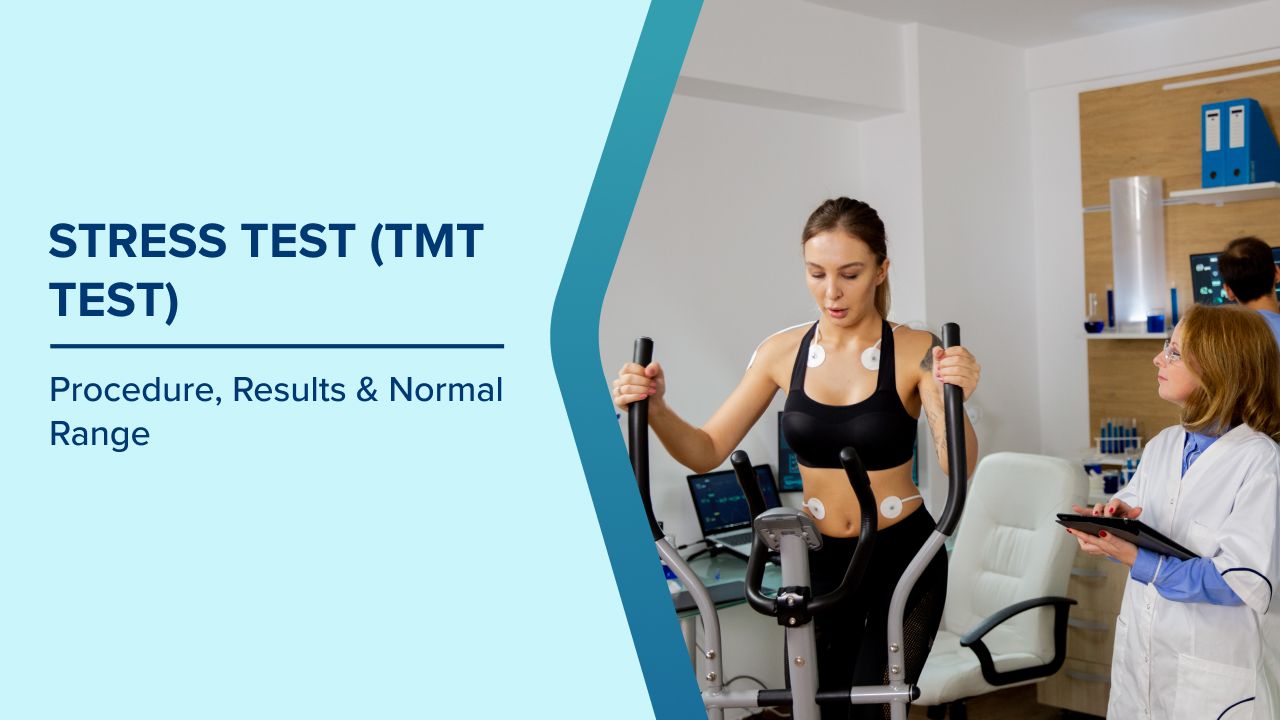
A Stress Test, also known as a Treadmill Test (TMT test) or cardiac stress test, is a non-invasive diagnostic procedure that evaluates how well your heart functions under physical exertion. It monitors your heart rate, blood pressure, and electrical activity through an electrocardiogram (ECG) while you walk or run on a treadmill at progressively increasing speeds. Doctors recommend it when symptoms such as chest pain, breathlessness, or palpitations suggest a possible heart condition, or when there is an elevated risk of coronary artery disease.
When Is a Stress Test Recommended?
- Chest pain or discomfort during activity - If you experience tightness, pressure, or pain in your chest that appears during walking or physical exertion and eases at rest, your doctor may order a TMT test to check for restricted blood flow to the heart muscle.
- Unexplained breathlessness or palpitations - Persistent shortness of breath during mild activity, or a racing or irregular heartbeat without a clear cause, may prompt a cardiac stress assessment to rule out underlying ischemia or arrhythmia.
- Diagnosis of suspected coronary artery disease - The stress test is a frontline non-invasive tool used when a doctor suspects narrowing or blockage in the coronary arteries, particularly in individuals with risk factors such as high blood pressure, diabetes, or high cholesterol.
- Monitoring existing heart conditions - Patients who have already been diagnosed with a heart condition, or who have undergone bypass surgery or angioplasty, may be advised periodic TMT testing to track recovery and assess whether treatment is working.
- Pre-surgical cardiac clearance - Before certain planned surgeries, especially in patients over 40 years or those with cardiac risk factors, a stress test may be requested to confirm the heart can safely handle the procedure.
- Evaluating exercise tolerance - Individuals who wish to start a structured exercise programme or intensive physical training, particularly after the age of 35 or with pre-existing conditions, may be advised a TMT test to determine safe activity levels.
- Detecting exercise-induced arrhythmias - Some irregular heart rhythms only manifest during physical exertion. The TMT test creates controlled conditions to identify these arrhythmias that a resting ECG may miss entirely.
What the Stress Test Measures
- Heart rate response - The test monitors how your heart rate rises with increasing exertion and whether it reaches at least 85% of the maximum predicted rate, calculated as 220 minus your age. This threshold is needed to adequately stress the heart for meaningful evaluation.
- Blood pressure response - Blood pressure is recorded at each stage of exercise. A normal, gradual rise in systolic blood pressure with exertion is expected. An abnormal drop or an excessive spike may indicate cardiovascular stress or underlying hypertension.
- ECG (Electrocardiogram) changes - The electrical activity of the heart is continuously monitored throughout the test. Changes in the ST segment of the ECG, particularly ST depression, are a key indicator of myocardial ischemia during exercise.
- Exercise capacity in METs (Metabolic Equivalents of Task) - METs measure the energy your body expends during the test relative to rest. An exercise capacity of 5 to 8 METs or above is generally associated with good cardiac function. Lower values may suggest reduced exercise tolerance.
- Symptoms during exercise - The test records any chest pain, unusual fatigue, dizziness, or breathlessness that you experience during exercise. These symptoms, when correlated with ECG changes, provide important clinical information.
- Heart rate recovery - After exercise stops, the rate at which your heart rate returns to baseline is assessed. A slow recovery, defined as a drop of fewer than 12 beats per minute within the first minute after stopping, may carry prognostic significance.
Stress Test Normal Ranges
| Parameter | Normal Finding | Notes |
|---|---|---|
| Target heart rate achieved | At least 85% of maximum predicted | Maximum predicted = 220 minus age |
| Resting blood pressure | Below 140/90 mmHg | Measured before exercise begins |
| Peak systolic blood pressure | 160-200 mmHg during exercise | A normal gradual rise is expected |
| Exercise capacity | 5-8 METs or above | Higher values indicate better cardiac fitness |
| ST segment change | No significant change | Depression of more than 1 mm is considered abnormal |
| Heart rate recovery | Drop of 12 or more bpm in first minute post-exercise | Slower recovery may carry risk significance |
| Overall result interpretation | Negative for inducible ischemia | No significant ECG changes or symptoms under stress |
Understanding Your Stress Test Results
Normal (Negative) Result
- Suggests no significant restriction in blood flow to the heart during physical exertion, with heart rate, blood pressure, and ECG responding as expected.
- Indicates that your coronary arteries are likely free of major flow-limiting blockages at the time of the test.
- Does not completely rule out very minor or early-stage coronary disease, but is a reassuring finding that reduces the probability of significant ischemia.
- Your doctor will still interpret a negative result alongside your symptoms, age, and overall risk profile before making further decisions.
Positive (Abnormal) Result
- May indicate that the heart is not receiving adequate oxygenated blood during exercise, often due to narrowing in one or more coronary arteries, a condition known as myocardial ischemia.
- ST segment depression or elevation on the ECG during the test is a primary marker of possible coronary artery disease and usually prompts further investigation.
- Can be associated with other conditions such as arrhythmias, uncontrolled hypertension, or valvular heart disease, which your cardiologist will assess before concluding a diagnosis.
- A positive result usually leads to additional tests such as a stress echocardiography, nuclear stress test, or coronary angiography to confirm the diagnosis and plan treatment.
Borderline or Inconclusive Result
- Occurs when ECG changes are minor, occur late in the test, or resolve quickly, making a definitive interpretation difficult.
- May also arise when the patient does not reach the target heart rate, which reduces the diagnostic reliability of the test.
- In borderline cases, your doctor may recommend a repeat TMT with imaging, or a pharmacological stress test for a clearer picture.
How to Prepare for a Stress Test
- Fasting requirement - Avoid eating a heavy meal for 3 to 4 hours before the test. A light snack a few hours earlier is generally acceptable, unless your doctor gives specific instructions otherwise.
- Caffeine restriction - Avoid all caffeinated products including coffee, tea, energy drinks, and cola for at least 12 hours before the test, and ideally 24 hours if a pharmacological stress test is planned. Caffeine can interfere with heart rate response and certain stress medications.
- Medication review - Inform your doctor about all medications you take, particularly beta-blockers, calcium channel blockers, and nitrates. These may need to be paused 24 to 36 hours before the test as they can suppress heart rate and affect result accuracy. Never stop any medication without your doctor's guidance.
- Tobacco and smoking - Do not smoke or use any tobacco or nicotine products on the day of the test. Smoking within hours of the test can alter heart rate and blood pressure readings.
- Comfortable clothing and footwear - Wear loose, comfortable clothing and proper sports shoes or walking shoes. Avoid formal footwear, sandals, and excessive jewellery or accessories that may interfere with electrode placement.
- Diabetes and insulin management - If you are diabetic and on insulin or oral hypoglycaemic medications, discuss timing with your doctor in advance. Fasting combined with diabetes medication may cause low blood sugar, so special instructions will be provided.
- Physical activity on test day - Avoid strenuous exercise on the day of the test. Resting the heart before the procedure ensures a reliable baseline reading.
Stress Test Procedure
Step 1: Pre-Test Medical Review
The attending cardiologist or technician reviews your medical history, current medications, and any symptoms you have been experiencing. A brief physical examination is conducted to confirm you are fit to proceed with exercise-based testing.
Step 2: Electrode Placement and Baseline Recording
Small adhesive electrodes are attached to your chest, arms, and legs and connected to an ECG machine. A blood pressure cuff is placed on one arm. Resting heart rate, blood pressure, and a baseline ECG are recorded before the treadmill begins.
Step 3: Treadmill Exercise in Progressive Stages
The treadmill starts at a slow, comfortable walking speed. Every three minutes, both the speed and incline are increased according to a standardised protocol. The exercise continues until you reach the target heart rate, develop symptoms such as chest pain or dizziness, or until the doctor decides to stop the test.
Step 4: Continuous Monitoring During Exercise
Heart rate, ECG activity, blood pressure, and any symptoms are monitored and recorded continuously throughout each exercise stage. The medical team closely watches for any ECG changes, blood pressure abnormalities, or signs of distress.
Step 5: Recovery and Post-Exercise Monitoring
Once the exercise phase ends, you slow down and stop while continuing to be monitored. ECG and blood pressure are recorded for several minutes into the recovery phase, as abnormalities sometimes appear only after exertion stops. The total test duration is typically 30 to 45 minutes.
Factors That Can Affect Your Results
- Beta-blockers and antihypertensive medications - These drugs lower heart rate and can prevent you from reaching the target heart rate during the test, reducing its diagnostic accuracy. Your doctor may advise stopping them 24 to 36 hours beforehand after careful clinical assessment.
- Caffeine and methylxanthines - Caffeine from coffee, tea, chocolate, or energy drinks can alter heart rate response and interfere with pharmacological agents used in certain stress tests. Avoiding caffeine for 12 to 24 hours helps ensure accurate results.
- Smoking close to the test - Nicotine causes transient increases in heart rate and blood pressure that can distort the baseline measurements and make the results harder to interpret reliably.
- Physical fitness level - Very fit individuals may require higher workloads to reach the target heart rate, while those who are deconditioned may not achieve adequate exercise intensity, both of which can affect the quality of the result.
- Anaemia or thyroid disorders - Both severe anaemia and hyperthyroidism can raise baseline heart rate and alter the cardiac response to exercise, making interpretation of the TMT result more complex.
- Anxiety during the test - Feeling nervous before or during the stress test can cause a temporary rise in heart rate and blood pressure that may influence the initial readings. Staying calm and following the technician's instructions helps improve result reliability.
- Resting ECG abnormalities - Pre-existing ECG changes such as left bundle branch block or ventricular hypertrophy can make it difficult to detect stress-induced ischemia on the ECG tracing, and may require imaging-based stress tests instead.
Why Choose Max Healthcare
At Max Healthcare, cardiac stress testing is carried out under the supervision of experienced cardiologists in a fully monitored, safe environment. The diagnostic team uses quality-assured equipment to record precise ECG, blood pressure, and exercise capacity data, ensuring that your results are reliable and clinically meaningful. Every TMT report is reviewed by a qualified cardiologist who correlates your findings with your symptoms and medical history to guide the right next steps. Booking is straightforward through our digital platforms or by visiting your nearest Max Healthcare centre.
Book your test at Max Healthcare
Frequently Asked Questions
What does a positive stress test mean?
A positive result suggests that your heart may not be receiving adequate blood supply during exercise, possibly due to narrowed or blocked coronary arteries. Your doctor will recommend further tests such as a stress echocardiography or coronary angiography to confirm the finding before planning any treatment.
What does a negative stress test result mean?
A negative result indicates that your heart rate, blood pressure, and ECG all responded normally during exercise with no significant changes suggestive of ischemia. It generally means there is a lower likelihood of major coronary artery blockages at the time of testing.
How long does a TMT stress test take?
The actual treadmill exercise phase typically lasts between 8 and 15 minutes, depending on your fitness level and how quickly you reach the target heart rate. Including preparation, baseline recording, and post-exercise monitoring, the entire procedure usually takes around 30 to 45 minutes.
Is the stress test safe? Are there any risks?
The TMT test is generally safe when performed in a supervised clinical setting. Rare complications can include temporary arrhythmias, a transient drop in blood pressure, or, very rarely, a cardiac event. Medical staff monitor you throughout and the test is stopped immediately if any concerning signs appear.
Can medicines be taken before a stress test?
Some medications, particularly beta-blockers and calcium channel blockers, may need to be paused 24 to 36 hours before the test as they can affect heart rate. Never stop any medication on your own. Always inform your doctor about every drug you are taking so that specific guidance can be given.
What is the difference between a TMT test and a stress echo?
A standard TMT test monitors heart rate, blood pressure, and ECG changes during exercise on a treadmill. A stress echocardiography additionally captures ultrasound images of the heart before and immediately after exercise, allowing the doctor to directly see heart wall motion and blood flow under stress, which provides more detailed information.
Written and Verified by:

Related Blogs

Dr. Ganesh Kumar Mani In Cardiac Sciences , Cardiac Surgery (CTVS)
Apr 25 , 2016 | 3 min read

Dr. Kewal Krishan In Cardiac Sciences , Cardiac Surgery (CTVS)
May 02 , 2016 | 4 min read
Blogs by Doctor

Most Effective Tips to Keep Heart Healthy
Dr. Yogendra Singh In Cardiology
Dec 29 , 2022 | 2 min read

Heart Failure: Awareness on Symptoms, Causes, and Debunking Misconceptions
Dr. Yogendra Singh In Cardiology
Feb 21 , 2024 | 2 min read
Most read Blogs


Related Blogs
Dr. Ganesh Kumar Mani In Cardiac Sciences , Cardiac Surgery (CTVS)
Apr 25 , 2016 | 3 min read
Dr. Kewal Krishan In Cardiac Sciences , Cardiac Surgery (CTVS)
May 02 , 2016 | 4 min read
Blogs by Doctor
Most Effective Tips to Keep Heart Healthy
Dr. Yogendra Singh In Cardiology
Dec 29 , 2022 | 2 min read
Heart Failure: Awareness on Symptoms, Causes, and Debunking Misconceptions
Dr. Yogendra Singh In Cardiology
Feb 21 , 2024 | 2 min read
Most read Blogs