 WhatsApp Us (24/7)
 +91 926 888 0303 (24/7)


To Book an Appointment
Call Us+91 926 888 0303Back Pain: Signs, Tips & When to See Orthopedist
By Dr. Jatinder Bir Singh Jaggi in Orthopaedics & Joint Replacement , Arthroscopy & Sports Injury
Jul 21 , 2026

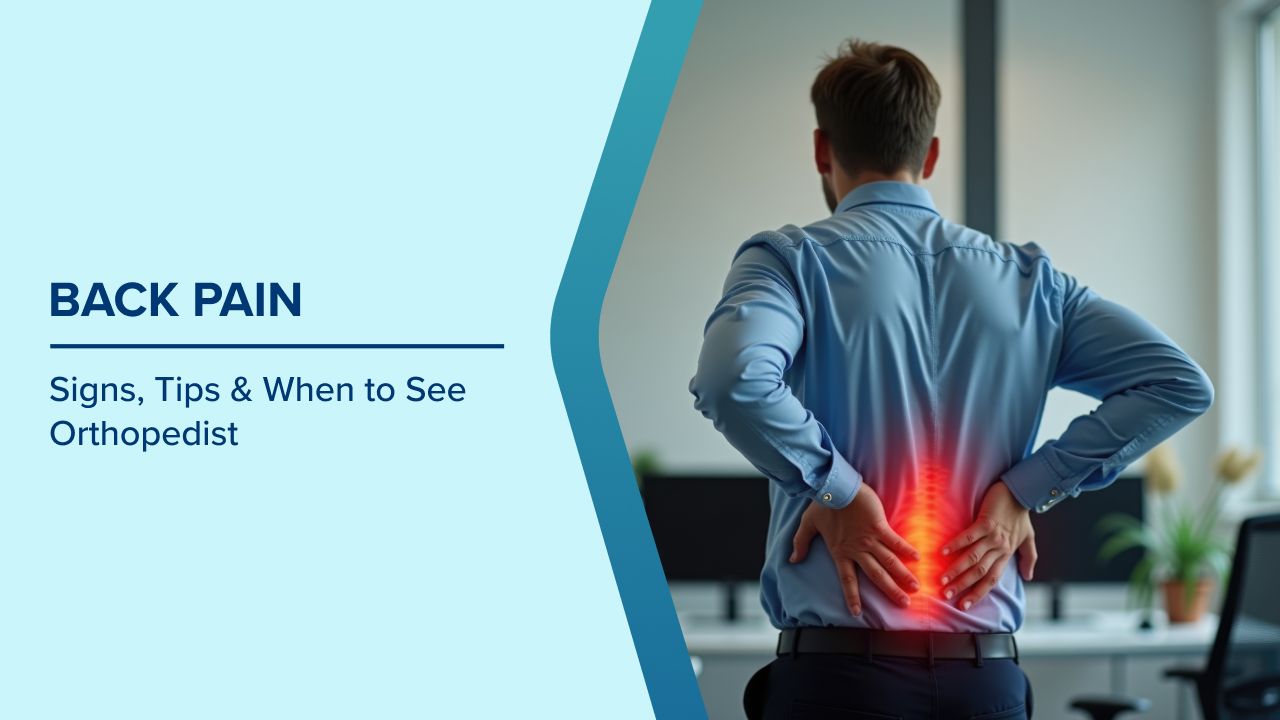
Back pain is one of the most common health problems affecting people of any age group. It can result from poor posture, prolonged sitting, heavy lifting, sports injuries, or age-related wear and tear of the spine.
While occasional back pain often improves with rest and simple home remedies, persistent or severe pain should never be ignored. Recognising when to seek medical attention can help prevent complications and ensure timely treatment.
When Is It Time to See an Orthopaedic Specialist?
Most episodes of mild back pain resolve within a few days to a couple of weeks with adequate rest, gentle stretching, and over-the-counter pain relief. However, if your pain lasts for more than two weeks, keeps recurring, or interferes with your daily activities, it is advisable to consult an orthopaedic specialist. Timely evaluation can help identify the underlying cause and prevent the condition from worsening.
Warning Signs That Should Not Be Ignored
Certain symptoms are considered warning signs that require prompt medical attention. If your back pain radiates down one or both legs, is accompanied by numbness, tingling, or muscle weakness, it could indicate nerve compression, such as sciatica or a slipped disc. Severe pain following a fall, accident, or sports injury should also be assessed immediately to rule out fractures or spinal injuries.
You should also seek medical advice if your back pain is associated with:
- Unexplained weight loss
- Fever
- Difficulty walking
- Loss of bladder or bowel control
Although these symptoms are less common, they may indicate serious conditions requiring urgent diagnosis and treatment.
What to Expect During Your Consultation
During your consultation, an orthopaedic specialist will take a detailed medical history, perform a physical examination, and assess your posture, movement, and nerve function. Depending on your symptoms, diagnostic tests such as X-rays or MRI scans may be recommended to determine the exact cause of your pain.
Treatment Options for Back Pain
The good news is that most cases of back pain can be managed without surgery. Treatment may include:
- Medications to relieve pain and inflammation
- Physiotherapy
- Posture correction
- Strengthening exercises
- Weight management
- Lifestyle modifications
These approaches not only reduce pain but also improve flexibility and help prevent future episodes. Surgery is usually considered when conservative treatments show no result or when there is significant spinal instability or nerve compression.
Tips to Help Prevent Back Pain
Preventing back pain starts with maintaining a healthy lifestyle. Simple measures include:
- Regular exercise
- Strengthening your core muscles
- Practising good posture
- Avoiding prolonged sitting
- Lifting heavy objects correctly
- Maintaining a healthy weight
Conclusion
Back pain is often manageable, but persistent or worsening symptoms should not be ignored. Consulting an orthopaedic specialist at the right time can lead to an accurate diagnosis, effective treatment, and faster recovery. If your back pain is affecting your work, sleep, or quality of life, seeking expert care early can help you regain mobility and return to your daily activities with confidence.
Written and Verified by:

Related Blogs


Dr. Ashish Jain In Orthopaedics & Joint Replacement
Nov 07 , 2020 | 1 min read
Blogs by Doctor
Sprained Ankle vs. Rolled Ankle: Understanding the Key Differences
Dr. Jatinder Bir Singh Jaggi In Orthopaedics & Joint Replacement
Feb 13 , 2025 | 7 min read

Arthritis: Debunking Common Misconceptions
Dr. Jatinder Bir Singh Jaggi In Orthopaedics & Joint Replacement , Arthroscopy & Sports Injury
Oct 14 , 2025 | 2 min read
Most read Blogs


Related Blogs
Dr. Ashish Jain In Orthopaedics & Joint Replacement
Nov 07 , 2020 | 1 min read
Blogs by Doctor
Sprained Ankle vs. Rolled Ankle: Understanding the Key Differences
Dr. Jatinder Bir Singh Jaggi In Orthopaedics & Joint Replacement
Feb 13 , 2025 | 7 min read
Arthritis: Debunking Common Misconceptions
Dr. Jatinder Bir Singh Jaggi In Orthopaedics & Joint Replacement , Arthroscopy & Sports Injury
Oct 14 , 2025 | 2 min read
Most read Blogs