 WhatsApp Us (24/7)
 +91 926 888 0303 (24/7)


To Book an Appointment
Call Us+91 926 888 0303Spurling Test: Procedure, Results & Uses | Max Hospital
By Dr. Priyank Uniyal in Neurosciences , Spine Surgery
Sep 09 , 2026

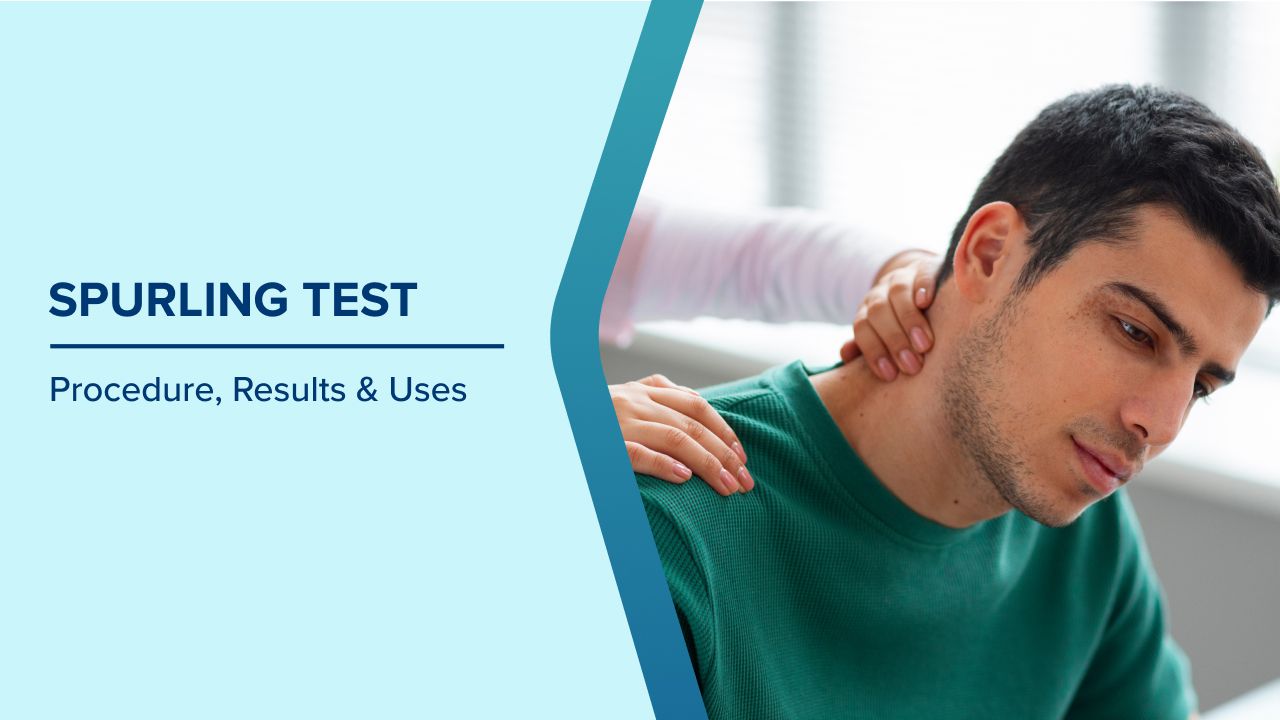
The Spurling Test (also called the Foraminal Compression Test or Maximal Cervical Compression Test) is a physical examination maneuver used to assess nerve root compression in the cervical spine. A doctor or physiotherapist gently tilts, rotates, and applies downward pressure on your head to check whether a pinched nerve in your neck is responsible for pain, tingling, or weakness radiating into your shoulder or arm. It is one of the most widely used clinical tools for evaluating cervical radiculopathy.
When Is a Spurling Test Recommended?
- Persistent neck pain with radiating arm symptoms - Your doctor may suggest this assessment if you have been experiencing pain that travels from the neck down into the shoulder, forearm, or hand, as this pattern often points to nerve root involvement.
- Numbness or tingling in the arm or hand - If you feel pins and needles, reduced sensation, or a burning feeling along a specific part of your arm, the Spurling test can help your doctor check whether a compressed cervical nerve is the cause.
- Weakness in the hands or arms - Unexplained muscle weakness in the upper limbs, difficulty gripping objects, or reduced coordination may prompt your doctor to evaluate cervical nerve function using this maneuver.
- Suspected cervical disc herniation or spondylosis - Patients with age-related disc degeneration, bone spur formation, or a suspected slipped disc in the neck may undergo this assessment as part of a broader spinal evaluation.
- Pre-imaging clinical evaluation - Before ordering an MRI or CT scan of the cervical spine, your doctor may use the Spurling test to determine how likely nerve root compression is, helping to decide whether imaging is warranted.
- Monitoring known cervical radiculopathy - If you have already been diagnosed with a pinched nerve in the neck, this maneuver may be repeated over time to track whether your symptoms are improving or worsening with treatment.
- Ruling out cervical spine involvement in shoulder pain - Because shoulder pain can sometimes originate from the neck rather than the shoulder joint itself, the Spurling test helps distinguish between these two sources before further investigation.
What the Spurling Test Assesses
- Cervical nerve root compression - The test evaluates whether a nerve root exiting the cervical spine is being pinched or irritated, typically due to a herniated disc, bone spur, or narrowing of the intervertebral foramen.
- Intervertebral foramen space - When the neck is extended and tilted toward the affected side, the opening through which nerve roots exit the spinal canal narrows. If a nerve is already compressed, this narrowing reproduces or worsens pain.
- Radicular symptom distribution - By noting where pain, tingling, or numbness travels during the maneuver, the examining doctor can often identify which specific cervical nerve root level (such as C5, C6, or C7) may be involved.
- Disc herniation and posterior disc bulging - Cervical extension during the test can cause the intervertebral disc to bulge slightly backward, compressing an already irritated nerve root and reproducing the patient's familiar symptoms.
- Facet joint pathology - The axial compression applied during this test also stresses the small joints at the back of the cervical spine. Reproduction of local neck discomfort can point to facet joint involvement, though radiating arm symptoms are more diagnostically significant.
Spurling Test Result Interpretation
Positive Spurling Test
- Indicates that radiating pain, tingling, or numbness was reproduced in the arm or shoulder on the same side as the direction of head tilt during the maneuver.
- May suggest cervical nerve root compression caused by a herniated disc, degenerative bone spurs, or narrowing of the intervertebral foramen.
- Can be associated with cervical spondylosis, particularly in adults over 40 years who have progressive degenerative changes in the neck.
- May prompt your doctor to recommend imaging such as an MRI of the cervical spine or nerve conduction studies to confirm the diagnosis and identify the exact level of compression.
- Does not by itself confirm a diagnosis - your doctor will always interpret a positive result alongside your symptom history, neurological examination findings, and imaging results.
Negative Spurling Test
- Indicates that the maneuver did not reproduce radiating arm symptoms, suggesting that significant cervical nerve root compression may not be present.
- A negative result does not completely rule out cervical radiculopathy, as the test has a relatively low sensitivity - some patients with a pinched nerve may still return a negative result.
- May reassure your doctor that your neck pain or shoulder discomfort is more likely arising from muscle strain, ligament issues, or shoulder joint pathology rather than nerve compression.
- Your doctor may recommend additional testing or imaging if symptoms persist despite a negative result.
Indeterminate or Local Pain Only
- If the maneuver produces only local neck discomfort without any radiation into the arm, the result is generally not considered diagnostic of cervical radiculopathy.
- Local pain during neck compression can sometimes indicate facet joint irritation or generalised cervical muscle tightness without nerve root involvement.
- Your doctor may use other clinical tests alongside the Spurling test to build a more complete picture of your condition.
How to Prepare for a Spurling Test
- Wear comfortable, loose clothing - Since the doctor will need easy access to your neck and upper back, avoid turtlenecks, scarves, or heavy jewellery on the day of your appointment. A simple shirt with a low or open collar is ideal.
- Share your full symptom history - Before the test begins, tell your doctor exactly where your pain or tingling is located, when it started, what makes it worse, and any previous neck injuries or surgeries you have had.
- Mention all current medications - Inform your doctor about any pain relievers, muscle relaxants, or anti-inflammatory medicines you are taking, as these may influence how strongly you feel symptoms during the test.
- Disclose any recent trauma or known conditions - Let your doctor know if you have had a recent fall, motor vehicle accident, or if you have rheumatoid arthritis, osteoporosis, or a known history of cervical instability. These conditions may mean the test needs to be modified or avoided altogether.
- No special fasting or physical preparation is needed - Unlike blood or imaging tests, the Spurling test requires no fasting, no contrast preparation, and no prior physical restrictions. You can eat and drink normally beforehand.
Spurling Test Procedure
Step 1: Patient Positioning
The patient is seated upright on an examination table or chair. The examiner stands behind the patient and ensures the patient is relaxed and comfortable, with the head in a neutral, forward-facing position.
Step 2: Initial Cervical Extension and Lateral Tilt
The examiner gently guides the patient's head into extension (tilting the chin upward) and then laterally tilts the head toward the side being tested - typically the side where symptoms have been reported. This position narrows the intervertebral foramen on that side.
Step 3: Axial Compression
With the head held in extension and lateral tilt, the examiner places both hands on top of the patient's head and applies a gentle downward (axial) compression force. This further reduces the space available for the cervical nerve roots at the narrowed foramen.
Step 4: Symptom Assessment
The examiner asks the patient to describe any sensations they feel. A positive finding is when pain, tingling, or numbness radiates from the neck down into the shoulder or arm on the same side as the direction of tilt. The patient is encouraged to communicate any symptoms clearly throughout this step.
Step 5: Result Recording and Clinical Correlation
The examiner notes whether the test was positive or negative and documents the location and nature of any reproduced symptoms. These findings are then correlated with the patient's history, neurological examination, and any available imaging to guide the next steps in diagnosis or treatment.
Factors That Can Affect Your Spurling Test Results
- Cervical muscle spasm or tightness - Significant muscle tension in the neck can limit the range of motion available during the test, potentially preventing adequate compression of the nerve root and leading to a false negative result.
- Patient pain tolerance and communication - The test relies on the patient accurately reporting symptoms during the maneuver. If a patient underreports or overreports discomfort, it may affect how the result is interpreted.
- Prior pain medication use - Taking strong analgesics or anti-inflammatory drugs shortly before the assessment may reduce the intensity of symptoms reproduced during the test, potentially masking a true positive finding.
- Examiner technique and applied force - Differences in how firmly or how precisely the examiner applies axial compression and positions the neck can influence whether symptoms are reproduced. The test has multiple described variations in the clinical literature.
- Severity and nature of the compression - Intermittent or mild nerve root compression may not produce consistent symptoms during the test. Similarly, a bony spur causing compression may respond differently to the maneuver compared with a soft disc herniation.
- Presence of cervical instability - Conditions such as rheumatoid arthritis, acute trauma, or malignancy affecting the cervical spine can make the test unreliable or unsafe to perform, and these situations typically call for imaging-based evaluation instead.
Why Choose Max Healthcare
At Max Healthcare, cervical spine assessments including the Spurling test are conducted by experienced orthopaedic specialists, neurologists, and trained physiotherapists who follow systematic clinical evaluation protocols. Our quality-assured diagnostic facilities support accurate correlation between clinical findings and advanced imaging, so patients receive a well-rounded evaluation rather than a result in isolation. If your Spurling test points toward nerve root compression, our specialists can guide you seamlessly from assessment to imaging to treatment, whether that involves physiotherapy, medications, or further spinal evaluation. Book your test at Max Healthcare
Frequently Asked Questions
Is the Spurling test painful?
The test may cause temporary discomfort, particularly if a compressed nerve root is present, since the maneuver is designed to reproduce your existing symptoms. The examiner applies gentle, controlled pressure and will stop immediately if you feel significant pain. Any discomfort usually resolves quickly once the maneuver is released.
How accurate is the Spurling test for diagnosing a pinched nerve?
The Spurling test is highly specific, meaning a positive result is a strong indicator that nerve root compression is present. However, its sensitivity is moderate, so a negative result does not fully rule out cervical radiculopathy. It is best used as part of a broader clinical evaluation that includes your symptom history and imaging where needed.
Can the Spurling test be done at home?
No. The Spurling test must be performed by a trained healthcare professional - such as an orthopaedic specialist, neurologist, or physiotherapist - who can control the applied force, monitor your response, and ensure the maneuver is safe for your specific condition. Attempting it without professional supervision carries a risk of injury.
What happens after a positive Spurling test?
Your doctor will typically recommend imaging, most commonly an MRI of the cervical spine, to identify the exact level and cause of nerve root compression. Depending on the findings, treatment may include physiotherapy, anti-inflammatory medications, cervical traction, or in some cases a specialist referral for further evaluation.
Who should not undergo the Spurling test?
The test should be avoided in patients with cervical spine instability, acute neck trauma, rheumatoid arthritis affecting the cervical joints, metastatic cancer involving the spine, or any active infection in the spinal region. In these cases, imaging is the safer first-line option. Your doctor will assess your suitability before proceeding.
Is the Spurling test the same as a cervical MRI?
No. The Spurling test is a physical examination maneuver performed in a clinic in a few minutes. An MRI is a detailed imaging scan that shows the structures of the cervical spine. The Spurling test may suggest nerve compression clinically, while an MRI confirms the diagnosis and provides structural detail that guides treatment decisions.
Written and Verified by:

Related Blogs

Prof. (Dr). V.K.Jain In Neurosciences , Spine Surgery
Nov 07 , 2020 | 5 min read

Dr. Chandril Chugh In Neurosciences , Interventional Neurology
Nov 08 , 2020 | 1 min read
Blogs by Doctor

New Help For All Spinal Problems: Live Better!
Dr. Priyank Uniyal In Neurosurgery
Nov 09 , 2020 | 3 min read
Most read Blogs


Related Blogs
Prof. (Dr). V.K.Jain In Neurosciences , Spine Surgery
Nov 07 , 2020 | 5 min read
Dr. Chandril Chugh In Neurosciences , Interventional Neurology
Nov 08 , 2020 | 1 min read
Blogs by Doctor
New Help For All Spinal Problems: Live Better!
Dr. Priyank Uniyal In Neurosurgery
Nov 09 , 2020 | 3 min read
Most read Blogs