 WhatsApp Us (24/7)
 +91 926 888 0303 (24/7)


To Book an Appointment
Call Us+91 926 888 0303Hydronephrosis: Warning Signs, Causes & Prevention
By Dr. Mandeep Kr. Dhanda in Urology , Kidney Transplant , Robotic Surgery
Sep 09 , 2026

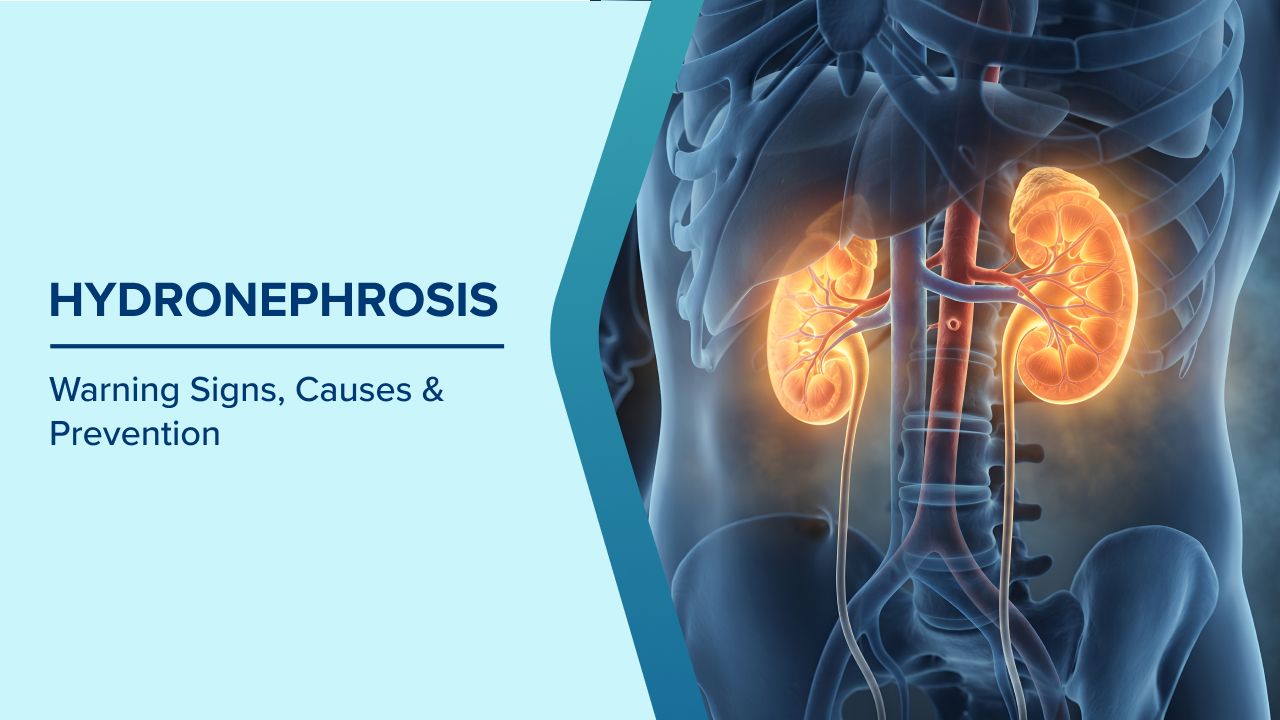
Hydronephrosis is a condition in which urine builds up in the kidney because it cannot drain properly into the bladder. This causes the kidney to become swollen and, if the obstruction continues for a long time, may gradually affect kidney function.
The good news is that timely diagnosis and appropriate treatment can often prevent permanent kidney damage. In some cases, surgery is necessary to remove the blockage and restore normal urine flow.
What Causes Hydronephrosis?
Hydronephrosis is not a disease by itself. It is usually a result of another condition that blocks or slows the flow of urine. Common causes include:
- Kidney stones
- Narrowing of the ureter
- Enlarged prostate in men
- Tumours or masses pressing on the urinary tract
- Blood clots or scar tissue
- Congenital abnormalities of the urinary system
- Pregnancy-related pressure on the urinary tract
- Conditions causing urine to flow backward toward the kidneys
The obstruction can affect one kidney or both, depending on its location and cause.
What Happens If Hydronephrosis Is Left Untreated?
Mild hydronephrosis may sometimes resolve after the underlying cause is addressed. However, persistent or severe obstruction can put increasing pressure on kidney tissue.
Over time, this pressure may reduce blood flow and impair the kidney's ability to function properly. Severe or prolonged obstruction can potentially result in permanent loss of kidney function.
The risk depends on factors such as the severity and duration of the obstruction, whether one or both kidneys are affected, the underlying cause, and the person's overall kidney health.
Can Surgery Prevent Permanent Kidney Damage?
In many cases, yes, especially when obstruction is identified and treated before significant irreversible damage occurs.
The primary goal of treatment is to restore the normal flow of urine and relieve pressure on the kidney.
However, surgery is not required for every person with hydronephrosis. Treatment depends on what is causing the obstruction and how severely the kidney is affected.
When Might Surgery Be Needed?
Surgical or procedural treatment may be recommended when there is:
- A significant blockage that is unlikely to resolve on its own
- A large or obstructing kidney stone
- Severe or worsening hydronephrosis
- Recurrent urinary tract infections associated with obstruction
- Declining kidney function
- Significant pain or other symptoms
- An anatomical abnormality that prevents normal urine drainage
What Procedures Are Used?
The treatment depends on the underlying cause.
- Kidney stones: Depending on their size and location, stones may be treated using procedures such as ureteroscopy, shock-wave lithotripsy, or other minimally invasive techniques.
- Ureteric obstruction: A ureteric stent may be placed to keep the ureter open and allow urine to drain. In some situations, a nephrostomy tube may be used to drain urine directly from the kidney.
- Ureteropelvic junction obstruction: If the area where the kidney connects to the ureter is narrowed, a procedure called pyeloplasty may be performed to remove the narrowed segment and improve drainage.
- Prostate-related obstruction: In men with an enlarged prostate causing significant urinary obstruction, medications or procedures to improve urine flow may be considered.
Does Every Case of Hydronephrosis Need Surgery?
No, mild hydronephrosis caused by a temporary or reversible problem may improve once the underlying condition resolves. Some patients may simply require monitoring with imaging and kidney-function tests.
The important point is to identify the cause rather than treating the swelling alone.
How Do Doctors Assess Kidney Damage?
Doctors may use several tests to understand the severity of hydronephrosis and determine whether the kidney is at risk. These may include:
- Ultrasound
- CT scan or other imaging
- Urine tests
- Blood tests to assess kidney function
- Specialised renal scans in selected cases
A renal scan can sometimes help doctors determine how well each kidney is functioning and whether urine is draining appropriately.
What Are the Warning Signs?
Hydronephrosis may not always cause obvious symptoms. When symptoms occur, they can include:
- Pain in the side or back
- Pain that radiates toward the abdomen or groin
- Nausea or vomiting
- Painful urination
- Frequent or urgent urination
- Blood in the urine
- Recurrent urinary tract infections
- Fever, particularly when infection is present
Fever with severe flank pain, vomiting, or difficulty passing urine requires prompt medical evaluation, as an infected obstructed kidney can become a serious medical emergency.
Can Kidney Function Recover After Treatment?
Recovery depends largely on how severe and how long-lasting the obstruction was.
When obstruction is treated early, kidney function may remain normal or improve after urine drainage is restored. If significant kidney tissue has already been damaged by prolonged obstruction, some loss of function may be permanent.
This is why waiting for symptoms to become severe is not advisable when hydronephrosis has already been diagnosed.
Conclusion
Hydronephrosis should not be ignored, particularly when it is caused by a persistent urinary obstruction. Timely treatment can relieve pressure on the kidney, restore urine flow, and in many cases help prevent permanent kidney damage.
Surgery is not always necessary, but when a significant blockage cannot resolve on its own, an appropriate surgical or minimally invasive procedure may be essential to protect kidney function.
If you have been diagnosed with hydronephrosis, speak with a urologist to determine its cause, assess kidney function, and understand whether monitoring, medication, a drainage procedure, or surgery is the most appropriate option.
Written and Verified by:

Related Blogs

Dr. Anant Kumar In Urology , Kidney Transplant , Uro-Oncology
Nov 08 , 2020 | 8 min read

Dr. Anant Kumar In Urology , Uro-Oncology
Nov 08 , 2020 | 3 min read
Blogs by Doctor

Prostate Gland: Function, Disorders and Treatment Options
Dr. Mandeep Kr. Dhanda In Urology
Feb 21 , 2024 | 10 min read

Most read Blogs


Related Blogs
Dr. Anant Kumar In Urology , Kidney Transplant , Uro-Oncology
Nov 08 , 2020 | 8 min read
Dr. Anant Kumar In Urology , Uro-Oncology
Nov 08 , 2020 | 3 min read
Blogs by Doctor
Prostate Gland: Function, Disorders and Treatment Options
Dr. Mandeep Kr. Dhanda In Urology
Feb 21 , 2024 | 10 min read
Most read Blogs