 WhatsApp Us (24/7)
 +91 926 888 0303 (24/7)


To Book an Appointment
Call Us+91 926 888 0303A 101 Guide to Corneal Abrasion: Causes, Symptoms, Diagnosis and Treatment
By Dr. Anita Sethi in Eye Care / Ophthalmology
Jul 23 , 2026

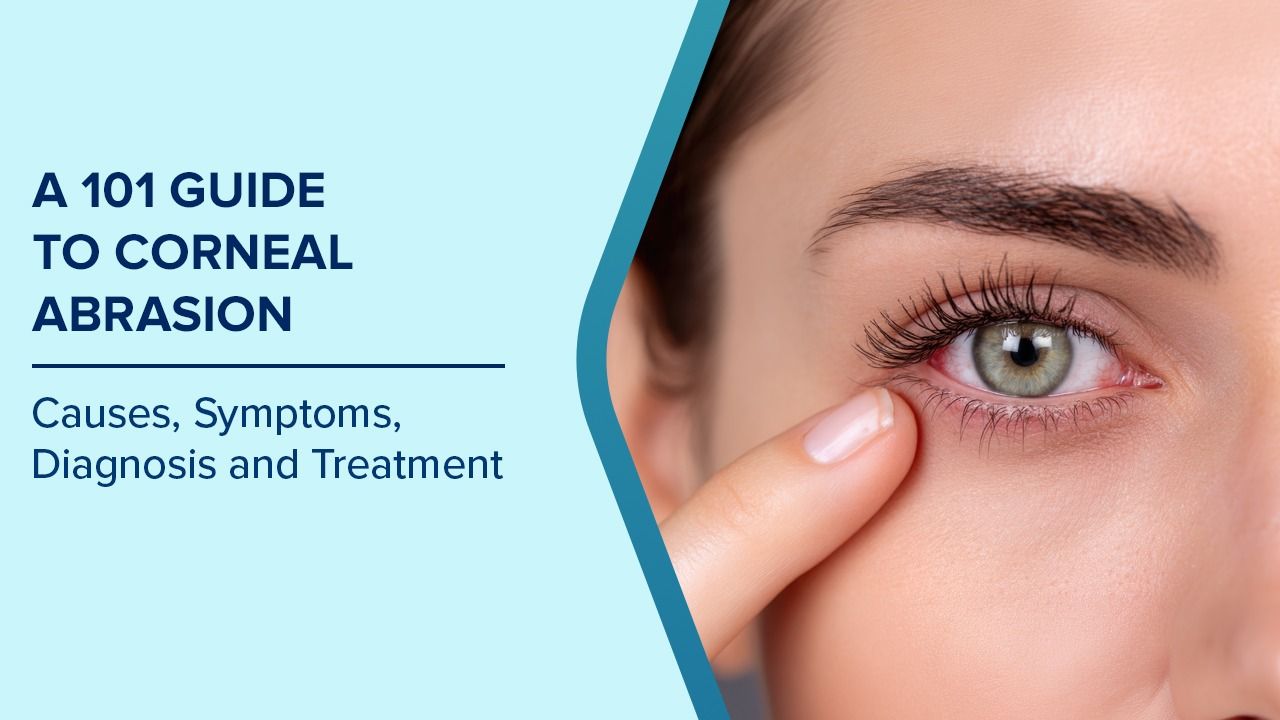
A corneal abrasion is a condition in which the eye’s cornea gets scratched, leading to issues such as discomfort, light sensitivity, blurred vision, and difficulty keeping the eyes open. Beyond immediate problems, an untreated abrasion can raise the risk of infection or scarring. To help increase awareness and ensure timely care, this blog discusses the common causes of a corneal abrasion, its symptoms, diagnostic methods, and treatment options. But before we move further, let’s understand what a corneal abrasion actually means.
What is a Corneal Abrasion?
A corneal abrasion is essentially a break in the outermost layer of the cornea, known as the epithelium. This clear tissue is only a fraction of a millimetre thick, and it serves as the eye’s first line of defence against dust, microbes, and minor injuries. When this protective layer is scratched or disrupted, even slightly, the underlying nerve endings are exposed, which explains why the pain feels so sharp compared to the size of the injury. Corneal abrasions are not limited to major trauma. They can occur from something as simple as rubbing the eyes too hard, a misdirected eyelash, or improper contact lens use.
What Causes Corneal Abrasion?
The cornea is one of the most delicate parts of the eye and can easily be scratched by everyday incidents. Below are the most common causes:
1. Foreign Objects Entering the Eye
Foreign bodies such as dust, sand, wood particles, or metal fragments are common causes of corneal abrasions. Even though these may seem harmless, their sharp edges can scrape the corneal surface. Sometimes the object is flushed out quickly with tears, but the scratch it leaves behind can still cause pain and redness. In more severe cases, larger fragments may remain lodged in the cornea, leading to persistent irritation or infection if not removed promptly.
2. Accidental Trauma
Physical injury is one of the leading causes of corneal abrasion. This can happen in many ways, a fingernail accidentally poking the eye, a pet’s paw brushing against it, or being struck by a ball during sports. Such trauma can range from minor scratches to deeper abrasions that affect vision. People working in environments where small projectiles are common, such as construction or carpentry, are also at a higher risk unless protective eyewear is used.
3. Improper Contact Lens Use
Contact lenses sit directly on the cornea, so any misuse can easily damage it. Overwearing lenses deprives the cornea of oxygen, making it more fragile and prone to scratches. Inserting or removing them with unwashed hands increases the risk of minor injuries. Torn or poorly fitted lenses can rub against the corneal surface with each blink, gradually causing an abrasion. Sleeping in lenses not designed for overnight wear is another common cause.
4. Dry Eyes
Tears are essential for keeping the cornea smooth and well-lubricated. In dry eye syndrome, insufficient tear production or poor-quality tears leave the cornea exposed to friction. When the eyelid moves over a dry surface, especially during sleep or blinking, it can scratch the corneal layer. This is particularly common in people who spend long hours in air-conditioned rooms, use digital screens excessively, or take medications that reduce tear production.
5. Vigorous Eye Rubbing
Rubbing the eyes might provide temporary relief from irritation, but it can worsen the problem. If a foreign particle such as dust or an eyelash is already in the eye, rubbing pushes it across the cornea, creating scratches. In addition, vigorous rubbing can itself cause micro-abrasions, especially in people with sensitive or dry eyes.
6. Exposure to Chemicals and Environmental Irritants
Certain chemicals, such as household cleaning sprays, fertilisers, or even cosmetic products, can irritate and weaken the corneal surface. When the protective layer of tears is disrupted by these substances, the cornea becomes more vulnerable to scratches. In outdoor settings, strong wind carrying dust or debris can also increase the risk of injury.
7. Incomplete Eyelid Closure
Some people have a condition called lagophthalmos, where the eyelids do not close fully during sleep. This leaves parts of the cornea exposed and dry, making it more susceptible to abrasions. Even in milder cases, such as when the eyes partially open at night, the unprotected cornea can develop scratches due to dryness or accidental friction with the pillow.
What are the Symptoms of Corneal Abrasion?
Symptoms usually appear quickly after the injury but may continue to worsen if left untreated. Some of the most common signs include:
- Sharp or stabbing pain: This is often the first symptom, ranging from mild irritation to severe, constant pain. The discomfort tends to increase when the eye is opened, moved, or exposed to air.
- Foreign body sensation: Many people describe the feeling as if grit, dust, or a small particle is trapped in the eye, even when nothing is present. Blinking does not relieve this sensation.
- Redness and inflammation: The eye often becomes visibly bloodshot due to irritation of the surrounding blood vessels. Inflammation may also cause swelling of the eyelids.
- Excessive tearing: The eye produces an increased flow of tears as a natural response to flush out the irritant and protect the cornea.
- Light sensitivity (photophobia): Exposure to sunlight or even indoor lighting can worsen discomfort, sometimes forcing the person to keep the eye closed.
- Blurred or reduced vision: Vision may appear cloudy or hazy, especially if the scratch is near the centre of the cornea where light enters the eye.
- Headache or eye strain: Straining to keep the injured eye open, or compensating with the other eye, may trigger headaches and fatigue.
- Difficulty keeping the eye open: The combination of pain, tearing, and sensitivity often makes it hard to keep the affected eye uncovered.
- Discharge in severe cases: Although less common, a yellow or green discharge may develop if the abrasion becomes infected.
The intensity of these symptoms may depend on the size and depth of the abrasion. Minor scratches may only cause irritation and tearing, but deeper injuries can interfere with daily activities, such as reading, driving, or working on a computer.
How is Corneal Abrasion Diagnosed?
Diagnosing corneal abrasion usually begins with a clinical examination by an ophthalmologist or eye specialist. Since the cornea is transparent and highly sensitive, special techniques are used to identify even the smallest scratch. The diagnostic process may include the following steps:
Medical History and Symptom Review
The process of diagnosing corneal abrasion usually begins with a thorough discussion about the patient’s symptoms and recent activities. Doctors often ask if there was exposure to dust, chemicals, or trauma, and whether contact lenses have been used. Details such as sudden pain, watery eyes, or light sensitivity help in narrowing down the likelihood of an abrasion and in ruling out other possible eye conditions.
Slit Lamp Examination
A slit lamp, which is a microscope with a bright beam of light, is then used to carefully inspect the eye. This tool magnifies the cornea, making even minor scratches, irregularities, or swelling more visible. It allows the doctor to assess the exact size and location of the abrasion, which is essential for planning treatment and monitoring recovery.
Fluorescein Dye Test
To make small or hidden scratches clearer, the doctor often places a drop of fluorescein dye in the eye. Under a cobalt blue light, the dye highlights any corneal damage by causing abrasions to glow a bright green. This test is particularly useful for spotting fine scratches that might not otherwise be detected.
Eyelid Examination
If symptoms persist despite no obvious damage, the upper eyelid may be gently lifted and turned inside out. This step helps check for small particles, such as dust or metal fragments, that could be trapped beneath the eyelid and repeatedly rubbing against the cornea. Removing these particles is crucial to prevent further injury.
Additional Tests
In some cases, particularly when the abrasion is unusually severe or when there are signs of infection, extra tests may be required. These can include:
- Corneal culture or scraping: Performed if infection is suspected. A small sample from the corneal surface is tested to identify bacteria or fungi, allowing targeted treatment.
- Corneal topography: Maps the surface of the cornea to detect irregularities that may cause recurrent abrasions or delayed healing.
- Pachymetry: Measures corneal thickness to assess whether deeper layers of the cornea are affected.
- Ocular ultrasound: Used in cases of significant trauma to evaluate internal eye structures and detect foreign bodies that cannot be seen externally.
- CT scan of the eye/orbit: Occasionally recommended if a penetrating injury or serious trauma is suspected, to determine the extent of internal damage.
What are the Treatment Options for Corneal Abrasion?
The treatment for corneal abrasion focuses on relieving pain, preventing infection, and promoting proper healing of the cornea. The approach may vary depending on the size, depth, and cause of the abrasion, as well as the patient’s overall eye health.
Immediate Care
Prompt attention is important. If a foreign particle is still in the eye, it should be carefully removed by an eye specialist. Rinsing the eye with sterile saline may help flush out minor debris, but rubbing the eye should be strictly avoided, as this can worsen the injury.
Medication
Doctors often prescribe lubricating eye drops or ointments to keep the eye moist and reduce discomfort. Antibiotic eye drops or ointments may be recommended to prevent infection, particularly if the abrasion is large or caused by a foreign object. In some cases, mild oral painkillers or anti-inflammatory medications may be advised to manage pain.
Eye Patching or Bandage Contact Lenses
For larger or more painful abrasions, a bandage contact lens may be applied to protect the cornea and allow it to heal. Eye patching was previously common, but current practice generally favours bandage lenses or simply supportive care, as patching may delay healing in some cases.
Tips for Preventing Corneal Abrasion
Protecting the eyes from injury is often easier than treating one. Simple precautions in daily life and at work can greatly reduce the chances of corneal abrasions. The following measures help keep the eyes safe and healthy.
1. Protective Eyewear
Wearing safety glasses or protective goggles is one of the most effective ways to reduce the risk of corneal injury. This is especially important for individuals working in construction, carpentry, laboratories, or any environment where small particles, dust, or chemicals may come into contact with the eyes. Sports players, particularly in activities involving fast-moving balls or physical contact, should also use protective gear.
2. Safe Contact Lens Use
Improper contact lens use is a common cause of corneal abrasions. To avoid this, lenses should be cleaned and stored correctly, never worn beyond the recommended duration, and always removed before sleeping, unless specifically prescribed. Using well-fitted lenses and avoiding extended wear can significantly lower the chance of irritation or injury.
3. Good Eye Hygiene
Simple habits such as washing hands before touching the eyes, avoiding the use of old or contaminated eye makeup, and not sharing cosmetics help maintain eye safety. Removing makeup thoroughly before bedtime also prevents small particles from irritating the eye surface.
4. Caution in Daily Activities
Even small actions, like trimming nails to avoid accidental scratches or being careful with children and pets who may unintentionally touch the eyes, can make a difference. When outdoors in windy or dusty environments, sunglasses can help protect the eyes from airborne particles that may scratch the cornea.
Consult Today
Eye injuries such as corneal abrasions may seem minor at first, but the discomfort they bring and the risk of further complications make timely care essential. At Max Hospital, ophthalmologists provide the guidance and medical attention needed to restore comfort and protect vision. If you are experiencing pain, redness, or a sudden change in how your eye feels, seeking help without delay is the best step forward. Book a consultation with an ophthalmologist at Max Hospital today and give your eyes the care they deserve.
Frequently Asked Questions
Are corneal abrasions contagious?
No, corneal abrasions are not contagious. They are mechanical injuries to the cornea and cannot spread from one person to another. However, if an infection develops in the injured cornea, proper hygiene should still be followed to prevent eye discharge from contaminating other surfaces or causing irritation in the unaffected eye.
Can a corneal abrasion cause long-term vision problems?
Most corneal abrasions heal without lasting issues if treated promptly. However, untreated or severe injuries can sometimes lead to complications such as scarring of the cornea, recurrent corneal erosion, or secondary infections, which may affect vision. Early treatment helps reduce these risks.
Is it safe to wear contact lenses after a corneal abrasion?
Contact lenses should not be worn until the cornea has completely healed and the ophthalmologist has confirmed it is safe to resume use. Wearing lenses too soon may delay healing or increase the chance of infection. In some cases, a doctor may recommend a special bandage contact lens under medical supervision to protect the cornea during recovery.
How long does it usually take for a corneal abrasion to heal?
The healing time depends on the size and depth of the abrasion. Small abrasions often heal within 24 to 48 hours, whereas larger or deeper injuries may take several days to a week. Regular follow-up is important to ensure the healing process is on track.
Can corneal abrasions reoccur in the same spot?
Yes, some people may experience recurrent corneal erosion, where the healed area of the cornea becomes unstable and breaks open again, especially after waking up or rubbing the eyes. This is more common in abrasions caused by fingernail scratches or other sharp objects. Preventive treatment may be advised in such cases.
Are there home remedies that can help with corneal abrasions?
It is not recommended to rely on home remedies for corneal abrasions. Applying unverified substances can worsen the condition or lead to infection. The safest approach is to seek medical care immediately and follow prescribed treatment. Simple measures like resting the eyes and avoiding bright light may provide comfort but do not replace professional care.
Written and Verified by:

Related Blogs

Dr. Parul Sharma In Ophthalmology , Eye Care / Ophthalmology
Jun 27 , 2014 | 1 min read

Dr. Parul Sharma In Ophthalmology , Eye Care / Ophthalmology
Apr 16 , 2015 | 1 min read
Blogs by Doctor

Eye Flu: Symptoms, Precautions, and At-Home Remedies
Dr. Anita Sethi In Eye Care / Ophthalmology
Aug 23 , 2024 | 8 min read

World Glaucoma Week 2025: Awareness & Prevention
Dr. Anita Sethi In Eye Care / Ophthalmology
Mar 06 , 2025 | 2 min read
Most read Blogs


Related Blogs
Dr. Parul Sharma In Ophthalmology , Eye Care / Ophthalmology
Jun 27 , 2014 | 1 min read
Dr. Parul Sharma In Ophthalmology , Eye Care / Ophthalmology
Apr 16 , 2015 | 1 min read
Blogs by Doctor
Eye Flu: Symptoms, Precautions, and At-Home Remedies
Dr. Anita Sethi In Eye Care / Ophthalmology
Aug 23 , 2024 | 8 min read
World Glaucoma Week 2025: Awareness & Prevention
Dr. Anita Sethi In Eye Care / Ophthalmology
Mar 06 , 2025 | 2 min read
Most read Blogs