 WhatsApp Us (24/7)
 +91 926 888 0303 (24/7)


To Book an Appointment
Call Us+91 926 888 0303Celiac Plexus Neurolysis: Procedure, Benefits & Recovery
By Dr Ekta Gupta in Pain Management , Palliative Care
Jul 09 , 2026

Persistent abdominal pain can become one of the most challenging symptoms for people living with advanced cancers, particularly those affecting the pancreas, stomach, liver, gallbladder, or upper abdominal organs. While pain medicines often provide relief, some patients continue to experience significant discomfort despite increasing doses of medication.
In such situations, doctors may recommend specialised pain-relief procedures known as splanchnic neurolysis or celiac plexus neurolysis. These minimally invasive interventions target specific nerve pathways responsible for transmitting pain signals from the abdomen to the brain.
For many patients, these procedures can reduce pain intensity, decrease dependence on strong opioid medications, and improve overall comfort during cancer treatment or palliative care.
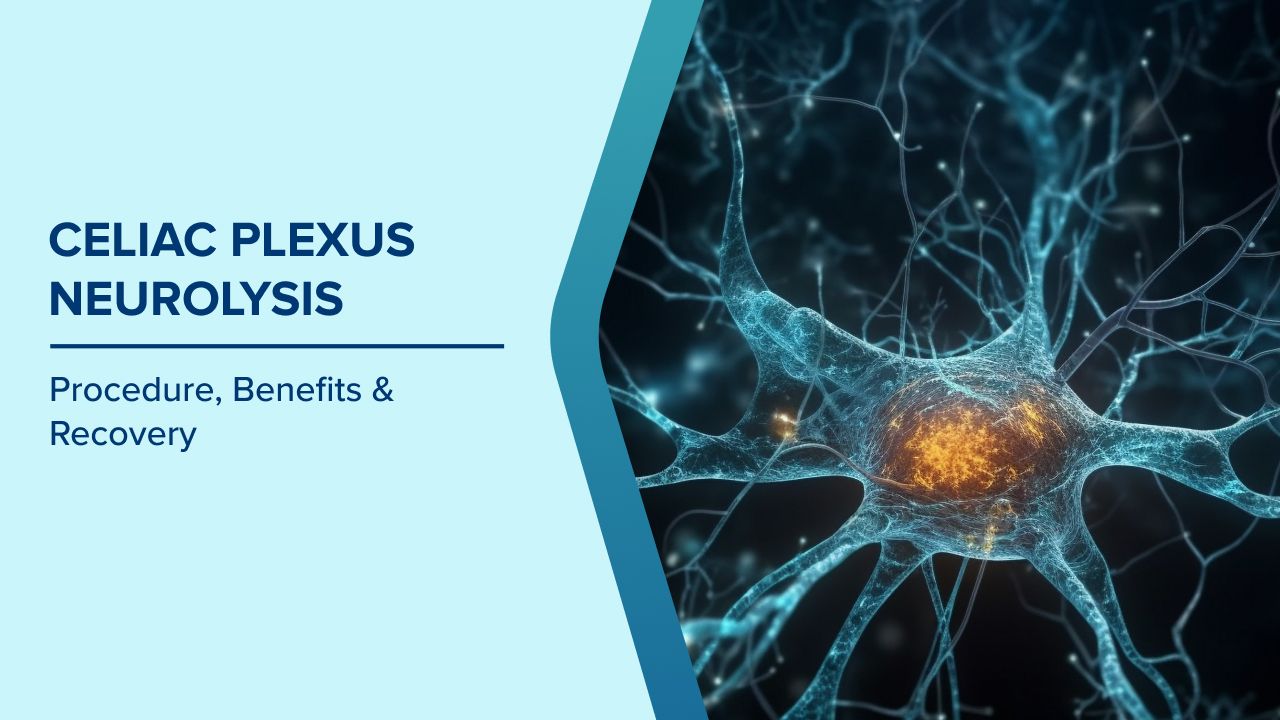
Understanding How Abdominal Pain Signals Travel
The abdomen contains a complex network of nerves that continuously communicate with the brain. Pain arising from organs such as the pancreas, liver, stomach, bile ducts, and intestines is often carried through two important nerve structures:
- The celiac plexus
- The splanchnic nerves
These nerves act like communication highways, transmitting pain messages from the abdominal organs to the central nervous system.
When cancer grows within or around these organs, it may irritate, compress, or invade nearby nerves, resulting in persistent and often severe pain.
Neurolysis works by interrupting these pain pathways before the signals reach the brain.
What Is Celiac Plexus Neurolysis?
The celiac plexus is a bundle of nerves located deep in the upper abdomen, close to the aorta and behind the stomach.
Celiac plexus neurolysis is a procedure in which a doctor injects a special neurolytic agent, commonly alcohol or phenol, around this nerve network. The aim is to disrupt pain transmission and provide longer-lasting relief.
This technique is most commonly considered for:
- Advanced pancreatic cancer
- Upper abdominal cancers
- Certain gastrointestinal malignancies
- Severe cancer-related abdominal pain
The procedure targets pain directly at its source rather than simply masking symptoms with medication.
What Is Splanchnic Neurolysis?
The splanchnic nerves are closely connected to the celiac plexus and carry pain signals from many abdominal organs.
Splanchnic neurolysis follows a similar principle but targets these nerves higher up in the body, usually near the spine.
Doctors may choose splanchnic neurolysis when:
- Access to the celiac plexus is difficult
- Previous celiac plexus procedures have not provided adequate relief
- Tumour location makes another approach more suitable
Although the target area differs, the goal remains the same: reducing severe abdominal pain and improving quality of life.
Who May Benefit From These Procedures?
Not every patient with cancer-related pain requires neurolysis.
These procedures are generally considered for people who:
- Have moderate to severe upper abdominal pain
- Require escalating doses of opioid medications
- Experience troublesome medication side effects
- Have pain that significantly affects sleep, appetite, or daily activities
- Need better symptom control during palliative care
Early referral for pain intervention may sometimes provide better results than waiting until symptoms become extremely severe.
How the Procedure Is Performed
Before the Procedure
The medical team reviews:
- Pain patterns
- Imaging scans
- Current medications
- Overall health status
Patients are given instructions regarding eating, drinking, and medication use before the procedure.
During the Procedure
Neurolysis is usually performed under imaging guidance, which may include:
- CT scan guidance
- Fluoroscopy (real-time X-ray)
- Endoscopic ultrasound guidance
A needle is carefully advanced to the target area while avoiding nearby organs and blood vessels.
Once proper positioning is confirmed, the neurolytic solution is injected around the nerves.
The procedure typically takes less than an hour.
After the Procedure
Most patients are observed for a short period before returning home or to their hospital room.
Pain relief may begin within hours or develop gradually over several days.
Benefits Beyond Pain Reduction
The primary goal is pain control, but successful neurolysis may offer additional advantages.
Reduced Need for Opioids
Many patients are able to lower their opioid requirements after treatment.
This may help reduce side effects such as:
- Drowsiness
- Constipation
- Nausea
- Mental clouding
Improved Appetite
Persistent pain often affects eating habits. Better pain control may make meals more comfortable and enjoyable.
Better Sleep Quality
Chronic abdominal pain frequently disrupts sleep. Relief can allow patients to rest more comfortably through the night.
Greater Daily Comfort
Even modest reductions in pain can make activities such as sitting, walking, socialising, or spending time with family easier.
How Long Does Pain Relief Last?
The duration of benefit varies from person to person.
Factors influencing outcomes include:
- Type of cancer
- Extent of disease
- Tumour location
- Individual pain characteristics
Some patients experience relief for several months, while others may continue to benefit for longer periods.
In some cases, additional pain management strategies may still be required alongside neurolysis.
Possible Side Effects and Risks
Like any medical procedure, neurolysis carries potential risks, although serious complications are uncommon when performed by experienced specialists.
Temporary effects may include:
- Low blood pressure
- Mild diarrhoea
- Temporary soreness at the injection site
- Back discomfort
Less common complications may involve:
- Bleeding
- Infection
- Nerve injury
- Injury to surrounding structures
The healthcare team carefully evaluates each patient to minimise these risks.
Neurolysis as Part of Comprehensive Cancer Care
Pain management is rarely based on a single treatment alone.
Neurolysis is often combined with:
- Pain medications
- Nutritional support
- Radiation therapy when appropriate
- Psychological support
- Palliative care services
A multidisciplinary approach helps address both the physical and emotional impact of chronic cancer pain.
Addressing Common Concerns
Does Neurolysis Cure Cancer?
No. Neurolysis is a pain-relief procedure and does not treat the underlying cancer. Its purpose is to improve comfort and quality of life.
Will I Stop All Pain Medicines Afterwards?
Some patients significantly reduce their medications, while others continue to require smaller doses. Individual responses vary.
Is the Procedure Painful?
Most patients tolerate the procedure well with local anaesthesia, sedation, or both.
Is It Only for End-Stage Cancer?
Not necessarily. Some patients benefit earlier in the course of advanced disease when pain begins affecting daily functioning despite medical treatment.
Conclusion
Cancer-related abdominal pain can have a profound impact on physical comfort, sleep, nutrition, emotional well-being, and overall quality of life. For patients whose pain remains difficult to control with medication alone, splanchnic neurolysis and celiac plexus neurolysis offer valuable options for advanced pain relief.
By targeting the nerves responsible for carrying pain signals from the abdomen, these procedures can provide meaningful symptom improvement, reduce reliance on strong pain medications, and help patients focus more on living comfortably and less on managing constant pain.
Frequently Asked Questions
1. What is the difference between a nerve block and neurolysis?
A nerve block usually provides temporary pain relief using local anaesthetic medications. Neurolysis intentionally disrupts nerve function for longer-lasting pain control.
2. Can celiac plexus neurolysis be repeated if pain returns?
In selected cases, repeat procedures may be considered depending on the patient's condition, previous response, and overall treatment plan.
3. Will the procedure affect digestion?
Most patients continue to digest food normally. Some may experience temporary diarrhoea or changes in bowel habits that usually improve over time.
4. How soon can normal activities be resumed after neurolysis?
Many patients can return to light activities within a day or two, depending on their overall health and recovery.
5. Can neurolysis be used for non-cancer abdominal pain?
In certain situations, such as severe chronic pancreatitis, specialists may consider these procedures. Suitability depends on the underlying cause of pain and individual patient factors.
Written and Verified by:

Related Blogs

Dr. Amod Manocha In Pain Management
Oct 27 , 2020 | 1 min read

Dr. Manish Marda In Pain Management
Jun 30 , 2017 | 20 min read
Blogs by Doctor

When is Pain Serious: Symptoms & When to Seek Care
Dr Ekta Gupta In Pain Management , Palliative Care
Dec 29 , 2025 | 2 min read
Most read Blogs


Related Blogs
Dr. Amod Manocha In Pain Management
Oct 27 , 2020 | 1 min read
Dr. Manish Marda In Pain Management
Jun 30 , 2017 | 20 min read
Blogs by Doctor
When is Pain Serious: Symptoms & When to Seek Care
Dr Ekta Gupta In Pain Management , Palliative Care
Dec 29 , 2025 | 2 min read
Most read Blogs