 WhatsApp Us (24/7)
 +91 926 888 0303 (24/7)


To Book an Appointment
Call Us+91 926 888 0303Endoscopic Brain Surgery: Procedure & Recovery
By Dr. Manu Rastogi in Neurosurgery , Surgical Oncology , Spine Surgery , Neuro Oncology
Aug 04 , 2026

The field of neurosurgery has advanced significantly over the years, making it possible to treat certain brain conditions through techniques that are less invasive than traditional open surgery. One such advancement is endoscopic brain surgery, a minimally invasive approach that allows surgeons to access specific areas of the brain using a thin tube fitted with a camera and specialised surgical instruments.
For carefully selected patients, this technique can provide effective treatment while reducing disruption to surrounding tissues. Although endoscopic brain surgery is not suitable for every neurological condition, it has become an important option for managing a range of brain disorders with greater precision.
What Is Endoscopic Brain Surgery?
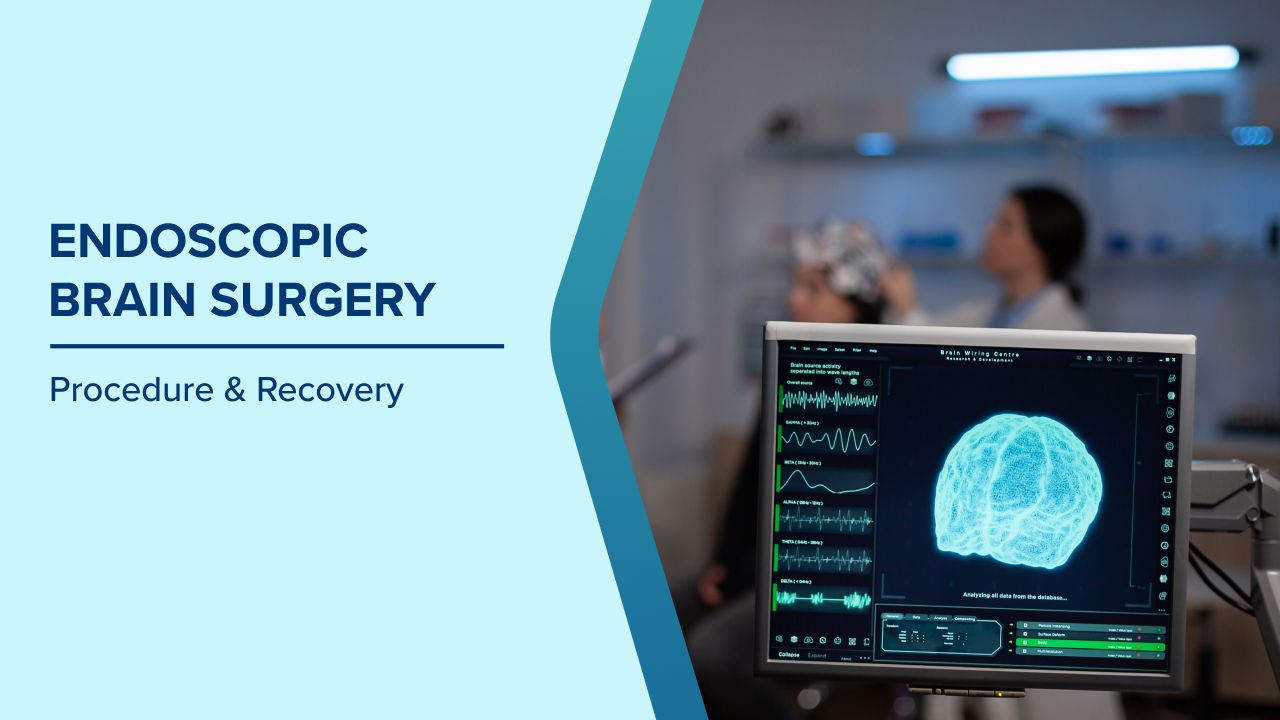
Endoscopic brain surgery is a minimally invasive neurosurgical technique that uses an endoscope, a slender instrument equipped with a high-definition camera and light source, to view and treat conditions inside the brain through a small opening.
The live images from the endoscope are displayed on a monitor, allowing the neurosurgeon to operate with excellent visualisation while using specially designed instruments. Unlike conventional surgery that may require a larger opening for direct access, this approach enables surgeons to reach certain parts of the brain through a much smaller pathway.
The exact technique depends on the condition being treated and the location of the abnormality.
How Endoscopic Brain Surgery Differs from Traditional Brain Surgery
Both endoscopic and conventional brain surgery aim to treat the underlying neurological condition safely and effectively. The difference lies in how the surgeon reaches the affected area.
Endoscopic brain surgery relies on specialised optical equipment that provides magnified internal views through a limited opening. In suitable cases, this allows treatment with less disruption to healthy tissues surrounding the surgical site.
Traditional surgery remains the preferred option for many complex conditions, particularly when extensive access is needed to remove large tumours, control bleeding, or reconstruct damaged structures. The choice of procedure is always based on the patient's diagnosis, imaging findings, and overall treatment goals rather than on the size of the incision alone.
Conditions That May Be Treated with Endoscopic Brain Surgery
Endoscopic brain surgery has expanded beyond a few specialised procedures and is now used for several carefully selected neurological conditions.
These may include:
- Certain pituitary tumours
- Colloid cysts within the brain's ventricular system
- Hydrocephalus requiring restoration of cerebrospinal fluid flow
- Selected intraventricular tumours
- Some skull base lesions
- Certain cystic brain lesions
Not every patient is a candidate for an endoscopic approach. Factors such as the size, location, and complexity of the condition help determine the most appropriate surgical technique.
Accessing Deep Areas of the Brain with Minimal Disruption
Some brain conditions develop in areas that are surrounded by delicate structures responsible for vision, movement, memory, or hormone regulation. Reaching these regions safely requires careful planning.
Endoscopic techniques allow surgeons to work through narrow surgical corridors while maintaining continuous visualisation of the operative field. This focused approach helps minimise unnecessary handling of surrounding tissues and supports greater surgical precision in selected cases.
Every procedure is individually planned using detailed imaging to identify the safest pathway before surgery begins.
The Role of High-Definition Visualisation
One of the defining features of endoscopic brain surgery is the quality of visualisation it provides.
Modern endoscopes offer high-definition, magnified views that enable surgeons to inspect areas that may be difficult to see using conventional line-of-sight techniques alone. Angled endoscopes can also provide visual access around anatomical corners, allowing a more comprehensive assessment of certain regions without increasing the size of the surgical opening.
Improved visualisation supports precise dissection and better identification of critical blood vessels, nerves, and surrounding brain structures.
Why Surgical Planning Is Essential
Successful endoscopic brain surgery begins long before the patient enters the operating room.
The surgical team carefully reviews brain imaging to understand:
- The exact location of the lesion
- Nearby blood vessels and nerves
- Natural anatomical pathways that can be used safely
- The relationship between the lesion and surrounding brain structures
- Whether an endoscopic approach is likely to achieve the surgical objective
This planning helps determine whether endoscopic surgery is appropriate or whether another surgical technique would provide a safer outcome.
What Patients Can Expect on the Day of Surgery
The procedure is performed under general anaesthesia, ensuring the patient remains asleep and comfortable throughout the operation.
After the surgery, patients are monitored closely as the effects of anaesthesia wear off. Depending on the type of procedure performed and the patient's overall condition, early neurological assessments are carried out to evaluate recovery.
Many patients are encouraged to begin gentle movement once their medical team confirms it is safe to do so. The length of hospital stay varies according to the underlying condition and the complexity of the surgery.
Recovery Following Endoscopic Brain Surgery
Recovery differs for every individual and depends more on the condition being treated than the surgical technique itself.
Follow-up care may include:
- Scheduled neurological examinations
- Imaging studies to assess surgical outcomes
- Medication when required
- Gradual return to daily activities under medical guidance
- Ongoing follow-up with the neurosurgical team
Patients should follow all postoperative instructions carefully and attend regular follow-up appointments to monitor healing and long-term progress.
When Endoscopic Brain Surgery May Not Be Suitable
Although endoscopic techniques have broadened treatment options, they are not appropriate for every neurological condition.
Conventional microsurgery or other specialised procedures may still be recommended for:
- Large brain tumours requiring wider exposure
- Extensive vascular abnormalities
- Complex traumatic brain injuries
- Conditions involving multiple areas of the brain
- Situations where complete access cannot be achieved through an endoscopic approach
Choosing the most suitable procedure always depends on achieving the safest and most effective outcome for the individual patient.
The Importance of an Individualised Treatment Plan
Modern neurosurgery focuses on selecting the right procedure rather than applying the same approach to every patient.
The treatment plan considers several factors, including:
- The diagnosis
- Imaging findings
- Neurological symptoms
- General health
- Previous treatments
- Expected surgical goals
In many cases, endoscopic brain surgery forms one part of a broader treatment strategy designed specifically for the patient's needs.
Read More: Minimally Invasive Brain Care: Precise, Safe & Faster Recovery
Conclusion
Endoscopic brain surgery represents an important advancement in minimally invasive neurosurgery, offering an effective treatment option for selected brain conditions. By combining specialised instruments with high-definition visualisation, it enables surgeons to access certain areas of the brain through smaller surgical pathways while maintaining excellent precision.
Although it is not suitable for every neurological disorder, endoscopic brain surgery continues to expand the range of treatment options available. Careful patient selection, detailed surgical planning, and experienced neurosurgical expertise remain the foundation for achieving the best possible outcomes.
Frequently Asked Questions
1. Is endoscopic brain surgery the same as keyhole brain surgery?
Endoscopic brain surgery is a minimally invasive or keyhole surgery that uses an endoscope to visualise and treat certain brain conditions through a small surgical opening.
2. Does every brain tumour require endoscopic surgery?
No. The choice of surgical approach depends on the tumour's size, location, type, and relationship to surrounding brain structures.
3. Is endoscopic brain surgery only used for tumours?
No. It may also be used for conditions such as hydrocephalus, colloid cysts, selected skull base lesions, and certain other neurological disorders.
4. Will I need regular scans after endoscopic brain surgery?
Many patients require follow-up imaging to assess healing and monitor the treated condition. The schedule varies according to the underlying diagnosis.
5. Is hospital stay always shorter after endoscopic brain surgery?
Many patients experience shorter hospital stays compared with traditional surgery, but the duration depends on the condition treated, the complexity of the procedure, and individual recovery.
6. How do doctors decide whether endoscopic brain surgery is suitable?
The decision is based on detailed brain imaging, the location and characteristics of the condition, the patient's overall health, and whether the endoscopic approach can safely achieve the treatment goals.
Written and Verified by:

Related Blogs

Dr. Sanjeev Kumar Gupta In Neurosurgery , Neurosciences
Jun 30 , 2016 | 2 min read

Dr. Sonal Gupta In Neurosurgery , Neurosciences
Jul 20 , 2016 | 2 min read
Most read Blogs


Related Blogs
Dr. Sanjeev Kumar Gupta In Neurosurgery , Neurosciences
Jun 30 , 2016 | 2 min read
Dr. Sonal Gupta In Neurosurgery , Neurosciences
Jul 20 , 2016 | 2 min read
Most read Blogs