 WhatsApp Us (24/7)
 +91 926 888 0303 (24/7)


To Book an Appointment
Call Us+91 926 888 0303What Is Interventional Pulmonology: Procedure & Tretament
By Dr. Vaibhav Chachra in Pulmonology , Allergy
Sep 29 , 2026

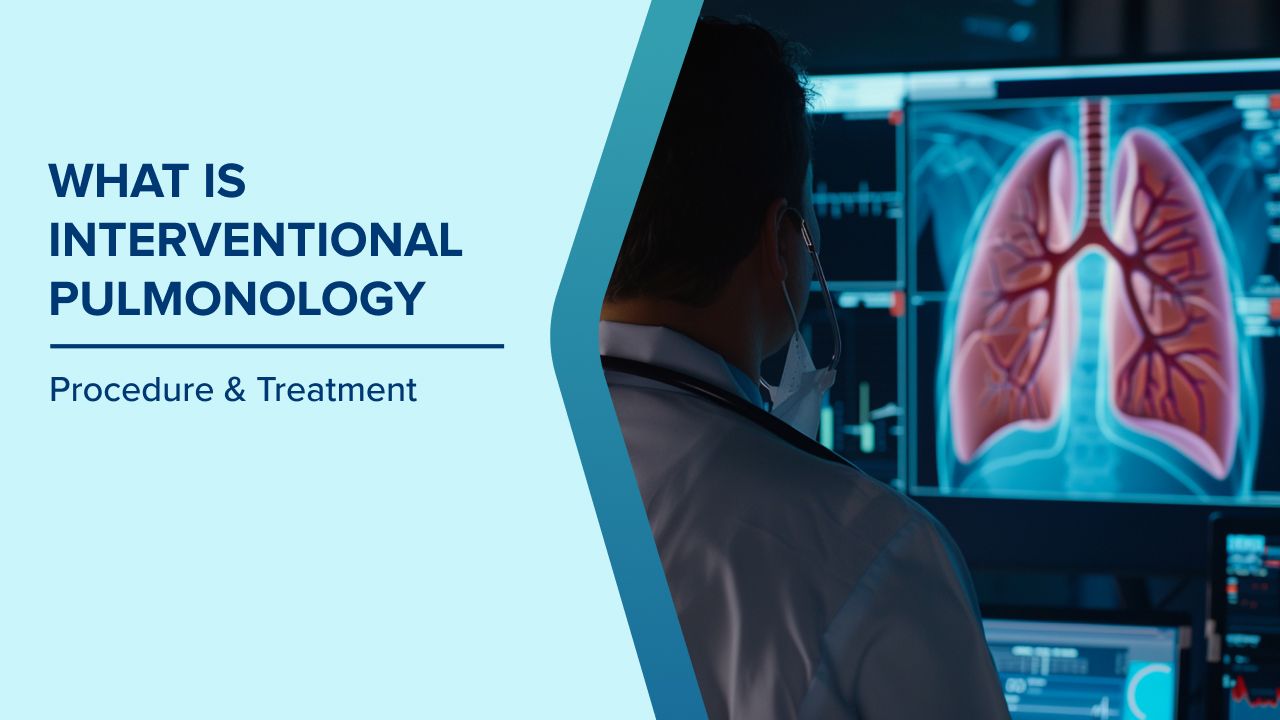
Interventional pulmonology is a specialised area of pulmonary medicine that uses minimally invasive procedures to diagnose, evaluate and treat certain conditions affecting the lungs, airways and chest. It can be useful for problems such as airway blockages, lung nodules or masses requiring biopsy, suspected lung cancer, enlarged lymph nodes in the chest, pleural effusion, airway narrowing and selected complex respiratory conditions. Procedures such as bronchoscopy, EBUS, bronchoscopic biopsy and therapeutic bronchoscopy allow doctors to investigate or manage conditions without always requiring conventional surgery. The right procedure depends on the underlying condition, its location and the patient's overall health.
What Is Interventional Pulmonology?
Interventional pulmonology is a specialised branch of pulmonary medicine focused on advanced procedures involving the airways, lungs and pleural space, which is the area between the lungs and chest wall.
While a pulmonologist manages a wide range of respiratory conditions, an interventional pulmonologist has additional expertise in performing specialised diagnostic and therapeutic procedures. These procedures can help doctors obtain tissue samples, examine abnormalities that cannot be assessed adequately through routine tests, relieve certain airway blockages and manage selected problems around the lungs.
Interventional pulmonology is not a treatment for every lung disease. Instead, it is particularly useful when a patient has a specific problem that may require an advanced bronchoscopic or pleural procedure.
What Conditions Can Interventional Pulmonology Treat?
The lung conditions treated by interventional pulmonology can be broadly divided into problems that require diagnosis and those that may benefit from a procedure to relieve or manage the condition.
Lung Cancer
Interventional pulmonology has an important role in the diagnosis and staging of certain lung cancers.
A suspicious area seen on a CT scan or another imaging test may need a tissue sample before treatment can be planned. Depending on its location, a bronchoscopic procedure may allow the interventional pulmonologist to obtain this sample.
EBUS, or endobronchial ultrasound, can also be used to examine and sample selected lymph nodes located around the airways. This can help determine whether cancer has spread to certain lymph nodes and contribute to lung cancer staging.
In some patients, interventional pulmonology may also help manage airway problems caused by a tumour, such as narrowing or obstruction. However, lung cancer treatment itself may involve surgery, radiation therapy, systemic treatment or a combination of approaches depending on the type and stage of cancer.
Lung Nodules and Lung Masses
A lung nodule is a small abnormal area in the lung, while a lung mass generally refers to a larger abnormal growth. Not every nodule or mass is cancerous, and not everyone requires a biopsy.
When further evaluation is needed, bronchoscopic techniques may sometimes be used to obtain tissue from a suspicious lesion. The choice of procedure depends largely on the size and location of the abnormality and what has already been seen on imaging.
A tissue diagnosis can help determine what the abnormality represents and guide the next step in management.
Airway Obstruction
Airway obstruction occurs when airflow through the trachea or bronchi becomes partially or completely blocked. Possible causes include:
- Tumours
- Foreign bodies
- Scarring
- Inflammation
- Structural abnormalities
- Other growths or lesions
In selected cases, therapeutic bronchoscopy can be used to evaluate the obstruction and, depending on its cause and location, help restore airflow. The procedure chosen depends on whether the obstruction is caused by a growth, narrowing, foreign material or another problem.
Airway Stenosis or Narrowing
Airway stenosis means that part of the airway has become narrower than normal. It can affect the trachea or one of the larger bronchi.
Scarring after certain medical procedures, inflammation, previous treatment, tumours or other structural problems can contribute to airway narrowing.
Interventional pulmonology may have a role in evaluating and managing selected cases. Bronchoscopic procedures can help assess the narrowed area, and certain interventions may be considered to improve the airway opening when appropriate. Treatment depends on the location, severity and underlying cause of the airway narrowing.
Pleural Effusion
A pleural effusion occurs when excess fluid collects around the lungs. There are many possible causes, including infections, heart-related conditions, inflammation, cancer and other medical problems. Some pleural effusions resolve with treatment of the underlying condition, while others may require drainage or further investigation.
Interventional pulmonology may be involved in evaluating unexplained or recurrent pleural fluid and performing selected pleural procedures when appropriate.
Pneumothorax and Persistent Air Leak
A pneumothorax occurs when air collects in the space around the lung and causes part or all of the lung to collapse.
Most cases are managed according to their cause and severity. However, some patients may develop a persistent air leak that continues despite initial management.
In selected complex cases, specialised bronchoscopic procedures may be considered. The suitability of such treatment depends on the location of the air leak, the patient's condition and the response to other treatments.
Foreign Body in the Airway
A foreign body can accidentally enter the airway, particularly in children, although adults can also experience airway foreign-body aspiration.
It may cause sudden coughing, breathing difficulty or wheezing. Sometimes, the symptoms can be less obvious and present later as recurrent respiratory problems.
Bronchoscopy can allow the doctor to look inside the airways and, when appropriate, locate and remove a foreign body.
Severe or Complex Airway Diseases
Interventional pulmonology may also be useful in selected patients with complex problems involving the central airways. These can include:
- Tracheal narrowing
- Bronchial narrowing
- Central airway obstruction
- Complex airway lesions
- Certain structural abnormalities
Not every airway condition requires an interventional procedure. Evaluation is needed to determine whether an advanced bronchoscopic approach is suitable.
Which Interventional Pulmonology Procedures Are Commonly Used?
The interventional pulmonology procedures used depend on whether the objective is diagnosis, staging or treatment.
Bronchoscopy
Bronchoscopy is a procedure in which a thin, flexible or specialised bronchoscope is passed through the mouth or nose into the airways.
It allows the doctor to examine the inside of the trachea and bronchi. Depending on the situation, tissue or fluid samples may also be collected. Bronchoscopy can therefore be used for both diagnosis and selected treatments.
EBUS
EBUS, or endobronchial ultrasound, combines bronchoscopy with ultrasound imaging. It allows doctors to examine structures located around the airways and guide a needle to selected lymph nodes or other areas for tissue sampling.
EBUS is particularly useful when evaluating certain enlarged lymph nodes in the chest and can contribute to lung cancer diagnosis and staging.
Therapeutic Bronchoscopy
Therapeutic bronchoscopy goes beyond simply looking inside the airways. In selected patients, it may be used to manage airway obstruction, certain airway narrowings, foreign bodies or other central airway problems. The specific technique depends on what is causing the obstruction and where it is located.
Bronchoscopic Biopsy
A bronchoscopic biopsy involves collecting a tissue sample through a bronchoscope. It may be considered when a suspicious lung lesion, lymph node or airway abnormality needs further evaluation. The tissue is then examined to help establish the diagnosis.
Airway Stenting
An airway stent is a small device placed inside a narrowed or obstructed airway to help keep it open.
Airway stenting is not suitable for every patient with airway obstruction. It may be considered in selected cases where maintaining an open airway is clinically appropriate.
Pleural Procedures
Interventional pulmonology may also include procedures to evaluate or manage problems involving the pleural space.
For example, selected patients with pleural effusion may require drainage or sampling of the fluid to help determine its cause.
Is Interventional Pulmonology Used Only for Lung Cancer?
No, interventional pulmonology is not only used for cancer. Although it plays an important role in evaluating suspected lung cancer, obtaining tissue samples and assessing certain lymph nodes, it can also be used for several non-cancerous conditions.
These may include selected airway obstructions, airway narrowing, foreign bodies, pleural problems and other complex respiratory conditions.
The procedure is selected according to the patient's specific problem rather than simply the presence or absence of cancer.
Interventional Pulmonology for Diagnosis vs Treatment
One of the easiest ways to understand interventional pulmonology is to divide its role into diagnostic and therapeutic procedures.
Diagnostic procedures
These are performed to find out what is causing a patient's problem. Examples include:
- Bronchoscopy
- Bronchoscopic biopsy
- EBUS
- Lymph node sampling
- Selected bronchoscopic procedures for lung lesions
Therapeutic procedures
These are performed to manage an already identified problem or relieve a complication. Examples include:
- Removing a foreign body
- Managing selected airway obstructions
- Treating certain airway narrowings
- Airway stenting in appropriate cases
- Selected pleural interventions
A procedure can sometimes serve both purposes. For example, bronchoscopy may help identify an airway abnormality while also allowing treatment during the same procedure.
When Should You See an Interventional Pulmonologist?
A patient may be referred to an interventional pulmonologist when a respiratory problem requires specialised evaluation or an advanced procedure. Referral may be considered when there is:
- An abnormal finding on a chest CT or other imaging test
- A suspicious lung nodule or mass requiring further evaluation
- Enlarged lymph nodes in the chest
- Suspected lung cancer requiring tissue diagnosis or staging
- Persistent airway obstruction
- Significant airway narrowing
- Recurrent or unexplained pleural effusion
- A suspected foreign body in the airway
- A complex airway problem
- A need for an advanced bronchoscopic procedure
The decision depends on the patient's symptoms, medical history, imaging findings and suspected diagnosis.
How Is Interventional Pulmonology Different From Regular Bronchoscopy?
Bronchoscopy is a procedure, whereas interventional pulmonology is a specialised area of pulmonary medicine.
A routine bronchoscopy allows a doctor to examine the airways and, when needed, collect samples. Interventional pulmonology includes bronchoscopy as well as more advanced diagnostic and therapeutic procedures involving the airways, lungs and pleural space.
Therefore, bronchoscopy is one of the tools used in interventional pulmonology, rather than being a separate alternative to it.
Is Interventional Pulmonology Minimally Invasive?
Many interventional pulmonology procedures are considered minimally invasive because they can be performed through the natural airways or through relatively small access points rather than requiring conventional open surgery.
However, the level of invasiveness varies between procedures. Some require sedation, while others may require a deeper level of anaesthesia depending on the procedure and the patient's condition.
Minimally invasive does not mean risk-free. The potential benefits and risks are assessed before the procedure.
What Happens During an Interventional Pulmonology Procedure?
Although preparation varies, the general process may involve:
- Medical evaluation: Symptoms, medical history and imaging are reviewed.
- Procedure selection: The most suitable diagnostic or therapeutic approach is decided.
- Preparation and consent: The patient receives instructions and discusses the procedure with the treating team.
- Sedation or anaesthesia: This depends on the procedure and individual circumstances.
- Procedure: The selected bronchoscopic or pleural procedure is performed.
- Monitoring: The patient is observed during recovery.
- Follow-up: Biopsy or other test results are reviewed and the next step is planned.
Are Interventional Pulmonology Procedures Safe?
Interventional pulmonology procedures are performed after considering whether the expected benefit justifies the potential risks. However, complications can occur, and the risks vary depending on the procedure and the patient's health.
Possible complications may include bleeding, infection, breathing difficulties, temporary throat discomfort or coughing. Pneumothorax can also occur with certain procedures.
Patients should discuss their individual risks, anaesthesia requirements and aftercare instructions with their treating team before undergoing a procedure.
How Is the Right Procedure Decided?
There is no single interventional pulmonology procedure that is suitable for every patient. The choice may depend on:
- Symptoms and clinical history
- CT scan or other imaging findings
- Location and size of a lung lesion
- Whether lymph nodes are enlarged
- Suspected diagnosis
- Airway involvement
- Overall health
- Previous procedures or treatments
Sometimes the best approach may not involve interventional pulmonology at all. Other diagnostic procedures, surgery or medical treatment may be more appropriate depending on the condition.
When Should Lung Symptoms Be Medically Evaluated?
Persistent respiratory symptoms should not be ignored, particularly when they are unexplained or continue despite initial evaluation. Symptoms that may warrant medical assessment include:
- Persistent cough
- Coughing up blood
- Unexplained breathlessness
- Recurrent chest infections
- Persistent chest discomfort
- Unexplained weight loss
- Persistent wheezing
- An unexplained abnormality on chest imaging
These symptoms can occur due to many conditions and do not automatically mean lung cancer. A medical evaluation can help determine the underlying cause and whether further testing is needed.
Conclusion
Interventional pulmonology provides specialised, minimally invasive options for diagnosing and managing selected conditions involving the lungs, airways and pleural space. Its role extends beyond lung cancer and may include lung nodules requiring biopsy, airway obstruction, airway narrowing, foreign bodies, pleural effusion and other complex respiratory problems.
Procedures such as bronchoscopy, EBUS, bronchoscopic biopsy, therapeutic bronchoscopy and airway stenting can help doctors investigate or manage these conditions when appropriate. Since every lung problem is different, the most suitable procedure depends on the patient's symptoms, imaging findings, suspected diagnosis and overall health. A referral to an interventional pulmonologist may therefore be recommended when advanced pulmonary procedures could provide useful diagnostic or therapeutic information.
Frequently Asked Questions
What does an interventional pulmonologist do?
An interventional pulmonologist performs specialised procedures to diagnose and, in selected cases, treat conditions involving the airways, lungs and pleural space. This may include bronchoscopy, EBUS, tissue sampling, airway procedures and selected pleural interventions.
Is interventional pulmonology the same as pulmonology?
No, pulmonology covers the broader diagnosis and management of respiratory diseases, while interventional pulmonology focuses on advanced minimally invasive procedures used for selected diagnostic and therapeutic problems.
Can an interventional pulmonologist diagnose lung cancer?
Yes, in appropriate cases. Bronchoscopy, EBUS and other bronchoscopic techniques can be used to obtain tissue samples that may help confirm lung cancer and, in selected cases, determine its extent.
Can interventional pulmonology remove a blockage from the airway?
In selected cases, yes. Depending on the cause and location of the blockage, therapeutic bronchoscopy or another airway intervention may help remove or manage the obstruction.
What is the difference between bronchoscopy and EBUS?
Bronchoscopy allows the doctor to examine the inside of the airways. EBUS adds an ultrasound component that helps visualise structures and selected lymph nodes located around the airways and guide tissue sampling.
Is EBUS painful?
EBUS is generally performed with sedation or anaesthesia to improve comfort. Some patients may experience temporary throat irritation, coughing or mild discomfort afterwards. Individual experiences vary.
How long does it take to recover from bronchoscopy?
Recovery varies according to the procedure, sedation or anaesthesia used and the patient's overall health. Patients should follow the specific instructions provided by their treating team before returning to normal activities.
Can interventional pulmonology treat non-cancerous lung conditions?
Yes, it can have a role in selected non-cancerous problems, including airway narrowing, airway obstruction, foreign bodies, pleural conditions and certain complex respiratory problems.
Who needs therapeutic bronchoscopy?
Therapeutic bronchoscopy may be considered when there is a problem that can potentially be managed through the airways, such as selected airway obstructions, foreign bodies or certain airway narrowings.
When is an airway stent needed?
An airway stent may be considered when a significant airway narrowing or obstruction needs support to remain open and other appropriate options are not sufficient or suitable. The decision depends on the underlying cause and location of the airway problem.
Written and Verified by:

Related Blogs

Medical Expert Team
Jun 06 , 2015 | 2 min read

Blogs by Doctor
Chronic Lung Diseases: Understanding Asthma, COPD, and Their Growing Global Burden
Dr. Vaibhav Chachra In Pulmonology , Allergy
Sep 24 , 2025 | 3 min read

Most read Blogs


Related Blogs
Medical Expert Team
Jun 06 , 2015 | 2 min read
Blogs by Doctor
Chronic Lung Diseases: Understanding Asthma, COPD, and Their Growing Global Burden
Dr. Vaibhav Chachra In Pulmonology , Allergy
Sep 24 , 2025 | 3 min read
Most read Blogs