 WhatsApp Us (24/7)
 +91 926 888 0303 (24/7)


To Book an Appointment
Call Us+91 926 888 0303Raynaud's Syndrome: Symptoms, Causes, Diagnosis & Treatment Options
By Dr Shatakshi Awasthi in Paediatrics (Ped)
Oct 06 , 2026

Raynaud’s syndrome is a condition that affects blood flow to certain parts of the body, most often the fingers and toes. During exposure to cold temperatures or emotional stress, the small blood vessels narrow more than usual, leading to colour changes, numbness, and discomfort. These episodes can be mild for some people and more troublesome for others, especially when symptoms occur frequently or last longer. For anyone living or recently diagnosed with Raynaud's syndrome, knowing about the condition is vital. This blog explains the symptoms, common causes, how the condition is diagnosed, and the treatment options available to help you navigate the condition with confidence and clarity.
What is Raynaud’s Syndrome?
Raynaud's syndrome is a vasospastic disorder where the body overreacts to temperature changes or emotional stress by dramatically narrowing the small arteries that supply blood to the skin. This exaggerated response is caused by spasms in the blood vessel walls, which temporarily block normal circulation to the affected areas. The condition mainly affects the fingers and toes, though ears, nose, and lips can also be involved. Episodes usually follow a pattern and resolve once normal circulation returns. Raynaud’s syndrome is not always a serious condition, but in some cases it may point to an underlying health issue that needs medical evaluation.
What are the Types of Raynaud’s Syndrome?
Raynaud’s syndrome is broadly classified into two types based on the underlying cause and severity of symptoms:
Primary Raynaud’s Syndrome
This is the more common form and occurs without an associated medical condition. Symptoms are usually mild and develop gradually. Blood vessels function normally between episodes, and long-term complications are uncommon.
Secondary Raynaud’s Syndrome
This form is linked to an underlying health condition, most often connective tissue or autoimmune disorders. Symptoms tend to be more frequent and severe, and there is a higher risk of complications such as skin sores or tissue damage. Identifying and managing the underlying condition plays an important role in controlling symptoms.
What Causes Raynaud’s Syndrome?
Raynaud’s syndrome develops due to abnormal narrowing of small blood vessels that supply blood to the extremities. In primary Raynaud’s syndrome, the exact cause is not clearly understood, and no associated medical condition is identified. The blood vessels are structurally normal but react more strongly than expected.
Secondary Raynaud’s syndrome occurs as a result of an underlying health condition that affects blood vessels or circulation. Connective tissue and autoimmune disorders are common causes. Structural damage to blood vessels, nerve-related conditions, and long-term exposure to factors that affect circulation can also contribute to the development of this form.
What Triggers Raynaud’s Syndrome?
Episodes of Raynaud’s syndrome occur when blood vessels narrow suddenly in response to certain situations. These triggers can vary from person to person, but the following are commonly recognised:
- Cold temperatures: Exposure to cold weather, cold water, or air-conditioned spaces can quickly reduce blood flow to the fingers and toes. Even handling cold objects may trigger symptoms.
- Emotional stress: Stressful situations, anxiety, or strong emotional responses can affect the nervous system and lead to tightening of blood vessels.
- Sudden temperature changes: Moving from a warm environment to a colder one can prompt an episode, even if the cold exposure is brief.
- Repetitive hand movements: Tasks that involve repeated use of the hands and fingers may increase sensitivity of blood vessels over time.
- Vibration exposure: Long-term use of vibrating tools or equipment can irritate blood vessels and nerves, making symptoms more likely to occur.
What are the Common Symptoms of Raynaud’s Syndrome?
Symptoms of Raynaud’s syndrome usually occur in episodes and most often affect the fingers and toes. The intensity and duration of symptoms can vary from person to person. Common symptoms include:
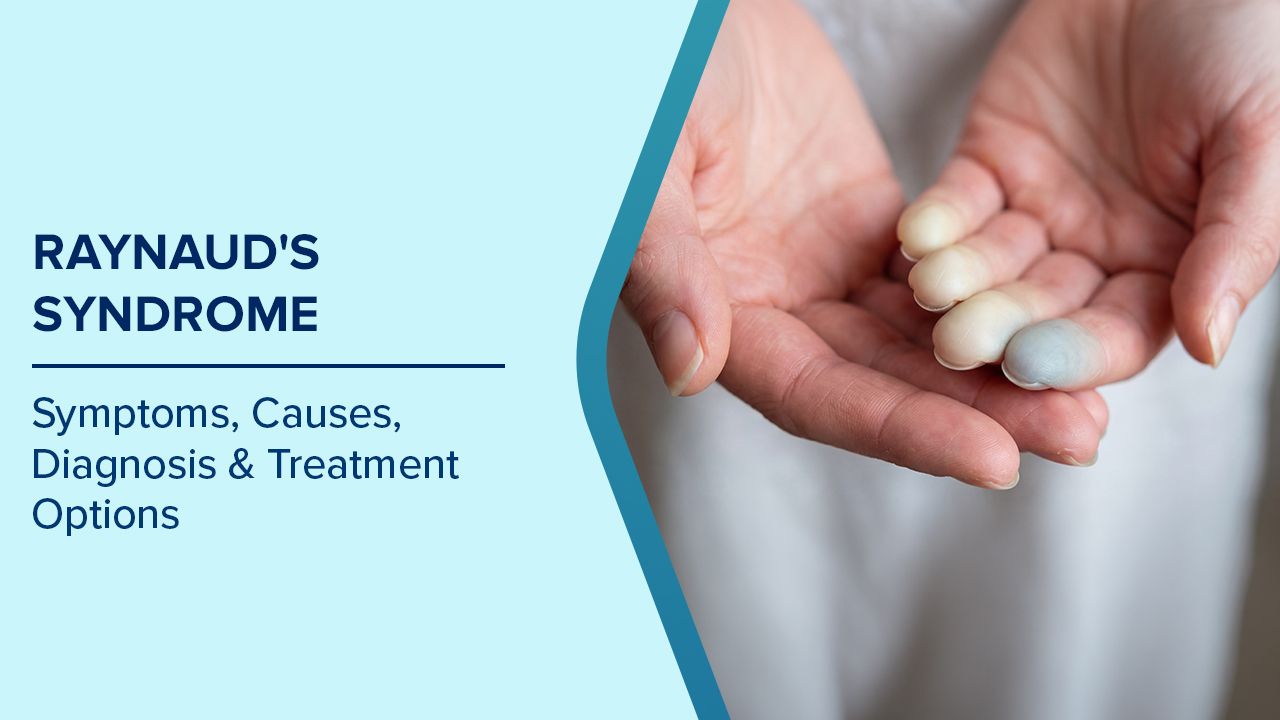
- Distinct colour changes in the skin: Affected areas may first turn white due to reduced blood flow, then blue as oxygen levels drop, and finally red when circulation returns
- Cold or icy sensation: Fingers or toes often feel much colder than surrounding areas, even in mildly cool conditions
- Numbness or reduced sensation: Limited blood flow can cause temporary loss of feeling or a heavy, dull sensation
- Tingling or prickling: A pins-and-needles feeling may occur as blood flow begins to return
- Pain or throbbing discomfort: Some people experience aching or throbbing as circulation improves
- Stiffness or difficulty moving: Affected fingers or toes may feel stiff during an episode, making movement uncomfortable
- Skin tenderness after an episode: The area can remain sensitive once normal blood flow is restored
Symptoms may last from a few minutes to several hours and can become more noticeable in colder environments or during periods of stress.
How is Raynaud’s Syndrome Diagnosed?
Diagnosis of Raynaud’s syndrome focuses on confirming symptoms, identifying the type, and checking for any underlying condition.
Medical History and Detailed Symptom Review
The diagnostic process begins with a thorough discussion of symptoms. Doctors assess how episodes start, the sequence of colour changes, how long symptoms last, and how often they occur. Attention is also given to age at symptom onset, as symptoms beginning later in life are more likely to be associated with secondary Raynaud’s syndrome. Information about existing medical conditions, family history of autoimmune disease, and long-term medicine use is also reviewed.
Physical Examination of Affected Areas
A close examination of the hands, feet, and skin helps identify signs of reduced blood flow. The doctor looks for skin thickening, cracks, ulcers, delayed healing, or changes around the nails. These findings can suggest ongoing circulation problems or tissue damage, which are more common in secondary Raynaud’s syndrome.
Nailfold Capillaroscopy
Nailfold capillaroscopy is a key test used to examine the small blood vessels at the base of the fingernails. Using magnification, doctors check for enlarged, distorted, or damaged capillaries. Normal capillaries usually point towards primary Raynaud’s syndrome, whereas abnormal patterns raise concern for an underlying connective tissue disorder.
Blood Tests for Underlying Conditions
Blood tests are carried out to look for markers of autoimmune or connective tissue diseases. These tests help identify inflammation, immune system activity, and specific antibodies that may explain the symptoms. Abnormal results support a diagnosis of secondary Raynaud’s syndrome and guide further evaluation.
Assessment of Blood Flow and Nerve Function
In selected cases, additional tests may be recommended to evaluate circulation or nerve involvement. These tests help rule out other vascular or neurological conditions that can mimic Raynaud’s syndrome, especially when symptoms are severe or atypical.
What are the Treatment Options for Raynaud’s Syndrome?
Medical treatment is recommended when Raynaud’s syndrome symptoms are frequent, severe, or interfere with daily life. The goal is to improve blood flow, reduce the severity of episodes, and prevent complications such as ulcers or tissue damage.
Medicines
Medicines are often the first step in medical management when lifestyle measures alone are not enough. They work by relaxing and widening the blood vessels, improving circulation to affected areas. Common medications include:
- Calcium channel blockers: Reduce the frequency and severity of episodes by helping blood vessels stay open.
- Vasodilators: Medicines that widen blood vessels to increase blood flow, sometimes used in severe cases.
- Blood pressure medicines: Certain drugs may help prevent blood vessel spasms and improve circulation.
These medicines are generally more important for people with secondary Raynaud’s syndrome or those experiencing painful or prolonged episodes.
Treatment of Underlying Conditions
Secondary Raynaud’s syndrome is linked to conditions such as autoimmune or connective tissue disorders. Effective management of these underlying conditions can reduce the severity and frequency of Raynaud’s symptoms. Treating the root cause may also prevent long-term complications, including skin ulcers or tissue damage.
Nerve Surgery (Sympathectomy)
In severe cases that do not respond to medicines, sympathectomy may be considered. This surgical procedure involves interrupting the nerves that trigger blood vessel constriction, which can improve blood flow to the fingers or toes. It is usually reserved for patients with persistent pain, recurrent ulcers, or tissue damage.
Chemical Injection (Botulinum Toxin Therapy)
Botulinum toxin injections can relax the small blood vessels in the hands or feet, reducing the intensity of episodes. This therapy may be recommended for severe cases where other treatments have not provided adequate relief.
Medical treatments are most effective when combined with lifestyle measures, ensuring better circulation and reducing the risk of long-term complications.
Managing Raynaud's Syndrome Through Lifestyle Adjustments
For many people with Raynaud's syndrome, lifestyle modifications serve as the first line of defense against uncomfortable episodes. These practical strategies can significantly reduce the frequency and severity of attacks, often without the need for medication. While they require some planning and habit changes, most people find these adjustments become second nature over time.
- Dress in layers: Start with moisture-wicking base layers, add insulating middle layers, and finish with windproof outer layers to protect against cold.
- Protect your extremities: Wear insulated gloves or mittens, thick socks, warm boots, and don't forget hats, scarves, and earmuffs.
- Keep your environment warm: Maintain home temperature above 68°F (20°C) and use gloves when reaching into refrigerators or handling cold items.
- Practice stress management: Try deep breathing exercises, meditation, progressive muscle relaxation, or biofeedback training to reduce stress-triggered episodes.
- Exercise regularly: Aim for at least 30 minutes of moderate activity most days to improve overall circulation and cardiovascular health.
- Quit smoking: Nicotine constricts blood vessels and directly worsens Raynaud's symptoms, making smoking cessation essential.
- Limit caffeine: Reduce or eliminate caffeinated beverages, as caffeine can have a vessel-constricting effect in some people.
- Protect your hands and feet: Wear protective gloves during household tasks and keep skin well-moisturized to prevent injury and cracking.
- Eat circulation-supporting foods: Include omega-3 fatty acids, antioxidant-rich fruits and vegetables, and stay well-hydrated throughout the day.
- Manage temperature transitions: Put on outerwear before leaving heated buildings and carry layers for air-conditioned spaces to avoid sudden temperature changes.
Most people find that combining several of these strategies provides the best protection against Raynaud's episodes.
Consult Today
Living with Raynaud's syndrome doesn't mean you have to accept constant discomfort or worry every time the temperature drops. You now have a solid understanding of what might be happening and what you can do about it. Here's the thing: while many people manage Raynaud's effectively on their own with the strategies we've discussed, you shouldn't hesitate to seek expert guidance, especially if your episodes are frequent, painful, or interfering with your daily life. At Max Hospital, our experienced rheumatologists specialize in vascular and autoimmune conditions like Raynaud's syndrome. They'll work with you to create a personalized treatment plan that fits your lifestyle and addresses your specific concerns. Schedule a consultation with a rheumatologist at Max Hospital today.
Frequently Asked Questions
Can Raynaud’s syndrome affect other parts of the body besides fingers and toes?
Yes, although it most commonly affects fingers and toes, Raynaud’s syndrome can sometimes involve the ears, nose, and lips, particularly during exposure to cold or stress.
Is Raynaud’s syndrome hereditary?
There may be a genetic component, especially in primary Raynaud’s syndrome. If close family members have the condition, your chances of developing it can be higher.
Can Raynaud’s syndrome lead to permanent damage?
Permanent tissue damage is rare in primary Raynaud’s syndrome. It is more likely in secondary cases, especially if episodes are severe, prolonged, or left untreated.
Are there seasonal differences in Raynaud’s symptoms?
Symptoms often worsen during colder months or in cold environments, while warmer seasons may see fewer or milder episodes.
Can certain hobbies or jobs increase the risk of Raynaud’s episodes?
Yes, activities involving repeated hand movements, vibration from tools, or prolonged exposure to cold can increase the likelihood of episodes in susceptible individuals.
Can Raynaud’s syndrome improve over time?
In primary Raynaud’s syndrome, symptoms may remain stable or even improve with age. In secondary cases, improvement depends on managing the underlying condition effectively.
Are there tests to predict the severity of future episodes?
There isn’t a specific test to predict episode severity, but monitoring symptom patterns, blood flow tests, and evaluation by a vascular specialist can help anticipate potential complications.
Written and Verified by:

Related Blogs

Dr. Nidhi Rawal In Paediatrics (Ped)
Nov 13 , 2020 | 2 min read

Blogs by Doctor
Most read Blogs


Related Blogs
Dr. Nidhi Rawal In Paediatrics (Ped)
Nov 13 , 2020 | 2 min read
Blogs by Doctor
Most read Blogs