 WhatsApp Us (24/7)
 +91 926 888 0303 (24/7)


To Book an Appointment
Call Us+91 926 888 0303What Are Gallstones: Symptoms & Surgery
By Dr. Alok Gupta in General Surgery , Laparoscopic / Minimal Access Surgery , Bariatric Surgery / Metabolic , Department of General Surgery and Robotics
Sep 25 , 2026

Gallstones are common and are often discovered incidentally during an ultrasound or health check-up. But finding a gallstone does not automatically mean that surgery is necessary.
The key distinction is whether the stones are asymptomatic or are causing symptoms or complications. In general, people with asymptomatic gallstones in an otherwise normal gallbladder do not routinely need treatment, while symptomatic gallstones are commonly treated by removing the gallbladder.
What Are Gallstones?
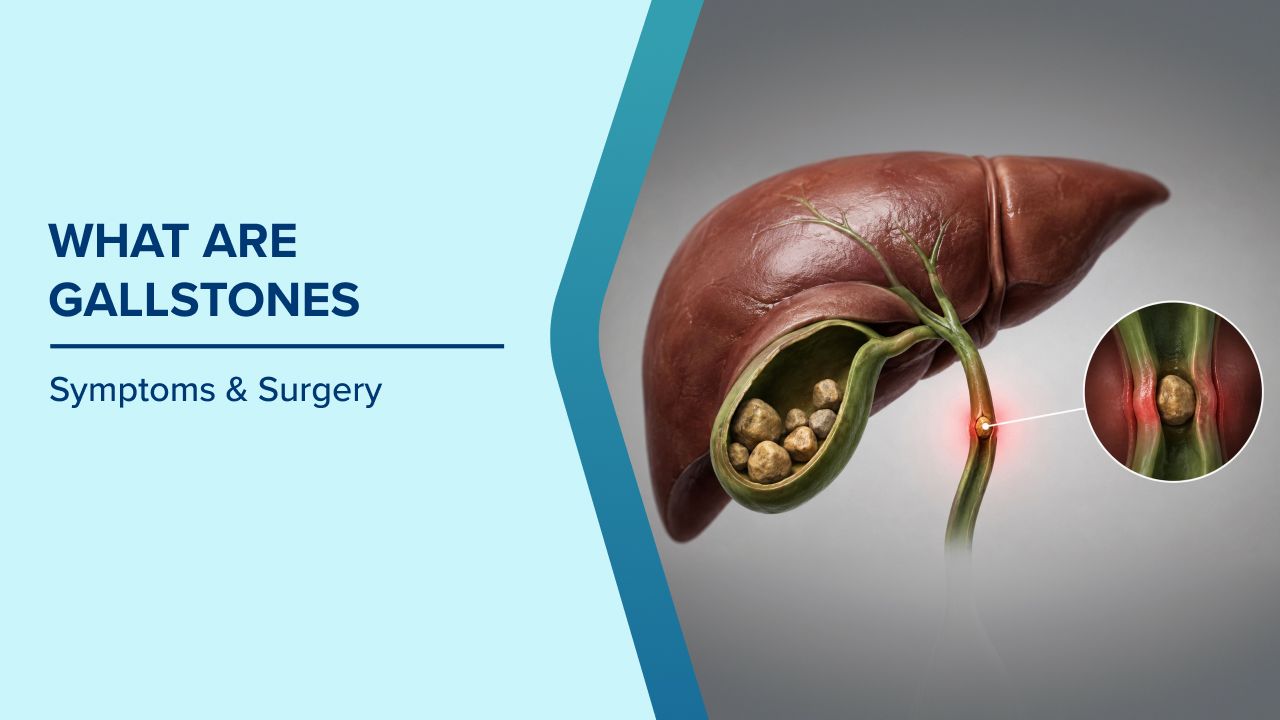
Gallstones are hardened deposits that develop inside the gallbladder. They can vary in size and number and may remain in the gallbladder without causing any symptoms.
Many people have gallstones without knowing they are there. These are often called silent or asymptomatic gallstones.
Problems arise when a stone blocks the normal flow of bile or irritates the gallbladder.
Gallstones Without Symptoms: Is Surgery Necessary?
If gallstones are discovered incidentally and the person has no symptoms, surgery is generally not required when the gallbladder and biliary tree are otherwise normal. Doctors may recommend observation and advise the patient to seek medical attention if symptoms develop.
However, there can be exceptions. Surgery may be considered in selected patients with particular risk factors or complications, so the decision should be individualised by a surgeon.
The presence of a stone on an ultrasound alone is therefore not an automatic indication for gallbladder removal.
What Do Painful Gallstones Feel Like?
When gallstones cause symptoms, the typical complaint is biliary colic—pain usually felt in the upper right or upper middle part of the abdomen.
The pain may:
- Occur after meals, particularly heavy or fatty meals
- Be severe or persistent
- Radiate towards the back or right shoulder
- Be associated with nausea or vomiting
Repeated attacks should not simply be ignored. Symptomatic gallstones are generally an indication for laparoscopic gallbladder removal, provided the patient is suitable for surgery.
When Do Gallstones Become More Serious?
A gallstone can sometimes cause more than intermittent pain. If a stone blocks the gallbladder outlet or bile duct, it can lead to complications such as:
- Acute cholecystitis: inflammation of the gallbladder
- Jaundice: when bile flow is obstructed
- Cholangitis: infection of the bile ducts
- Gallstone pancreatitis: inflammation of the pancreas caused by a gallstone
These complications may require urgent medical evaluation and, depending on the situation, procedures such as ERCP and/or surgery.
When Is Surgery Usually Recommended?
A surgeon may recommend laparoscopic cholecystectomy, commonly known as keyhole gallbladder surgery, when gallstones are causing symptoms or complications.
Common situations include:
- Symptomatic gallstones: Recurrent or significant biliary pain
- Acute cholecystitis: Inflammation or infection of the gallbladder
- Bile duct stones: Stones that have moved into the common bile duct may require bile duct clearance along with gallbladder removal
- Gallstone pancreatitis: Once the acute episode is appropriately managed, gallbladder removal is generally recommended to reduce the risk of recurrence.
For acute cholecystitis, guidelines recommend early laparoscopic surgery in appropriate patients rather than routinely delaying treatment.
Why Remove the Gallbladder Instead of Just the Stones?
Gallstones form because of conditions within the gallbladder that can persist even after an individual stone is removed. Therefore, when surgery is indicated for symptomatic gallstone disease, the usual procedure is cholecystectomy, removal of the gallbladder, rather than simply removing individual stones.
Laparoscopic cholecystectomy is the standard surgical approach for most patients requiring gallbladder removal and is commonly performed through small abdominal incisions.
Should You Wait for Another Painful Attack?
If you have already experienced symptoms from gallstones, it is worth discussing definitive treatment with a surgeon rather than simply waiting for another episode.
The appropriate timing depends on whether you have uncomplicated biliary pain, acute inflammation, bile duct stones or another complication. Your doctor may use your symptoms, blood tests and imaging findings to determine the safest approach.
When Should You Seek Urgent Medical Care?
Do not ignore severe or persistent abdominal pain, particularly if it is accompanied by:
- Fever or chills
- Repeated vomiting
- Yellowing of the eyes or skin
- Dark urine or unusually pale stools
- Severe or worsening abdominal pain
- Pain associated with significant weakness or dizziness
These symptoms can indicate a complication requiring prompt assessment.
Conclusion
Not every gallstone needs surgery.
If gallstones are discovered accidentally and are not causing symptoms, observation is usually appropriate. However, once gallstones start causing recurrent pain or complications such as cholecystitis, bile duct obstruction or pancreatitis, gallbladder removal may be recommended.
The decision should be based on your symptoms, ultrasound or other imaging findings, complications, overall health and surgical risk, not simply on the size or number of stones.
If you have been diagnosed with gallstones, an evaluation by a general or gastrointestinal surgeon can help determine whether monitoring is sufficient or whether surgery would be the safer long-term option.
Written and Verified by:

Related Blogs

Medical Expert Team
Oct 20 , 2015 | 1 min read
Dr. Vishwas Sharma In General Surgery
Apr 23 , 2015 | 1 min read
Blogs by Doctor


Most read Blogs


Related Blogs
Medical Expert Team
Oct 20 , 2015 | 1 min read
Dr. Vishwas Sharma In General Surgery
Apr 23 , 2015 | 1 min read
Blogs by Doctor
Most read Blogs