 WhatsApp Us (24/7)
 +91 926 888 0303 (24/7)


To Book an Appointment
Call Us+91 926 888 0303Loss of Appetite in Children: Causes & When to Worry
By Dr. Babita Jain in Paediatrics (Ped)
Oct 06 , 2026

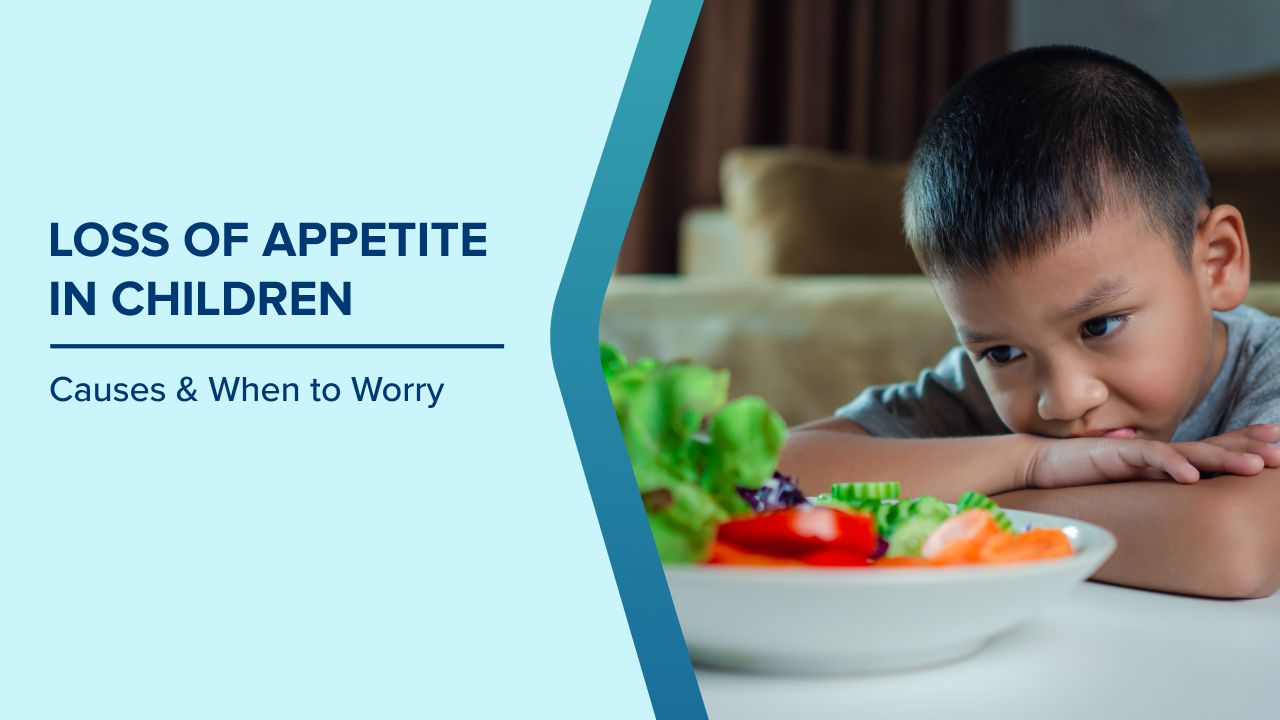
"My child doesn't eat properly." It is one of the most common concerns parents bring to a paediatrician. Children may go through phases of eating very little, becoming selective about food, skipping meals, or suddenly refusing foods they previously enjoyed. In many cases, this is a normal part of childhood.
However, a persistent or significant change in appetite, particularly when accompanied by poor growth or other symptoms, may need medical attention. So, when should parents simply observe, and when should they consult a doctor?
Why Do Children Lose Their Appetite?
A child's appetite can fluctuate for many reasons. These may include:
- Normal variations in growth and nutritional requirements
- Picky or selective eating
- Minor infections such as a cold, cough or fever
- Constipation
- Changes in routine or sleep
- Stress, anxiety or other emotional changes
- Frequent snacking between meals
- Excessive intake of sugary drinks or other calorie-dense beverages
- Distractions such as screens during meals
- Certain medications
Temporary loss of appetite during an illness is particularly common. Children often eat less when they are unwell and usually regain their appetite as they recover.
When Is Reduced Appetite Usually Not a Concern?
Occasional fluctuations in appetite are usually not a cause for concern if your child is:
- Active and playful
- Growing appropriately
- Drinking enough fluids
- Passing urine normally
- Eating a reasonable variety of foods over time
- Otherwise well, without persistent symptoms
Children do not necessarily eat the same amount every day, or even at every meal. Appetite can vary considerably depending on growth, activity, sleep and recent illness. For this reason, it is more useful to look at your child's overall eating pattern and growth over time rather than worry about one small meal or a skipped meal.
When Should Parents Pay Attention?
A persistent reduction in appetite deserves attention, particularly when it is accompanied by other symptoms. Parents should consult a paediatrician if they notice:
- Poor weight gain or weight loss
- A significant and persistent reduction in food intake
- Persistent vomiting or diarrhoea
- Recurrent or persistent abdominal pain
- Difficulty chewing or swallowing
- Persistent or troublesome constipation
- Unusual tiredness, weakness or reduced activity
- Excessive thirst or increased urination
- Persistent fever or other symptoms that are not improving
- A noticeable change in the child's usual behaviour or activity
In infants and younger children, reduced feeding accompanied by poor urine output, signs of dehydration, unusual drowsiness or marked lethargy should be assessed promptly.
Don't Force Your Child to Eat
When a child refuses food, parents naturally become anxious. This can sometimes lead to insisting, bargaining, threatening or forcing the child to finish the meal. Unfortunately, turning food into a struggle can make mealtimes stressful and may further worsen feeding difficulties. Instead, aim to create a calm and predictable mealtime environment.
- Offer Balanced Choices: Provide nutritious foods from different food groups, and let your child choose what to eat and how much.
- Keep Mealtimes Structured: Regular meal and snack times help children develop predictable eating patterns. Avoid allowing children to graze continuously throughout the day.
- Limit Excessive Snacking: Frequent snacks, especially sugary foods, juices and other calorie-dense drinks, can reduce hunger at mealtimes.
- Reduce Distractions: Try to keep televisions, phones and other screens away from the dining table. Mealtimes are also an opportunity for children and families to interact.
- Be a Role Model: Children learn by watching the adults around them. If they see parents enjoying a variety of nutritious foods, they are more likely to develop similar habits.
- Avoid Turning Food Into a Battle: A child does not need to be persuaded to finish every bite.
Parents decide what food is offered and when; the child can decide how much to eat.
Growth Matters More Than One Meal
One of the most important things a paediatrician considers when assessing appetite is growth. Weight, height and, particularly in younger children, their growth trajectory over time provide much more useful information than how much a child eats at any one meal.
A child who occasionally eats very little but remains active, healthy and continues to grow appropriately is very different from a child whose appetite has progressively declined along with weight loss, poor growth or other symptoms.
Conclusion
A child who eats less occasionally is not necessarily a child who is unwell. Appetite naturally fluctuates throughout childhood, and temporary reductions are particularly common during minor illnesses. What matters is the bigger picture:
- Is your child growing?
- Is your child active and well?
- Are they drinking and passing urine normally?
- Are they eating a reasonable variety of foods over time?
If the answer is yes, occasional poor appetite is usually not something to worry about. However, persistent loss of appetite, poor growth, weight loss or associated symptoms should not be ignored. If you are concerned about your child's appetite, feeding or growth, your paediatrician can assess the child as a whole and determine whether any further evaluation is needed.
Written and Verified by:

Related Blogs

Dr. Nidhi Rawal In Paediatrics (Ped)
Nov 13 , 2020 | 2 min read

Blogs by Doctor


Most read Blogs


Related Blogs
Dr. Nidhi Rawal In Paediatrics (Ped)
Nov 13 , 2020 | 2 min read
Blogs by Doctor
Most read Blogs