 WhatsApp Us (24/7)
 +91 926 888 0303 (24/7)


To Book an Appointment
Call Us+91 926 888 0303Recurrent Sinus Infections: Surgery & When to Consult
By Dr. Ravinder Gera in ENT(Ear Nose Throat)
Sep 15 , 2026
2

If you find yourself dealing with sinus infections repeatedly, you may wonder whether surgery can finally break the cycle. The answer is sometimes—but sinus surgery is not a guaranteed way to prevent every future sinus infection.
The right approach depends on why the infections keep returning, how frequently they occur, whether there is an underlying structural problem, and how well symptoms respond to medical treatment.
Why Do Sinus Infections Keep Coming Back?
Sinusitis occurs when the sinuses become inflamed, and their normal drainage is affected. Repeated episodes may be associated with allergies, nasal polyps, a deviated nasal septum or other problems that interfere with normal sinus drainage.
Some people may also have chronic rhinosinusitis, in which symptoms continue for 12 weeks or longer despite treatment.
Therefore, simply treating each episode with medication may not address the underlying reason for recurrence.
When Is Sinus Surgery Considered?
Most episodes of acute sinusitis do not require surgery. Doctors generally consider medical treatment first, which may include saline nasal irrigation, nasal corticosteroid sprays, allergy management and, when appropriate, antibiotics.
Surgery may be considered when chronic sinusitis does not improve adequately with appropriate medical treatment or when there is a structural or inflammatory problem that continues to block normal sinus drainage. Endoscopic sinus surgery is one such option.
An ENT specialist may evaluate factors such as:
- Frequency and severity of sinus infections
- Duration of symptoms
- Response to medical treatment
- Nasal blockage and difficulty breathing
- Presence of nasal polyps
- Deviated nasal septum or other structural abnormalities
- Findings on nasal endoscopy or CT scan
- Associated allergies or other conditions
How Can Surgery Help?
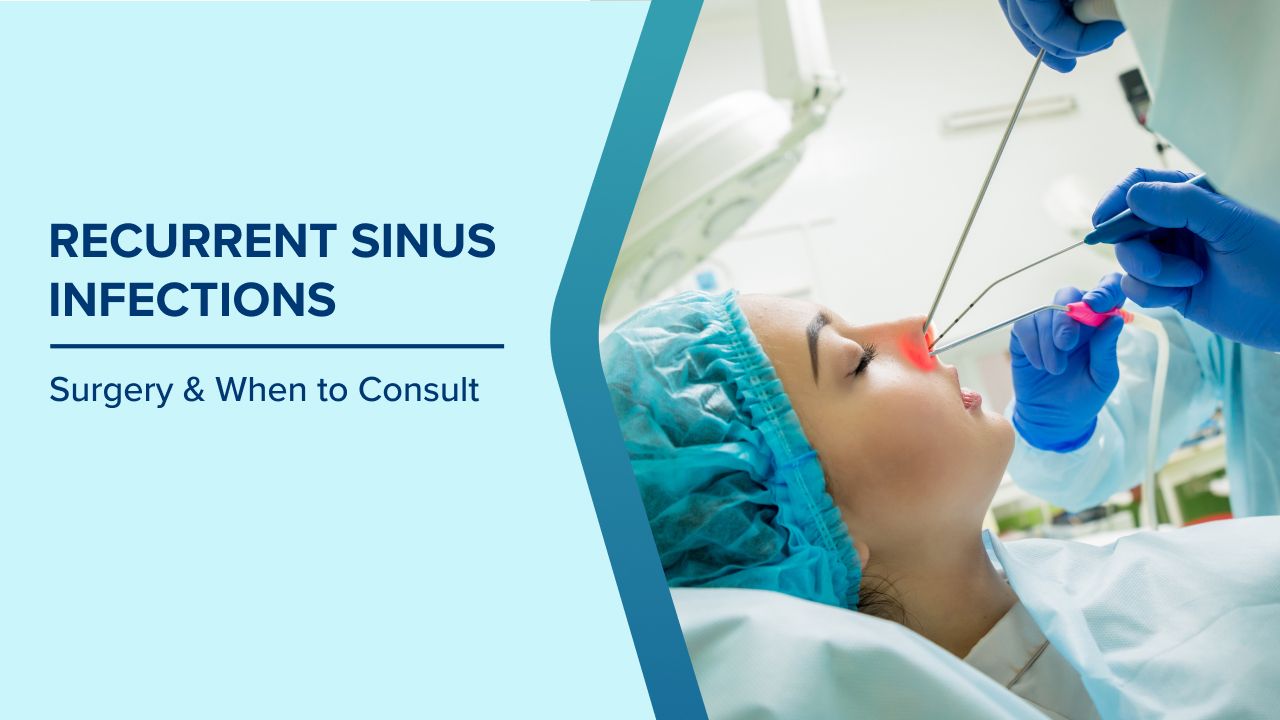
In endoscopic sinus surgery, the surgeon uses a small endoscope and specialised instruments through the nostrils to open blocked sinus pathways and remove tissue that is contributing to obstruction.
The goal is to restore ventilation and drainage of the sinuses, rather than simply treating an individual infection. Better access to the sinus cavities can also make it easier for topical medicines to reach the affected areas.
By addressing the underlying blockage, surgery may reduce the frequency or severity of sinus problems in appropriately selected patients.
Does Surgery Guarantee That Sinus Infections Will Never Return?
No.
Sinus surgery can improve symptoms and reduce the burden of disease in suitable patients, but it does not make a person completely immune to future sinus infections.
Conditions such as allergies, nasal polyps and chronic inflammation can continue after surgery. Some patients may therefore still need nasal sprays, saline irrigation, allergy treatment or other medical management. Long-term follow-up is also important, particularly for chronic rhinosinusitis.
What Happens After Sinus Surgery?
Recovery does not end when the operation is completed. Postoperative care may include nasal saline irrigation, prescribed medicines, follow-up examinations and, when required, nasal endoscopy or cleaning of the surgical area.
Following the ENT specialist's postoperative instructions is important because ongoing medical treatment can help maintain the benefits of surgery and reduce the likelihood of recurrent disease.
When Should You See an ENT Specialist?
Consider an ENT evaluation if you experience:
- Repeated sinus infections
- Persistent nasal blockage
- Facial pressure or pain that keeps returning
- Reduced sense of smell
- Thick or persistent nasal discharge
- Symptoms that do not improve despite appropriate treatment
Repeated sinusitis should not simply be treated as another episode of a common cold. Identifying the underlying cause can help determine whether continued medical management, allergy treatment, or surgery is appropriate.
The Takeaway
Sinus surgery can help reduce recurrent sinus problems in carefully selected patients by improving sinus drainage and addressing structural or diseased tissue that contributes to blockage. However, it is not a guaranteed cure for every future infection.
The best results usually come from combining the right surgical approach, when indicated, with appropriate medical treatment and long-term follow-up. An ENT specialist can evaluate the underlying cause of recurrent sinusitis and help determine whether surgery is likely to benefit you.
Written and Verified by:

Related Blogs


Dr. Ravinder Gera In ENT(Ear Nose Throat)
Nov 08 , 2020 | 2 min read
Blogs by Doctor
If You Could Make Your Deaf Child Hear, What Would You do? Get a Cochlear Implant?
Dr. Ravinder Gera In ENT(Ear Nose Throat)
Nov 08 , 2020 | 2 min read

What is Cochlear Implant: Eligibility, Pre-Surgery & Complications
Aug 27 , 2024 | 1 min read
Most read Blogs


Related Blogs
Dr. Ravinder Gera In ENT(Ear Nose Throat)
Nov 08 , 2020 | 2 min read
Blogs by Doctor
If You Could Make Your Deaf Child Hear, What Would You do? Get a Cochlear Implant?
Dr. Ravinder Gera In ENT(Ear Nose Throat)
Nov 08 , 2020 | 2 min read
What is Cochlear Implant: Eligibility, Pre-Surgery & Complications
Aug 27 , 2024 | 1 min read
Most read Blogs