 WhatsApp Us (24/7)
 +91 926 888 0303 (24/7)


To Book an Appointment
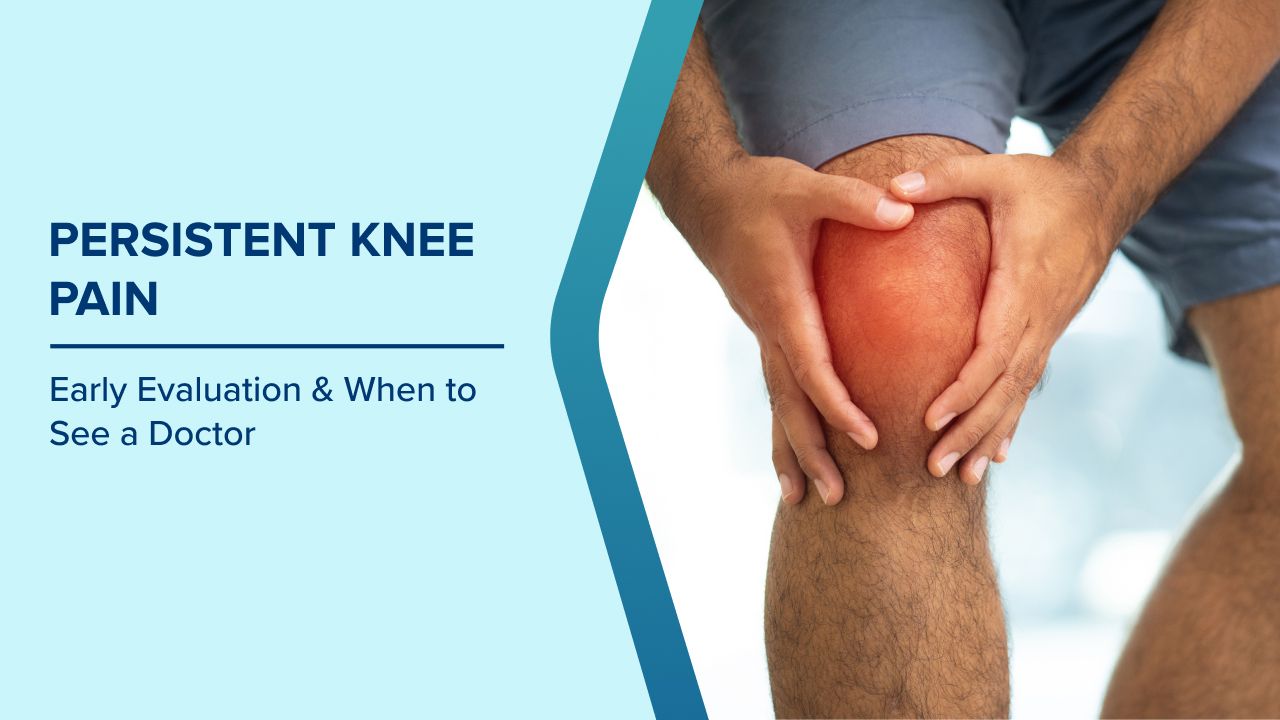
Call Us+91 926 888 0303Persistent Knee Pain: Early Evaluation & When to See a Doctor
By Dr. Jatinder Bir Singh Jaggi in Orthopaedics & Joint Replacement , Arthroscopy & Sports Injury
Oct 30 , 2026

People often dismiss knee pain as a normal part of ageing, a temporary result of overuse, or something that will go away with rest. But persistent or recurring knee pain can be your body's way of telling you that something needs attention.
Whether you're experiencing discomfort while walking, climbing stairs, getting up from a chair or exercising, understanding the cause of knee pain early can help prevent it from becoming a bigger limitation.
Why Does Your Knee Hurt?
The knee is one of the body's most complex weight-bearing joints. It consists of bones, cartilage, ligaments, tendons and other structures that work together to provide stability and movement. Knee pain can have several causes, including:
- Osteoarthritis: Gradual wear and changes in the joint that can cause pain, stiffness and reduced mobility.
- Ligament or meniscus injuries: Often associated with sports, sudden movements or falls.
- Tendinitis: Inflammation or irritation of a tendon around the knee.
- Bursitis: Inflammation of small fluid-filled sacs that cushion the joint.
- Previous injuries: An old knee injury can sometimes contribute to problems later in life.
- Excess weight: Additional load on the knee can increase stress on the joint.
The right treatment depends on the underlying cause.
When Should You Take Knee Pain Seriously?
Occasional discomfort after unusual physical activity may settle with appropriate rest. However, consider speaking to a healthcare professional if your knee pain:
- Persists or keeps returning
- Interferes with walking or everyday activities
- Makes climbing stairs difficult
- Causes prolonged stiffness
- Is accompanied by swelling
- Causes the knee to lock, give way or feel unstable
- Is getting progressively worse
You don't have to wait until the pain becomes severe to seek help.
Why Early Evaluation Matters
Knee pain doesn't always mean you need surgery. Depending on the cause and severity, treatment may include lifestyle modifications, physiotherapy, exercises to strengthen supporting muscles, weight management, medication when appropriate, injections in selected cases, or other interventions.
An early assessment can help identify the problem and determine the most appropriate treatment.
Don't Let Knee Pain Decide What You Can Do
Many people gradually change their lifestyle because of knee pain.
- They stop taking walks.
- They avoid stairs.
- They give up activities they enjoy.
- They become less physically active.
This can create a cycle in which reduced activity weakens muscles, which may further affect mobility and function. The goal of treatment is not simply to reduce pain, it is to help you maintain mobility, independence and quality of life.
What Can You Do to Support Your Knee Health?
- Stay Physically Active: Low-impact activities such as walking, swimming or cycling may help maintain strength and mobility, depending on your condition.
- Strengthen the Muscles Around Your Knee: Strong thigh and hip muscles can help support the knee and improve function. Exercises should be chosen according to your individual condition.
- Maintain a Healthy Weight: If you are overweight, even modest weight loss may reduce the load on your knees.
- Don't Ignore Recurrent Pain: Repeatedly relying on painkillers without understanding the underlying cause may delay appropriate evaluation.
- Give Your Knees the Attention They Deserve: If pain is affecting your daily routine, consult an orthopaedic specialist for an assessment rather than simply adjusting your lifestyle around the pain.
Your Knees Are Telling You Something
Knee pain isn't always something you have to "live with." Your knees help you walk, climb, bend, exercise and remain independent. Listening to persistent symptoms and getting the right evaluation early can help you take action before pain begins to significantly limit your life.
Listen to your knees. Understand the pain. Protect your mobility.
Written and Verified by:

Related Blogs


Dr. Ashish Jain In Orthopaedics & Joint Replacement
Nov 07 , 2020 | 1 min read
Blogs by Doctor
Sprained Ankle vs. Rolled Ankle: Understanding the Key Differences
Dr. Jatinder Bir Singh Jaggi In Orthopaedics & Joint Replacement
Feb 13 , 2025 | 7 min read
Arthritis: Debunking Common Misconceptions
Dr. Jatinder Bir Singh Jaggi In Orthopaedics & Joint Replacement , Arthroscopy & Sports Injury
Oct 14 , 2025 | 2 min read
Most read Blogs


Related Blogs
Dr. Ashish Jain In Orthopaedics & Joint Replacement
Nov 07 , 2020 | 1 min read
Blogs by Doctor
Sprained Ankle vs. Rolled Ankle: Understanding the Key Differences
Dr. Jatinder Bir Singh Jaggi In Orthopaedics & Joint Replacement
Feb 13 , 2025 | 7 min read
Arthritis: Debunking Common Misconceptions
Dr. Jatinder Bir Singh Jaggi In Orthopaedics & Joint Replacement , Arthroscopy & Sports Injury
Oct 14 , 2025 | 2 min read
Most read Blogs