 WhatsApp Us (24/7)
 +91 926 888 0303 (24/7)


To Book an Appointment
Call Us+91 926 888 0303Chest Pain During Exercise: Causes & Coronary Angiography
By Dr. Arun Kumar Gupta in Cardiac Sciences , Cardiology , Interventional Cardiology , Cardiac Electrophysiology-Pacemaker
Sep 25 , 2026

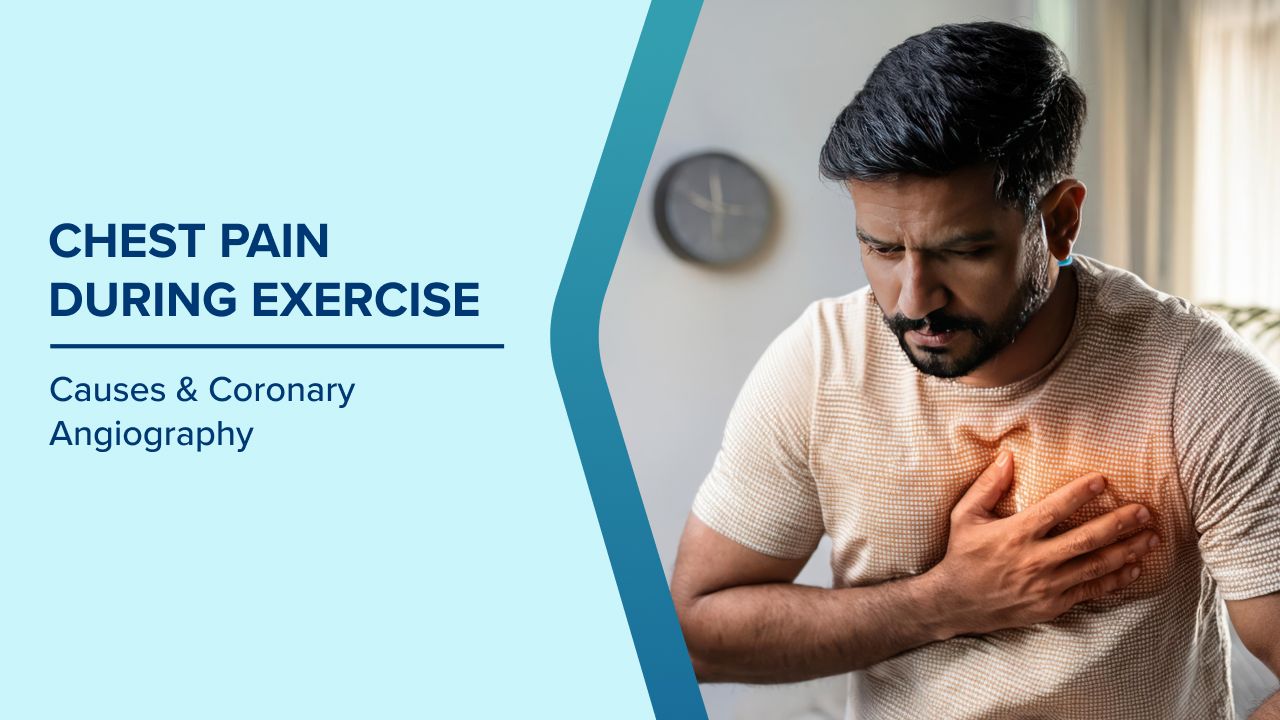
Chest discomfort during exercise can be unsettling. Sometimes it may be related to muscle strain, acidity or overexertion. But chest pain that repeatedly occurs during physical activity and improves with rest can also signal reduced blood flow to the heart, known as angina.
The important question is: Does every person with exercise-related chest pain need coronary angiography? Not necessarily. Doctors first assess the person's symptoms and cardiovascular risk and may recommend non-invasive tests before deciding whether an invasive angiogram is appropriate.
Why Does Chest Pain Occur During Exercise?
During exercise, the heart needs more oxygen-rich blood. If plaque buildup has narrowed the coronary arteries, they may not deliver enough blood when the heart is working harder.
This can cause pressure, tightness, heaviness or discomfort in the chest. The sensation may spread to the arm, shoulder, neck, jaw, or back and may be accompanied by breathlessness, sweating, nausea, or unusual fatigue.
However, chest pain during exercise does not automatically mean there is a blocked artery. A proper medical evaluation is needed to determine the cause.
What Happens Before Coronary Angiography?
For people with stable chest pain, doctors generally begin with a structured assessment of cardiovascular risk and symptoms. Depending on the individual's risk profile, they may recommend tests such as an ECG, echocardiogram, stress testing or coronary CT angiography (CCTA).
Current guidelines recognise CCTA and functional stress imaging as important non-invasive tests for evaluating suspected coronary artery disease.
These tests can help determine whether there is evidence of coronary artery disease and whether further evaluation is necessary.
When Might Coronary Angiography Be Considered?
Invasive coronary angiography may be recommended when there is a strong suspicion of significant coronary artery disease or when previous tests indicate a high-risk finding.
A cardiologist may consider angiography when:
- Chest pain is severe, frequent or occurring with relatively little physical activity.
- Symptoms continue despite appropriate medical treatment.
- Stress testing shows moderate-to-severe inducible ischaemia.
- Non-invasive imaging suggests significant coronary artery narrowing.
- There is a high likelihood of obstructive coronary artery disease.
- The patient has known coronary artery disease with persistent symptoms despite treatment.
- Non-invasive test results are inconclusive, but clinical suspicion remains high.
Invasive coronary angiography is considered in selected patients with a very high likelihood of obstructive coronary artery disease, severe symptoms despite treatment, angina occurring at a low level of exercise or evidence suggesting high cardiovascular risk.
What Does An Angiogram Tell Doctors?
During coronary angiography, doctors introduce a thin catheter through an artery, usually from the wrist or groin, and use contrast dye to visualise the coronary arteries.
The test can identify significant narrowing or blockage and help the cardiology team decide whether the patient may benefit from medication, angioplasty and stenting, or bypass surgery.
For some intermediate blockages, doctors may also assess whether the narrowing is actually restricting blood flow using techniques such as FFR or iFR before deciding on revascularisation.
When Is Chest Pain An Emergency?
Do not wait for a routine appointment if chest pain is new, severe, prolonged, or occurs at rest, particularly when accompanied by breathlessness, sweating, nausea, fainting, or pain spreading to the arm, jaw, back, or shoulder.
Such symptoms can indicate an acute coronary syndrome and require immediate medical evaluation.
Conclusion
Chest pain during exercise should not be ignored, but it does not automatically mean you need a coronary angiogram. The right approach depends on your symptoms, risk factors, examination and test results.
Early evaluation can help identify coronary artery disease before it progresses and allows the cardiologist to choose the most appropriate diagnostic and treatment strategy for you.
Written and Verified by:

Related Blogs

Dr. Ritwick Raj Bhuyan In Cardiac Sciences , Cardiac Surgery (CTVS)
Nov 08 , 2020 | 2 min read

Dr. Gaurav Minocha In Cardiac Sciences
Nov 08 , 2020 | 4 min read
Blogs by Doctor

Syncope or fainting attack -do always need a treatment?
Dr. Arun Kumar Gupta In Cardiac Sciences
Oct 19 , 2015 | 2 min read

Dilated Cardiomyopathy: Improving Care and Seeking a Cure
Dr. Arun Kumar Gupta In Cardiac Sciences
Jun 28 , 2024 | 12 min read
Most read Blogs


Related Blogs
Dr. Ritwick Raj Bhuyan In Cardiac Sciences , Cardiac Surgery (CTVS)
Nov 08 , 2020 | 2 min read
Dr. Gaurav Minocha In Cardiac Sciences
Nov 08 , 2020 | 4 min read
Blogs by Doctor
Syncope or fainting attack -do always need a treatment?
Dr. Arun Kumar Gupta In Cardiac Sciences
Oct 19 , 2015 | 2 min read
Dilated Cardiomyopathy: Improving Care and Seeking a Cure
Dr. Arun Kumar Gupta In Cardiac Sciences
Jun 28 , 2024 | 12 min read
Most read Blogs