 WhatsApp Us (24/7)
 +91 926 888 0303 (24/7)


To Book an Appointment
Call Us+91 926 888 0303Radiation Therapy Hair Loss: Causes & Prevention
By Dr Tripti Saxena in Radiation Oncology , Cancer Care / Oncology , Uro-Oncology , Musculoskeletal Oncology , Breast Cancer , Thoracic Oncology , Gynecologic Oncology , Head & Neck Oncology , Neuro Oncology , Gastrointestinal & Hepatobiliary Oncology
Aug 27 , 2026

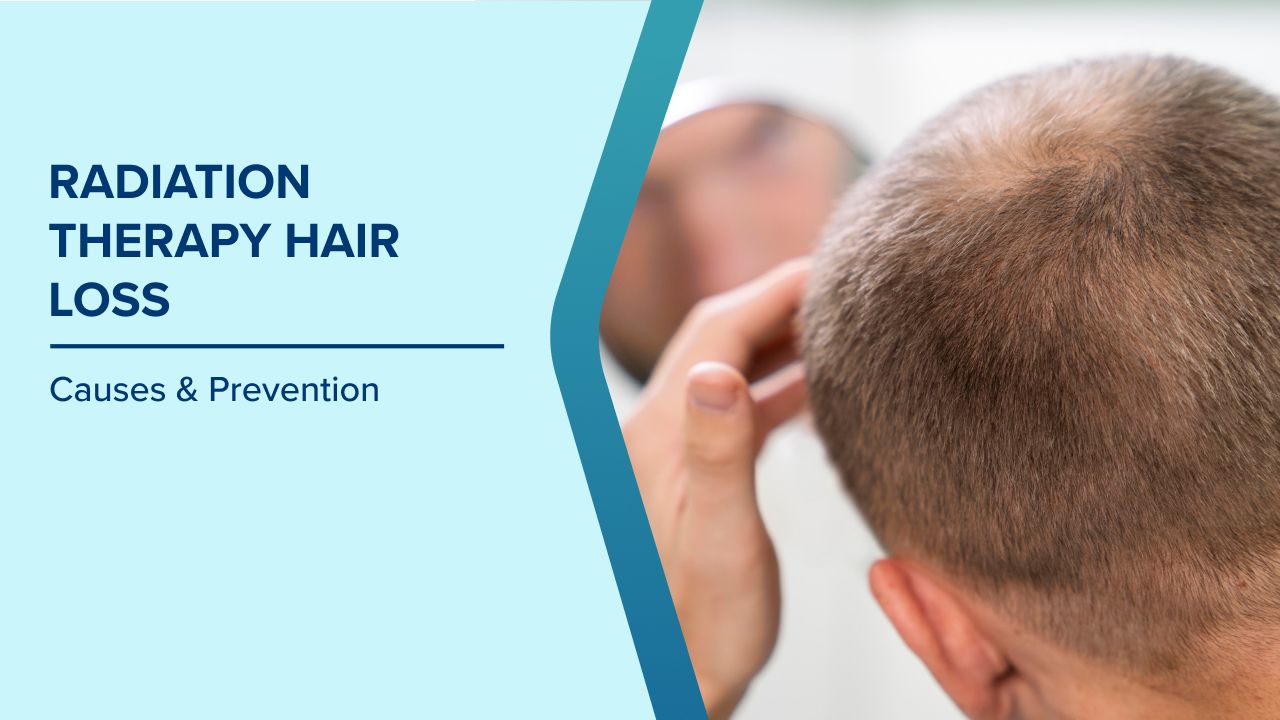
Radiation therapy can cause hair loss, but it does not affect everyone in the same way. Hair loss usually occurs only in the area exposed to radiation. Therefore, people receiving radiation to the brain, scalp or certain areas of the head may notice hair thinning or hair loss within the treatment area. Radiation directed at the chest, abdomen or pelvis generally does not cause scalp hair loss. The extent of hair loss depends mainly on the treatment area, radiation dose and individual response. Hair may grow back after treatment, but higher radiation doses can sometimes cause longer-lasting or permanent hair loss in the treated area.
Does Radiation Therapy Cause Hair Loss?
Yes, radiation therapy can cause hair loss when hair follicles are exposed to radiation, but it does not automatically cause scalp hair loss.
Radiation affects cells within the treatment field. Since hair follicles contain cells that are actively involved in hair production, they can be affected when they receive radiation. This means:
- Radiation to the scalp or brain may cause hair loss in the treated area.
- Radiation to the head and neck may affect scalp, facial, eyebrow or eyelash hair if those follicles are within the treatment field.
- Radiation to the chest or abdomen generally does not cause scalp hair loss.
- Radiation to another hair-bearing part of the body may cause hair loss specifically in that area.
The amount of hair loss can vary considerably from one person to another. Some people may notice mild thinning, while others may develop a more defined patch of hair loss.
Why Does Radiation Treatment Cause Hair Loss?
Hair follicles naturally go through cycles of growth and rest. The cells involved in producing hair are relatively active, which makes them sensitive to radiation.
When radiation reaches hair follicles within the treatment area, it can temporarily slow or stop hair production. With lower exposure, the follicles may recover after treatment. With higher exposure, the damage can be more significant and may affect the ability of the follicles to produce hair in the future.
The likelihood and severity of radiation-related hair loss depend on several factors, including:
- The radiation dose received by the hair follicles
- The location and size of the treatment area
- The number and schedule of treatment sessions
- Individual sensitivity to treatment
- Whether other cancer treatments are being given
This is why it is not possible to predict the exact amount of hair loss based on radiation therapy alone.
Does All Radiation Therapy Cause Hair Loss?
No, radiation therapy does not always cause hair loss. The most important factor is whether hair follicles are located within the radiation field.
For example, someone receiving radiation therapy to the brain may develop hair loss on part of the scalp, depending on the treatment area. In contrast, someone receiving radiation therapy to the chest would not generally lose scalp hair because the scalp is outside the treatment field.
Similarly, radiation to the pelvic region may affect hair within that area but would not normally affect the hair on the head.
The treatment team can explain which areas are likely to be affected before radiation therapy begins.
What Does Radiation-Related Hair Loss Look Like?
Radiation-related hair loss does not necessarily involve the entire head. Patients may notice:
- Gradual hair thinning
- Increased hair shedding
- A small or large patch of hair loss
- Reduced hair density within the treated area
- Loss of facial hair when it falls within the treatment field
The pattern generally corresponds to the area exposed to radiation. For example, a patient receiving radiation to a specific part of the scalp may develop hair loss in that particular region while hair outside the treatment area remains unaffected.
The appearance can also change depending on the treatment technique and the amount of radiation reaching the hair follicles.
When Does Hair Loss Start During Radiation Therapy?
Hair loss from radiation does not usually occur immediately after the first treatment session. When it occurs, it may become noticeable during the course of radiation therapy, although the timing can vary. The treatment dose and the sensitivity of the hair follicles can influence when shedding or thinning becomes apparent.
Some patients may notice changes relatively early, while others may not see obvious hair loss until later in the treatment course.
It is therefore better to ask the radiation oncology team what to expect based on the specific treatment plan rather than comparing the timing with another patient's experience.
Is Hair Loss From Radiation Permanent?
Not always. Radiation-induced hair loss may be temporary when the hair follicles are affected but not permanently damaged. Once treatment ends and the follicles recover, hair production may gradually resume.
However, higher radiation doses can cause greater damage to the hair follicles. In these situations, hair may take much longer to return, grow back less densely or fail to regrow completely.
Permanent hair loss is more likely when the hair follicles receive a higher radiation dose. This is an important reason why patients should not assume either that all radiation-related hair loss will be permanent or that all hair will definitely grow back.
When Does Hair Grow Back After Radiation Therapy?
If the hair follicles recover, regrowth usually takes time. Hair may begin growing again after treatment has ended, but the exact timing varies from person to person. Some patients may notice new growth within a few months, while others may take longer. New hair may also look different at first. It can be:
- Finer or thicker
- Curly or straighter than before
- Different in texture
- Uneven or patchy
- Different in colour
In some cases, hair may not return to its previous thickness. With higher radiation exposure, regrowth may be incomplete or permanent hair loss may occur in part of the treated area.
Radiation Therapy vs Chemotherapy Hair Loss
Radiation therapy and chemotherapy can both affect hair, but they do so differently. Chemotherapy involves medicines that travel through the bloodstream. Depending on the specific medicine and treatment regimen, hair follicles throughout the body can be affected. This may result in more widespread hair loss.
Radiation therapy is generally more localised. Hair loss usually occurs in the area that receives radiation.
A person receiving both chemotherapy and radiation therapy may therefore experience hair loss for more than one reason. The treatment team can explain what type of hair changes are expected with the planned cancer treatment.
Can Radiation Therapy Affect Eyebrows and Eyelashes?
Yes, eyebrows and eyelashes can be affected if they fall within the radiation treatment area. This may occur with certain treatments involving the brain, scalp, eyes or nearby areas of the head and face.
The amount of hair loss depends on how much radiation reaches the follicles. Regrowth is possible when the follicles recover, but higher radiation exposure can increase the risk of prolonged or permanent hair loss.
How to Care for Your Hair and Scalp During Radiation Therapy
If the scalp is included in the radiation field, the skin and hair may become more sensitive. Gentle care can help minimize unnecessary irritation.
- Be Gentle With Your Hair: Avoid vigorous brushing, excessive combing and tight hairstyles. If the scalp becomes sensitive, handle the area as gently as possible.
- Use Mild Hair Products: A gentle shampoo may be more comfortable if the scalp becomes dry or sensitive. If irritation develops, ask the treatment team which products are appropriate rather than trying multiple products on your own.
- Avoid Excessive Heat: Hair dryers, straighteners, curling irons and other heated styling tools may irritate sensitive hair and scalp. Limiting their use during treatment can help reduce unnecessary stress on the hair and skin.
- Be Careful With Chemical Treatments: Hair colouring, chemical straightening, perming and similar treatments can irritate a sensitive scalp. Discuss with the radiation oncology team when you can safely resume these treatments.
- Protect the Treated Skin: Radiation-treated skin may become more sensitive. Follow the specific skin-care instructions provided by the treatment team, particularly regarding sun exposure and products applied to the treated area.
Do not apply oils, creams, supplements or other products marketed for preventing radiation-related hair loss unless they have been approved by the treating team.
What If Hair Loss Affects Your Confidence?
Hair loss can be emotionally difficult, particularly when it affects a visible area such as the scalp, eyebrows or eyelashes. Some people may feel self-conscious about changes in their appearance, while others may find that the temporary nature of the change makes it easier to manage. Patients can consider whatever makes them comfortable, such as:
- Soft caps or scarves
- Wigs
- Head coverings
- Shorter hairstyles
- Talking openly with family or friends
- Speaking with a counsellor or support professional
There is no single right way to cope with treatment-related hair changes.
When Should You Speak to Your Radiation Oncology Team?
Hair loss may be an expected side effect when hair follicles are within the radiation field. However, patients should inform their treatment team about significant or unexpected changes to the scalp or treated skin. Contact the treatment team if there is:
- Significant pain
- Severe itching
- Marked redness
- Blistering
- Peeling or open skin
- Persistent discomfort
- Rapid or unexpected changes
- Concerns about hair or scalp care
The treatment team can determine whether the changes are expected and recommend appropriate care based on the radiation treatment plan.
Can Hair Loss From Radiation Therapy Be Prevented?
Radiation-related hair loss cannot always be prevented because it depends on the treatment area and the radiation dose needed to treat the condition.
Modern radiation treatment is carefully planned to target the intended area while limiting unnecessary exposure to surrounding healthy tissue. However, when hair follicles are located within the area that needs treatment, some hair loss may be unavoidable.
Patients should never reduce, delay or stop cancer treatment to avoid hair loss. Similarly, unproven oils, supplements or home remedies should not be relied upon to prevent radiation-induced hair loss. Any product intended for use on the treated skin or scalp should first be discussed with the healthcare team.
Conclusion
Radiation therapy can cause hair loss, but it usually affects only the area receiving radiation. Patients undergoing radiation to the scalp, brain or certain areas of the head may notice thinning or hair loss, while radiation directed at other parts of the body generally does not cause scalp hair loss.
Hair may grow back after treatment, particularly when the hair follicles have not been permanently damaged. However, regrowth can take time, and higher radiation doses may sometimes cause permanent hair loss.
The best way to know what to expect is to discuss the treatment area, expected side effects and hair and scalp care with the radiation oncology team before treatment begins.
Frequently Asked Questions
How soon does hair fall out after radiation therapy?
When radiation causes hair loss, it may become noticeable after treatment has started rather than immediately after the first session. The timing varies depending on the radiation dose, treatment area and individual response.
Does radiation therapy cause hair loss on the whole body?
Usually, no. Radiation-related hair loss generally occurs in the area exposed to radiation. It does not typically cause widespread hair loss in areas that are outside the treatment field.
Can radiation therapy cause hair thinning instead of complete hair loss?
Yes, the effect can range from mild thinning to more noticeable or patchy hair loss. The amount of hair affected depends on radiation exposure and individual response.
Can hair grow back differently after radiation treatment?
Yes, when hair regrows, it may initially have a different thickness, texture or curl pattern. Some people may also experience uneven regrowth.
Can radiation permanently damage hair follicles?
Yes, higher radiation exposure can cause significant damage to hair follicles and may result in prolonged or permanent hair loss in the treated area.
Can radiation cause eyebrow and eyelash loss?
It can if the eyebrows or eyelashes are within the radiation treatment area. Whether they regrow depends on the radiation dose and the extent of follicle damage.
Can hair be coloured after radiation therapy?
Hair colouring may irritate a sensitive scalp, particularly during or soon after treatment. It is best to ask the treatment team when chemical hair treatments are appropriate.
Is it safe to shave the head during radiation treatment?
Shaving may be uncomfortable if the scalp is sensitive or irritated. Anyone receiving radiation to the scalp should discuss shaving with the treatment team before doing so.
What should be used on the scalp after radiation therapy?
There is no single product that is appropriate for everyone. The choice depends on the condition of the treated skin. Patients should ask their healthcare team before applying new products, particularly to irritated or broken skin.
Does hair loss mean radiation treatment is working?
No, hair loss is a side effect caused by radiation affecting hair follicles. It cannot be used to determine whether the cancer is responding to treatment.
Written and Verified by:

Related Blogs


Dr. Charu Garg In Radiation Oncology , Cancer Care / Oncology , Breast Cancer
Sep 20 , 2017 | 3 min read
Blogs by Doctor

What is the DIBH technique: Purpose, Role & Importance in Breast Cancer Treatment
Dr Tripti Saxena In Radiation Oncology
Jun 24 , 2025 | 3 min read

How Radiation Affects Cancer & Healthy Cells: Risk & Treatment
Dr Tripti Saxena In Radiation Oncology , Cancer Care / Oncology , Uro-Oncology , Musculoskeletal Oncology , Breast Cancer , Thoracic Oncology , Gynecologic Oncology , Head & Neck Oncology , Neuro Oncology , Gastrointestinal & Hepatobiliary Oncology
Feb 12 , 2026
Most read Blogs


Related Blogs
Dr. Charu Garg In Radiation Oncology , Cancer Care / Oncology , Breast Cancer
Sep 20 , 2017 | 3 min read
Blogs by Doctor
What is the DIBH technique: Purpose, Role & Importance in Breast Cancer Treatment
Dr Tripti Saxena In Radiation Oncology
Jun 24 , 2025 | 3 min read
How Radiation Affects Cancer & Healthy Cells: Risk & Treatment
Dr Tripti Saxena In Radiation Oncology , Cancer Care / Oncology , Uro-Oncology , Musculoskeletal Oncology , Breast Cancer , Thoracic Oncology , Gynecologic Oncology , Head & Neck Oncology , Neuro Oncology , Gastrointestinal & Hepatobiliary Oncology
Feb 12 , 2026
Most read Blogs