 WhatsApp Us (24/7)
 +91 926 888 0303 (24/7)


To Book an Appointment
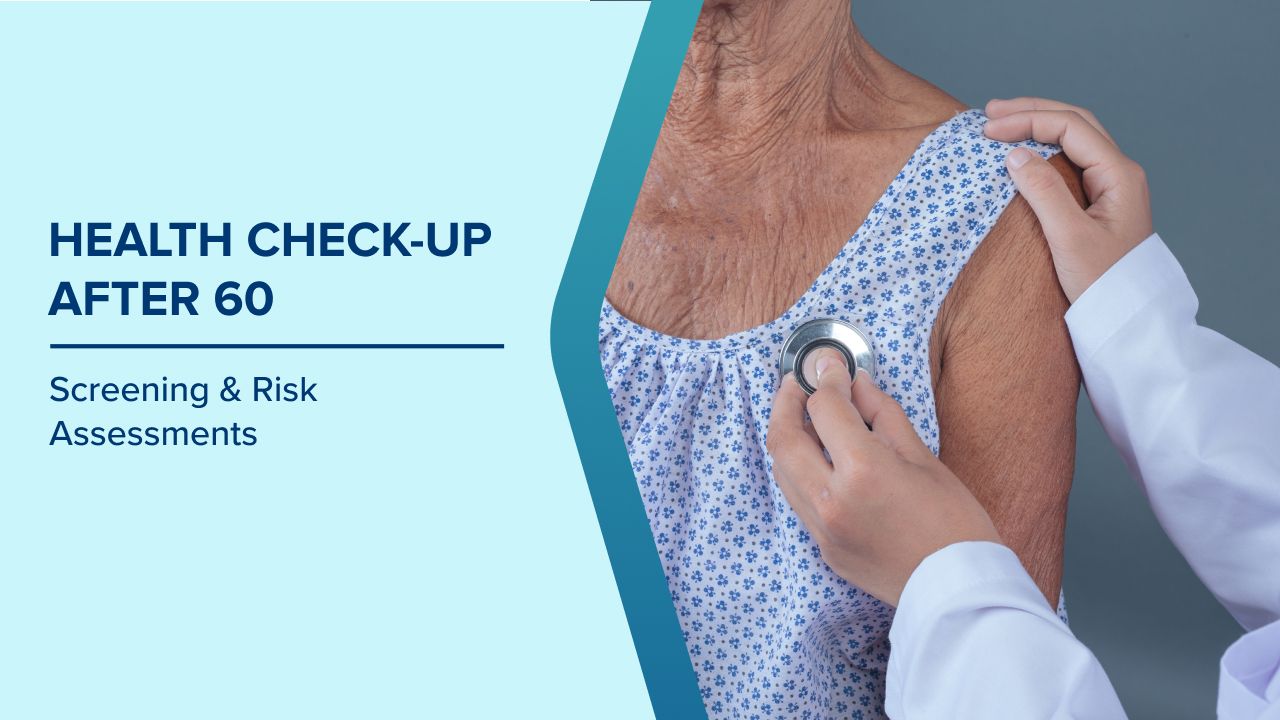
Call Us+91 926 888 0303Health Check-Up After 60: Screening & Risk Assessments
By Dr. Vineet Arora in Endocrinology & Diabetes , Internal Medicine
Sep 10 , 2026

Ageing does not affect everyone in the same way. Some older adults remain active and independent, while others may gradually experience changes in memory, strength, balance, appetite, hearing or the ability to manage everyday activities. These changes can develop slowly and may not always be recognised as health concerns.
This is why health screening after 60 should go beyond checking for diseases. A comprehensive senior health assessment can also look at physical function, cognitive health, nutrition, mobility, medicines and independence. Identifying these changes early can help doctors recommend appropriate support and reduce the risk of avoidable problems.
Why Does Health Screening Change After 60?
As people grow older, the focus of preventive care often shifts towards maintaining function and identifying changes that could affect daily life.
A senior health assessment may consider:
- Physical strength and mobility
- Memory and thinking abilities
- Risk of falls
- Nutritional status
- Ability to perform everyday activities
- Medication-related concerns
- Vision, hearing and oral health
- Existing medical conditions and their treatment
Not every person needs the same set of assessments. Screening should be based on individual health, symptoms, previous medical history and functional needs.
Cognitive Health Assessment
Changes in memory or thinking can sometimes be mistaken for a normal part of aging. However, persistent changes deserve attention, particularly if they begin affecting everyday activities.
A cognitive assessment may look at:
- Short-term and long-term memory
- Attention and concentration
- Language and communication
- Orientation
- Problem-solving ability
- Ability to manage familiar tasks
A doctor may use questions or brief cognitive tools as part of an assessment. If concerns are identified, further evaluation may be recommended to understand whether they are related to aging, medication effects, sleep problems, mood changes or an underlying neurological condition.
Balance and Fall-Risk Assessment
A fall can have a significant effect on an older person's confidence, mobility and independence. The risk may increase because of reduced muscle strength, balance problems, dizziness, vision difficulties, unsuitable footwear or medicines that affect alertness or blood pressure.
A fall-risk assessment may include checking:
- Walking pattern and gait
- Ability to stand and sit safely
- Balance while changing direction
- Lower-limb strength
- History of previous falls
- Dizziness or episodes of unsteadiness
- Medicines that may contribute to falls
The assessment can help identify modifiable risks before a serious fall occurs. Doctors may recommend exercises, physiotherapy, mobility aids or other measures depending on the findings.
Frailty and Muscle Strength Assessment
Frailty is a state of reduced physical reserve that can make an older person less able to cope with illness, injury or other physical stress.
It is not simply a consequence of being old. Frailty can develop gradually and may be associated with:
- Reduced muscle strength
- Slower walking
- Persistent tiredness
- Reduced physical activity
- Unintentional weight loss
- Difficulty carrying out usual activities
Doctors may assess walking speed, grip strength, physical performance and recent changes in weight or activity. Recognising frailty early can provide an opportunity to address nutrition, physical activity and other contributing factors.
Functional Health Assessment
One of the most useful aspects of senior health screening is understanding how independently a person can manage everyday life.
A healthcare professional may ask whether the person can independently:
- Bathe and dress
- Eat and prepare meals
- Use the toilet
- Move around the home
- Manage household tasks
- Shop for essential items
- Take medicines correctly
- Handle finances and appointments
Changes in these abilities may provide important clues about physical, cognitive or neurological health.
Functional assessment can also help families identify when additional support, home modifications or rehabilitation may be useful.
Nutritional and Muscle Health Assessment
Older adults may experience changes in appetite, taste, digestion, dental health or food intake. These can sometimes lead to inadequate nutrition without being immediately obvious.
A nutritional assessment may consider:
- Recent unintended weight loss
- Appetite and eating patterns
- Adequacy of protein and energy intake
- Difficulty chewing or swallowing
- Access to and ability to prepare food
- Muscle strength and physical activity
If nutritional concerns are identified, a doctor or dietitian may suggest dietary changes or further evaluation based on the individual's needs.
Medication and Supplement Review
Older adults are often prescribed several medicines for different health conditions. As the body changes with age, the effects of medicines can also change.
A medication review helps determine whether:
- All medicines are still necessary
- Doses remain appropriate
- Medicines may interact with each other
- A medicine could contribute to dizziness, drowsiness or falls
- Over-the-counter medicines are being used safely
- Supplements are appropriate and necessary
Medicines should never be stopped or changed without medical advice, even if a person feels that a particular medicine is no longer needed.
Vision, Hearing and Oral Health Checks
Sensory and oral health can influence far more than comfort. Difficulties with seeing, hearing or eating can affect communication, mobility, nutrition and social participation.
A vision assessment can identify changes that interfere with reading, recognising obstacles or moving safely.
Hearing assessment is important when a person struggles to follow conversations, frequently asks others to repeat themselves or has difficulty hearing in groups.
Oral health should also form part of routine senior care. Dental problems, gum disease, tooth loss, dry mouth or poorly fitting dentures can make eating difficult and may affect nutritional intake.
Addressing these concerns can support communication, safety and independence.
Which Disease Screenings Still Matter?
Senior health screening should not ignore established preventive tests. However, these should be selected according to the person's age, health status, previous results and individual risk rather than automatically ordering every available test.
A doctor may review whether the person remains due for screening related to:
- Cardiovascular risk
- Diabetes
- Certain cancers
- Bone health
- Other conditions based on personal or family history
For some older adults, continuing a particular screening may provide meaningful benefit. For others, the potential disadvantages of testing may outweigh the expected benefit. This is why screening decisions should be individualised rather than based on age alone.
When Should a Senior Have a Health Assessment?
There is no single schedule that applies to every person over 60. Routine medical reviews can provide an opportunity to identify gradual changes, but an assessment may be needed sooner if there is a noticeable change in health.
Medical advice should be sought if an older adult develops:
- Repeated falls or increasing unsteadiness
- Unexplained weight loss
- Persistent weakness
- New memory or behavioural changes
- Difficulty managing familiar activities
- Reduced appetite
- New problems with hearing or vision
- Increasing difficulty taking medicines correctly
- New onset breathing problems and/or chest discomfort
- Urinary discomfort like increased frequency or inability to control urination
A sudden or severe change in health should be assessed promptly rather than waiting for a routine appointment.
Conclusion
Senior health screening is about more than detecting disease. It can also identify changes in memory, mobility, nutrition, medication use and daily functioning that may affect independence and quality of life.
The right screening plan varies by individual. Combining medical tests with physical and cognitive assessments can help identify concerns early and guide appropriate support for healthy, independent ageing.
Frequently Asked Questions
1. Is cognitive screening necessary if an older person has no memory problems?
Not necessarily. A doctor may consider cognitive assessment based on symptoms, concerns raised by the person or family, or changes noticed during a health review. Screening should be individualised.
2. Why is fall-risk assessment important if a senior has never fallen?
A previous fall is not required for someone to have fall risk. Changes in balance, muscle strength, walking pattern, medicines or vision can increase risk before a fall occurs.
3. Can frailty be improved in older adults?
Frailty can sometimes be reduced or managed through measures such as appropriate physical activity, strength training, adequate nutrition and treatment of underlying health problems. The approach depends on the person's overall health.
4. Why should supplements be included in a medication review?
Some supplements can interact with medicines or may not be necessary for everyone. Reviewing them alongside prescription and over-the-counter medicines gives the doctor a clearer picture of everything the person is taking.
5. What is the difference between a health screening and a functional assessment?
Health screening generally looks for signs or risk factors related to diseases, while a functional assessment focuses on how well a person can move, think and manage everyday activities independently. Both can contribute to comprehensive senior care.
Written and Verified by:

Related Blogs

Dr. Vaishakhi Rustagi In Endocrinology & Diabetes , Paediatric (Ped) Endocrinology , Nutrition And Dietetics
Nov 08 , 2020 | 1 min read

Dr. Vaishakhi Rustagi In Endocrinology & Diabetes , Paediatric (Ped) Endocrinology
Nov 08 , 2020 | 2 min read
Blogs by Doctor

Monkeypox Outbreak in India: Symptoms, Causes, and Prevention Guide
Dr. Vineet Arora In Endocrinology & Diabetes
Aug 20 , 2024 | 3 min read

What Causes Low Blood Sugar: How to Manage & Prevention
Dr. Vineet Arora In Endocrinology & Diabetes , Internal Medicine
Jan 28 , 2025 | 6 min read
Most read Blogs


Related Blogs
Dr. Vaishakhi Rustagi In Endocrinology & Diabetes , Paediatric (Ped) Endocrinology , Nutrition And Dietetics
Nov 08 , 2020 | 1 min read
Dr. Vaishakhi Rustagi In Endocrinology & Diabetes , Paediatric (Ped) Endocrinology
Nov 08 , 2020 | 2 min read
Blogs by Doctor
Monkeypox Outbreak in India: Symptoms, Causes, and Prevention Guide
Dr. Vineet Arora In Endocrinology & Diabetes
Aug 20 , 2024 | 3 min read
What Causes Low Blood Sugar: How to Manage & Prevention
Dr. Vineet Arora In Endocrinology & Diabetes , Internal Medicine
Jan 28 , 2025 | 6 min read
Most read Blogs